

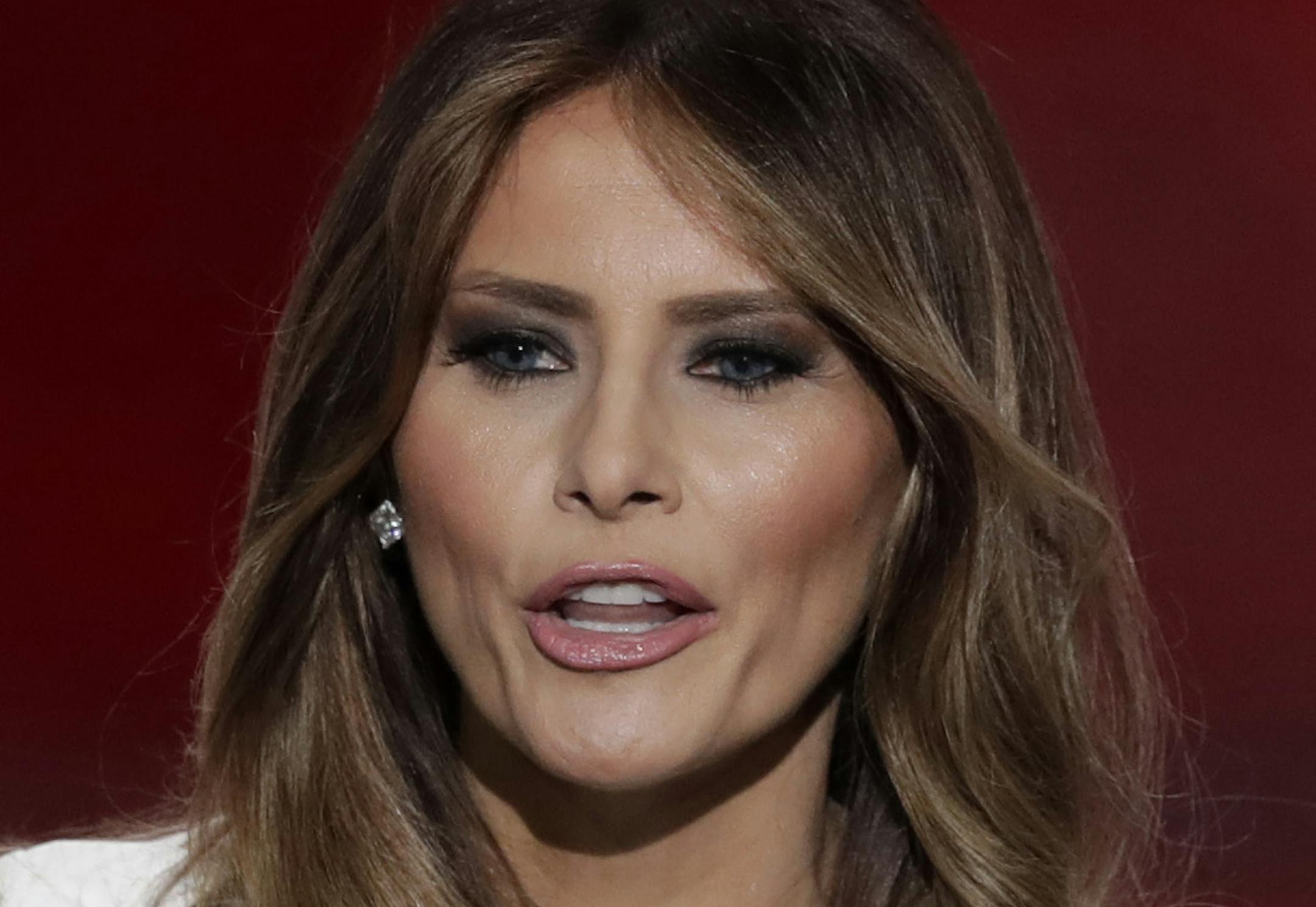
Melania Trump's convention speech may well turn into a teachable moment at college campuses this fall as a real-life lesson in the dangers of plagiarism.
It's been estimated that 25 percent of students try to pass off other people's words as their own, according to Turnitin, a popular online service used to detect plagiarized passages in written works.
If Monday night's speech had been a college essay, it "would have been flagged," says Jason Chu, Turnitin's education director. And more likely than not, it would have prompted a heart-to-heart with her professor, if not an F in class, experts say.
By now, a staffer has taken responsibility for the fact that the speech, delivered by Donald Trump's wife, lifted sentences and phrases verbatim from a similar one by Michelle Obama in 2008.
As the flap was unfolding, Turnitin posted a blog touting its service, and at least one English professor, at Dillard University, tweeted her plans to use the speech in her syllabus this fall — to teach students about plagiarism.
On college campuses, cribbing other people's words is something of a cardinal sin that, in extreme cases, can get students kicked out of school.
But even those who say they have "zero tolerance" for plagiarism admit that, in practice, it's not always intentional.
"I think a lot of plagiarism is inadvertent," says Jane Kirtley, a professor of law and media ethics at the University of Minnesota. "The reality is that people get exposed to literature, speeches, all kinds of things, and absorb it and think they created it. And that does happen."


