

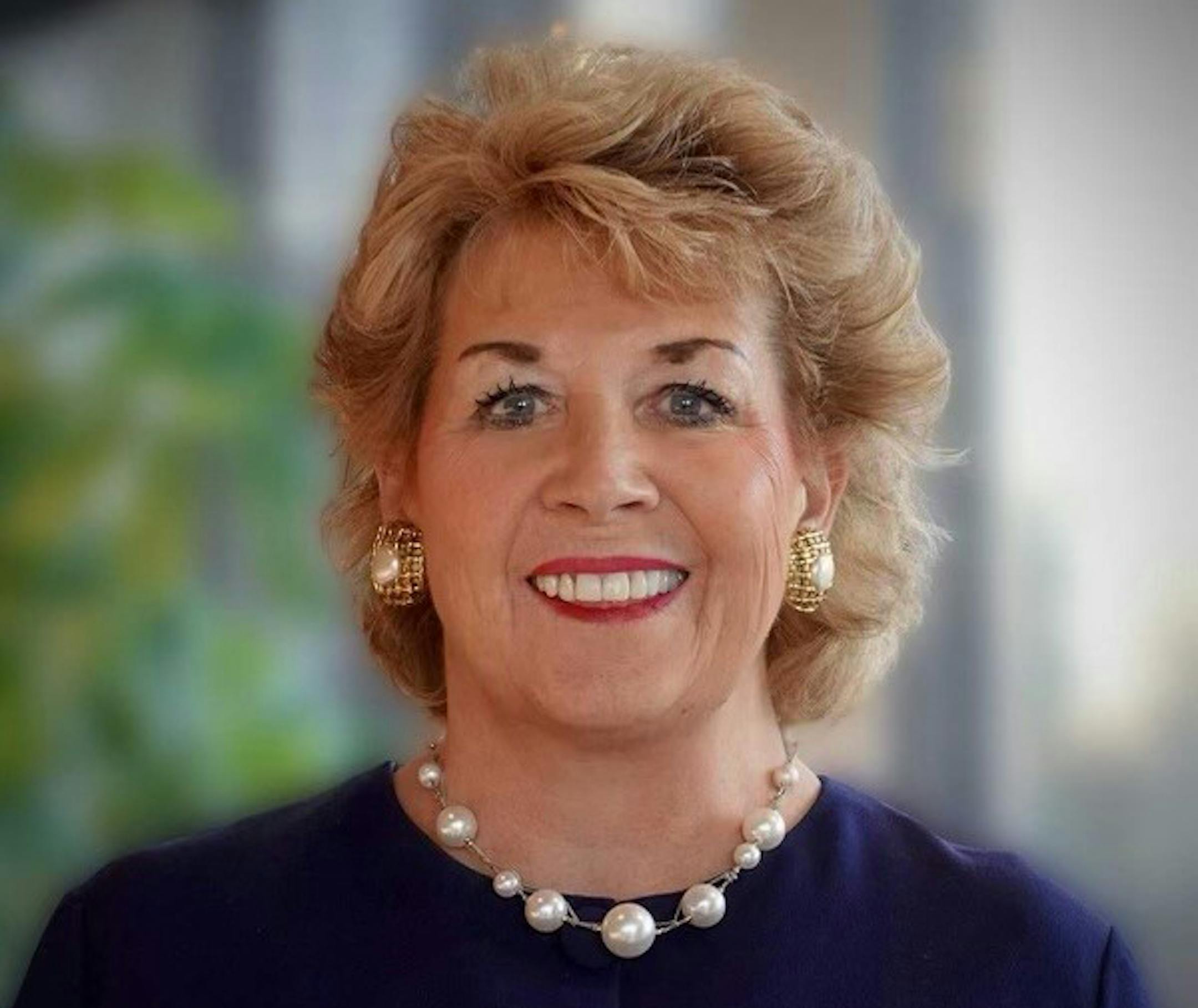
That Geraldine Byrne Nason, Ireland's ambassador to the United States, visited St. Paul for Irish Fair of Minnesota this past weekend is no surprise — the capital city has long and deep Irish roots.
But the diplomat's first-ever visit to the Twin Cities had a twofold purpose: celebrating the area's cultural and familial connections to Ireland, but also promoting an increasingly modern economic and social relationship.
Eye On St. Paul, whose Irish grandparents came to St. Paul in the 1930s, sat down with Nason on Friday at Celtic Junction Arts Center to go beyond the city's Irish history to its future with a new Ireland. This interview was edited for length.
Q: I shared some of my family's connections to Ireland. You get that a lot, don't you?
A: You know, I'm absolutely, passionately interested in everyone's Irish-ness. Frankly, two generations is very recent. As you know, there are 30 million Irish Americans and, globally, we talk about our diaspora being 70 million.
What I detect in you is that romantic and still-committed attachment. The affinity you feel with your forefathers. The circumstances in the 1930s and '40s were difficult in Ireland, but the big wave came here to the United States in the 19th century, when they were being literally starved off the island. I'm always proud when people tell me their story.
Q: As those family connections fade, do you find the relationship between the U.S. and Ireland weakening?
A: No. It's changing. We had a very traditional, core settlement of the first waves of immigrants to New York, of course, and Chicago and Boston and the West Coast. There, you have maybe third- or maybe fourth-generation Irish. Younger people who are now maybe taking an interest in Ireland as an affinity, rather than that direct link and knowledge.


