"Dreadful." "Ludicrous." "Idiotic."
That's how Patricia Highsmith described some movie versions of her books, which is surprising since, short of William Shakespeare or Jane Austen, few writers have been treated as well by filmmakers.
The American expatriate, who died in 1995 but would have been 100 this year, provided the source for at least two classics, Todd Haynes' "Carol" and Alfred Hitchcock's "Strangers on a Train," as well as beloved titles such as "The Talented Mr. Ripley" and France's "Purple Noon." (Like Jerry Lewis and Burger King, the French love Highsmith more than her fellow Americans do, with numerous adaptations that have starred Gert Fröbe, Isabelle Huppert and Gérard Depardieu.)
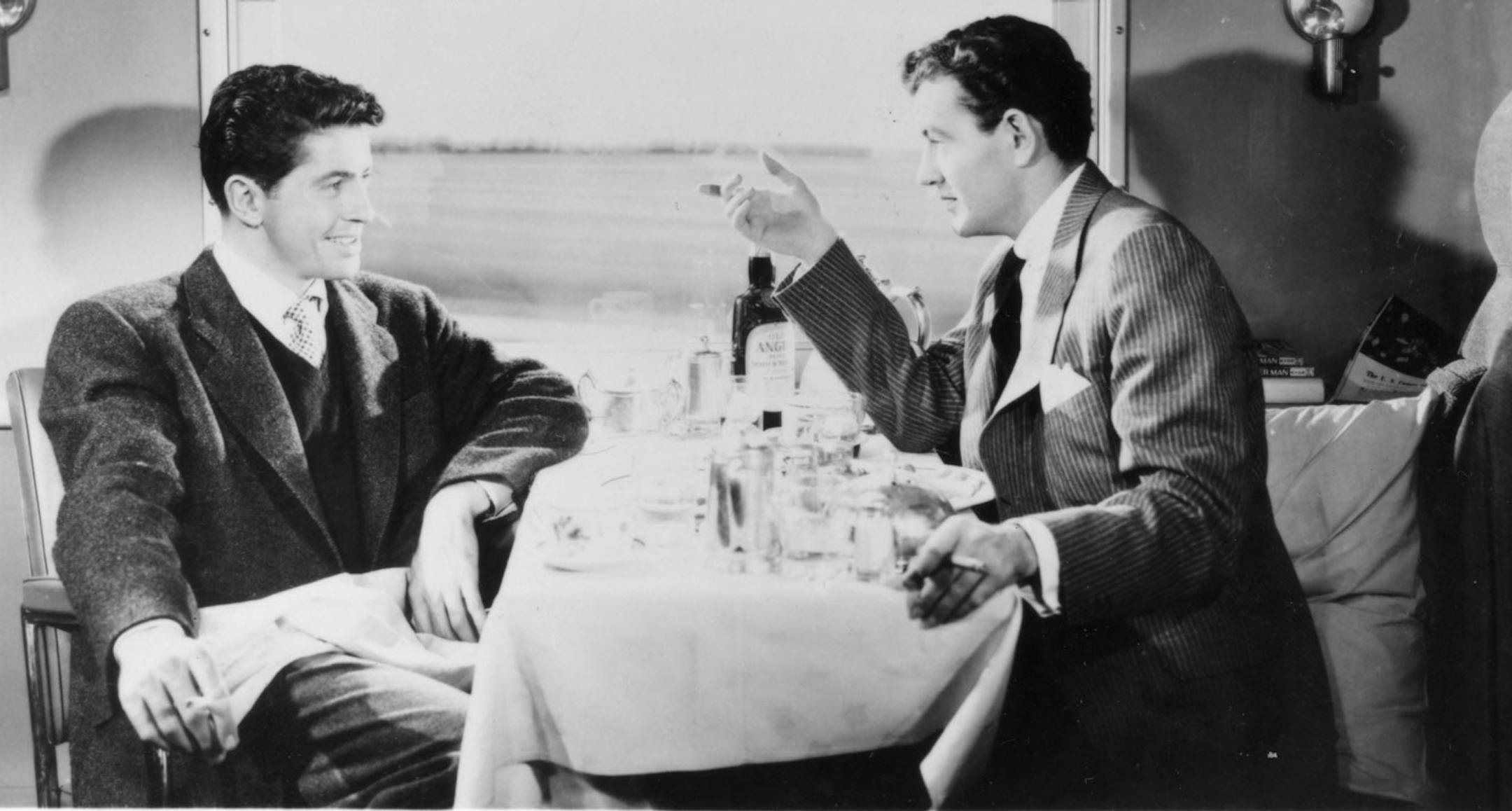
Highsmith endures because filmmakers keep reimagining her dastardly tales. "Strangers on a Train," published in 1950, spawned two other movies besides Hitchcock's great 1951 thriller. "Once You Kiss a Stranger," a (not great) 1969 version, mixes up the genders of the characters, and Danny DeVito's 1987 "Throw Momma From the Train" remixes it as a comedy.
David Fincher once planned a remake with Ben Affleck. Any number of TV shows, including "Law and Order," have borrowed from Highsmith's ingenious idea of two killers who create alibis by carrying out each other's murders.
If "Strangers on a Train" is the gift that keeps on giving to moviemakers, "The Talented Mr. Ripley" and its sequels are even more omnipresent. Its amoral hero, who worms into society by transforming himself into the person strangers want him to be, has been the subject of half a dozen movies, played by Matt Damon, John Malkovich, Alain Delon and Dennis Hopper. The template often appears in movies and TV shows about posers, with Showtime bringing him back in an upcoming "Ripley" series starring Andrew "Sexy Priest" Scott.
Highsmith's favorite ploy is for characters to act on longings that the rest of us don't dare to acknowledge. Repressed emotions are huge in her work — they're the whole point of "Carol," a chronicle of forbidden romance between a society matron and a shopgirl in the early 1950s — which is why adaptations almost always preserve the writer's time frames. Updating them wouldn't work.
Today, self-possessed Carol (Cate Blanchett) would just ask younger lover Therese (Rooney Mara) to go to a Lynx game with her. The not-bad 2016 "A Kind of Murder" remains in the "Mad Men" era because its unhappily married protagonist (Patrick Wilson) probably wouldn't need to ponder murdering the wife braying at him from their midcentury mod sofa.