

Meet our new restaurant critic. This is why he won’t be anonymous.

November 6, 2025
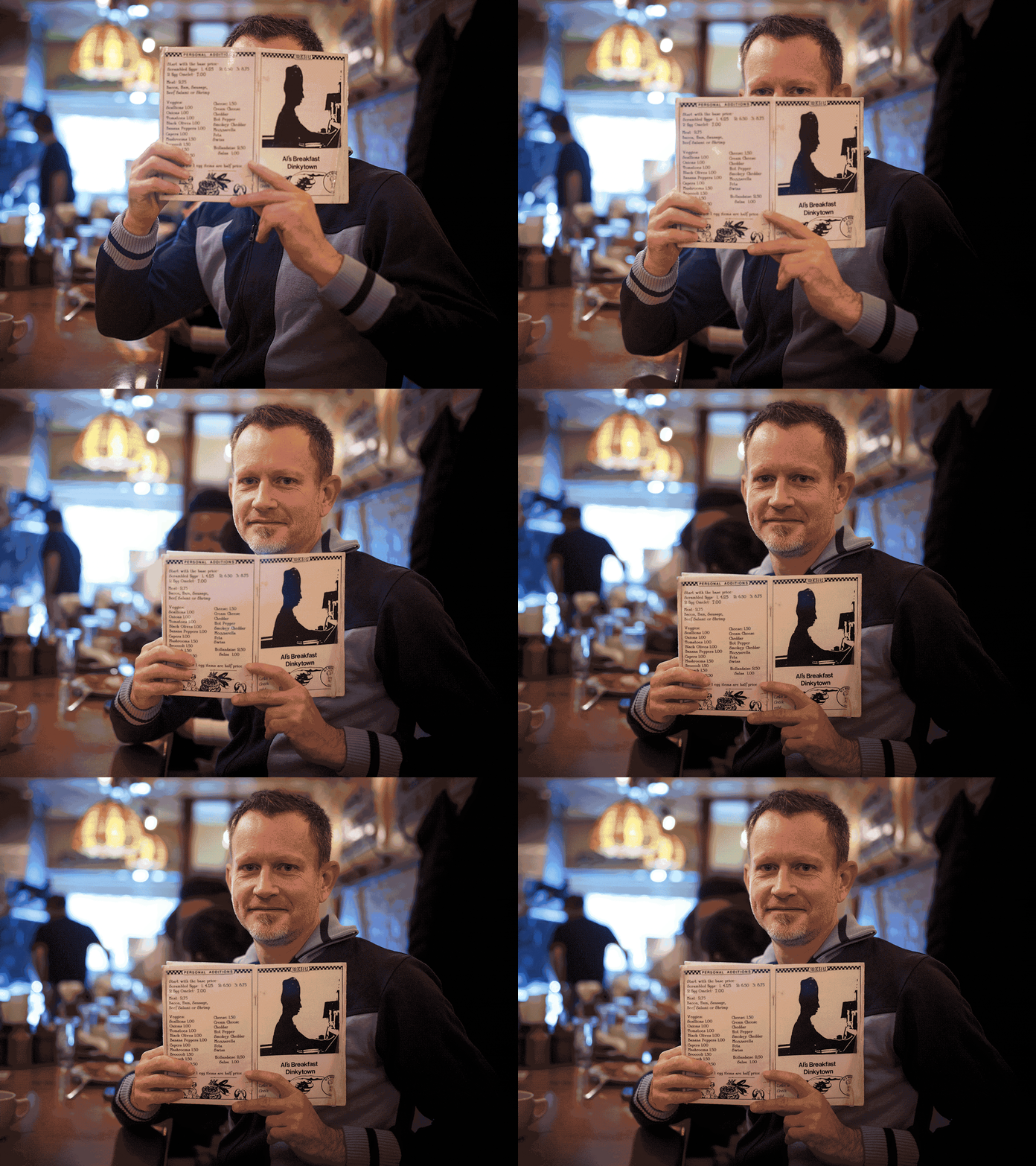
Animation of our new food critic.
(Leila Navidi/The Minnesota Star Tribune)

Award-winning food journalist Raphael Brion will offer restaurant reviews and commentaries on Minnesota’s dining scene.

Columnist Icon
The Minnesota Star Tribune

In a time of algorithm-driven recommendations, AI hallucinations and influencer hype cycles, rigorous, ethical restaurant criticism is more important than ever.

Restaurants are theater. They’re entertainment — they fill so many aspects of our lives. Restaurant reviews serve as both necessary service journalism (where you should spend your time and money) and important cultural criticism (how restaurants and food operate in a broader context in the world). At its best, criticism can guide chefs and restaurants toward higher standards, which can have a snowball effect, resulting in improved work environments and better overall dining experiences.

Unlike many critics, including some of my predecessors at the Star Tribune, I won’t be anonymous. There are plenty of photos of me already out there, so the cat’s out of the bag. I’d rather embrace visibility from the start.

I’ve long found anonymity to be somewhat of a charade. The intention was to stealthily experience the restaurant as a regular diner, but to me it always felt like some sort of secret agent subterfuge.

I should admit that back in the day as editor of Eater National, we ran the blog series “To Catch a Critic,” in which we regularly published photos of restaurant critics that we found on Google. How the tables have turned.

The anonymity debate

“I think that in the profession of restaurant criticism, anonymity is valuable,” says Bill Addison, who’s been the anonymous restaurant critic at the Los Angeles Times for the past seven years. “And I also believe that it is no longer realistic.” Everyone’s face is on social media, on people’s phones, in the world, everywhere, he said. It’s just part of life.

Tom Sietsema, who recently stepped down as critic at the Washington Post after 25 anonymous years, said that early in his career he felt that “one of the secret weapons for a critic was to be as hidden as possible.”

Yet he recognizes that avoiding being known is almost impossible. “Anyone who does this job with any rigor is going to be found out,” said Sietsema, who knew his photo was plastered on kitchen walls and that industry pros passed around his aliases and contact numbers.
Even longtime Star Tribune critic Rick Nelson, who publicly dropped his anonymity in 2015 after 16 years on the job, admitted he was a known commodity in the local restaurant scene. At the time, he said “I’ve always counted on good-old Minnesota Nice to keep my shaky anonymity game afloat.”

Others, like Tejal Rao at the New York Times and the Houston Chronicle’s Bao Ong, have chosen to be public-facing from the start. “I get to go to events, and do talks with writers I like, and do stuff at bookstores, and just be a person in the world,” says Rao. “It feels good to be part of them in a way that feels real and authentic.”

To Ong, not being anonymous can level the playing field, allowing for restaurants without the resources for public relations or marketing teams to know if a critic walks in the door.

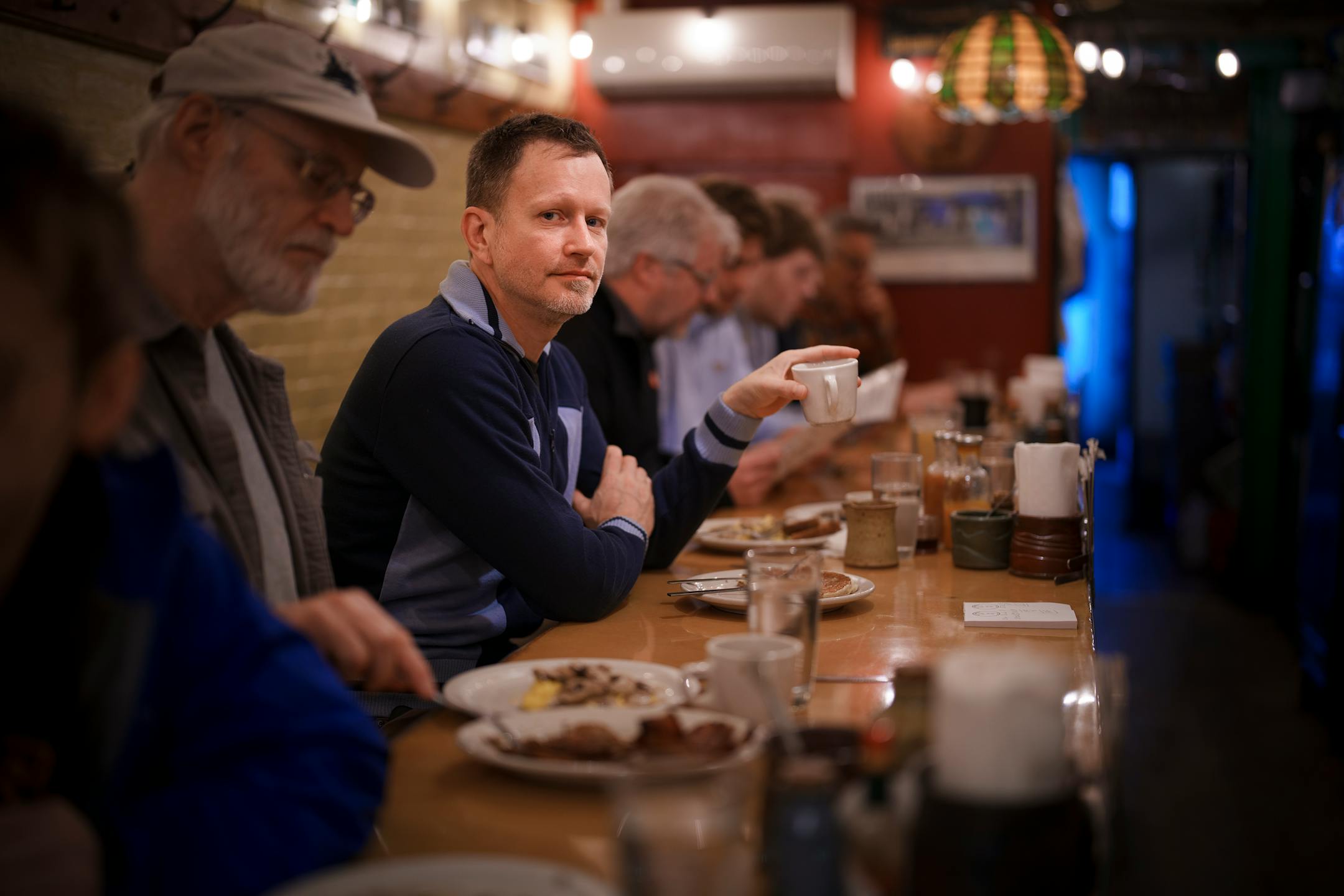
Star Tribune restaurant critic Raphael Brion eats breakfast at Al’s Breakfast in Minneapolis. (Leila Navidi/The Minnesota Star Tribune)

Special treatment

You can make it rain shaved truffles all you want, but I’m not convinced that once a critic is identified that a red carpet can suddenly be rolled out — or at least one that would substantially alter their restaurant experience.

“There are definitely restaurants that recognize you, and then sometimes you get an extra dish, or they add on the caviar,” said Ong. “At the end of the day, if the food misses, it doesn’t really matter how many dishes they send out.”

Sure, there are small things staffers can do to improve any diner’s experience, like not giving you the end cut of a salmon, making sure the steak is cooked to the correct temperature, seating you at a better table, or assigning you the most attentive server. But even that can backfire.

“Oftentimes the service got worse because people would be so nervous,” says Sietsema, who remembers a sommelier’s hand trembling as they poured wine.

Which is one reason why multiple visits are necessary when reviewing a restaurant: the quality of service and food can vary so much from visit to visit. Slipping in for a meal unannounced at the bar, or showing up after friends have been seated, often reveals more about the restaurant than any single experience.

A changing restaurant critic role

The reality is that the role of the restaurant critic has changed. While restaurant criticism will be at the center of what I do at the Minnesota Star Tribune, not being anonymous will allow me to interact with our audience in videos, on social media and in person.

There also are opportunities to work in new forms of criticism that go beyond the traditional review, including curated guides and commentaries on issues facing both the restaurant industry and diners.

Likewise, being more of a public figure will introduce a wider degree of transparency to the process of restaurant criticism that would not be able to happen otherwise. Plus, I doubt that there will be a budget for wigs.

A little about me

I learned to love restaurants from an early age, finding true joy and agency when I finally got to order an appetizer and an entree on my own. I’m originally from Belgium, and as such I am always in search of the perfect fry. Just please don’t call them French fries. Either way, they had better come with mayonnaise.

I’ve written for and worked in editorial leadership positions at national publications, and before writing about restaurants, I worked in them. I’ve hustled in busy coffee shops and waited on tables at hotspots in the Hamptons. I’ve cooked professionally at casual neighborhood bistros in Brooklyn and exacting Michelin-starred restaurants in Manhattan. These experiences still shape how I see hospitality and execution, and these skills are foundational to my ability to determine what a kitchen is doing well, and where it could do better.

Though I’ve just moved to Minneapolis, I’ve spent years visiting the Twin Cities and have long admired Minnesota’s bold, progressive and diverse culinary landscape.

I have lots of connections to Minnesota and the Midwest, with friends, family and even marathons. (I ran Grandma’s in Duluth in 2021 in a respectable 2:49.) Before joining the Star Tribune, I was restaurant editor at Food & Wine, where I helped spotlight chefs like Karyn Tomlinson of Myriel and named Diane’s Place the 2025 Restaurant of the Year.

Over the past couple of weeks, I’ve been eating out in earnest in the Twin Cities and beyond. I’d love to know which restaurants you think I should be visiting and reviewing. So please, email me at raphael.brion@startribune.com with your recommendations, or hit me up on Instagram at @raphael_brion.

And if you see me out there, do say hello.

about the writer

about the writer

Raphael Brion

Critic

Raphael Brion is the Minnesota Star Tribune's restaurant critic. He previously wrote about and led restaurant coverage for Food & Wine, Bonappetit.com and Eater National.

See Moreicon

More from Eat & Drink

See More
Dark Horse burger
Joy Summers/The Minnesota Star Tribune

Craggy edges, special sauce and kimchi-spiced — there’s a lot of love to find between two toasted buns.

card image
card image