

It isn't just bureaucrats and federal programs that will feel the harmful effects from "sequestration" — the automatic, across-the-board cuts kicking in this year because Congress and President Obama can't agree on a better way to balance the nation's budget.
Medical device firms, representing an industry that employs 35,000 people in Minnesota, could also see their growth slowed as sequestration's blunt reductions cut deeply into the resources to fund the U.S. Food and Drug Administration — the regulatory agency tasked with clearing new medical devices for the market.
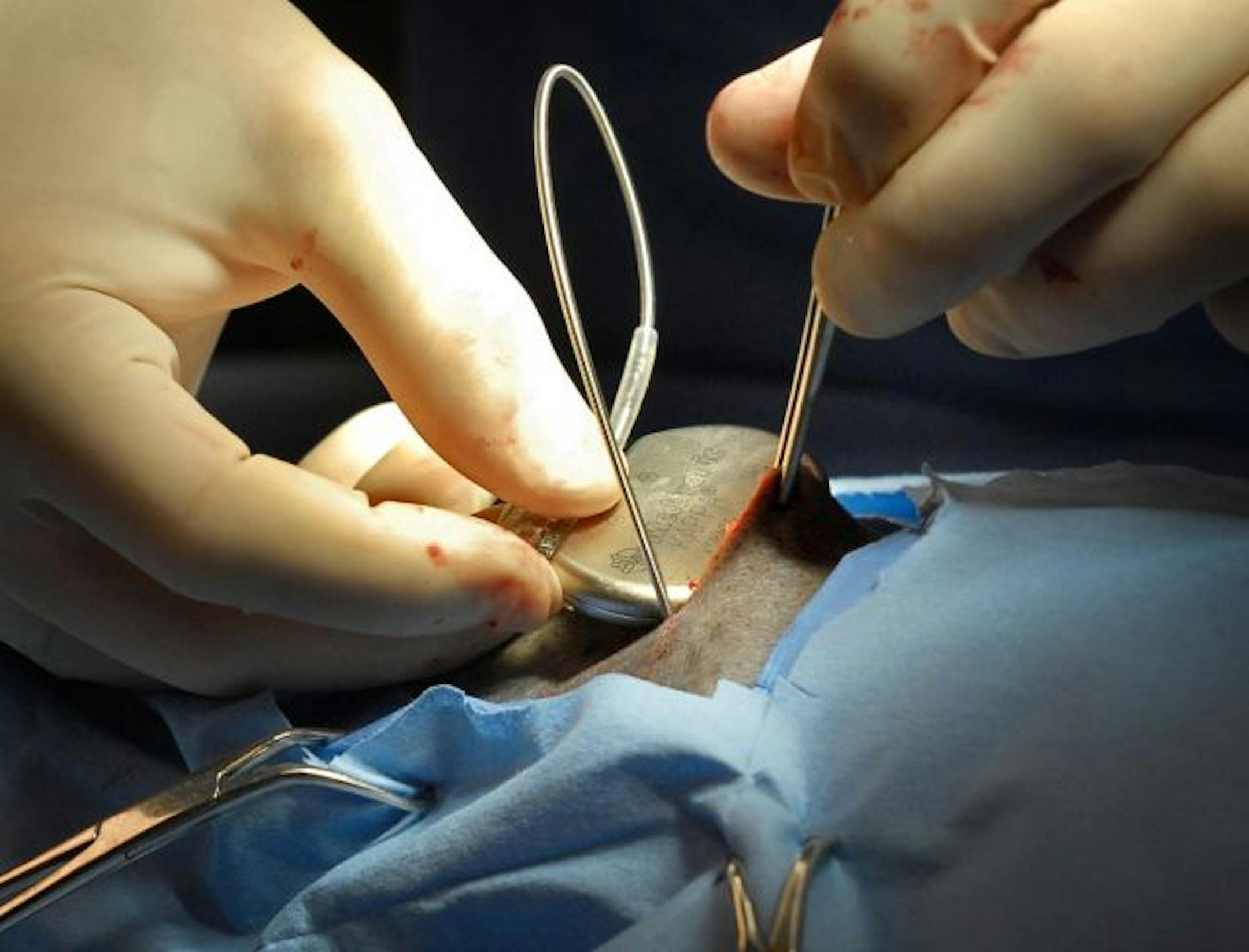
Nadim Yared, CEO of CVRx in Brooklyn Park, is among the industry leaders sounding the alarm. His firm is developing a pacemaker-like device to treat high blood pressure and heart failure. Delays in the FDA approval process — a likely outcome from an agency with diminished funds — could pose significant, even existential setbacks, especially for young firms surviving on investors' money before products hit the market.
"If a company like ours is spending, let's say, a million dollars in salaries a month and running a clinical trial for one product, any delay, any question that takes a month to answer, costs the company a million dollars. It's simple math,'' Yared said.
When Congress resumes in September, lawmakers are likely to hear complaints about the sequester's unfolding effects and face a plethora of petitions to shield certain programs or agencies from cuts. Just the threat of sequestration was supposed to push Congress into striking a broad deficit-reduction deal after raising the nation's debt ceiling in 2011. No deal was struck, setting the stage for about $85 billion in reductions in 2013 and similar cuts over the next decade.
Returning lawmakers likely will be resistant to pleas for sequestration exemptions — understandably fearing the slippery slope of restoring cuts piecemeal. But if a comprehensive deal can't be reached to replace the sequester with smarter cuts and increased revenue, lawmakers should exempt user fees voluntarily paid by medical device firms and other industries to ensure that regulatory agencies have the resources they need to carry out their oversight mission.
The FDA and the U.S. Patent and Trade Office in particular rely on user fees for staffing and technology. According to a recent Star Tribune story by Jim Spencer, "an estimated $148 million designated to improving the [patent] approval process has disappeared into the caldron of automatic budget cuts."
On Wednesday, the FDA said that the sequester had canceled $209 million in funds for this fiscal year. Of that, $85 million is from user fees collected from a number of industries, including medical device firms. It's questionable whether the funds can be applied to the deficit, since they're only supposed to be used for the purpose for which they're collected.


