

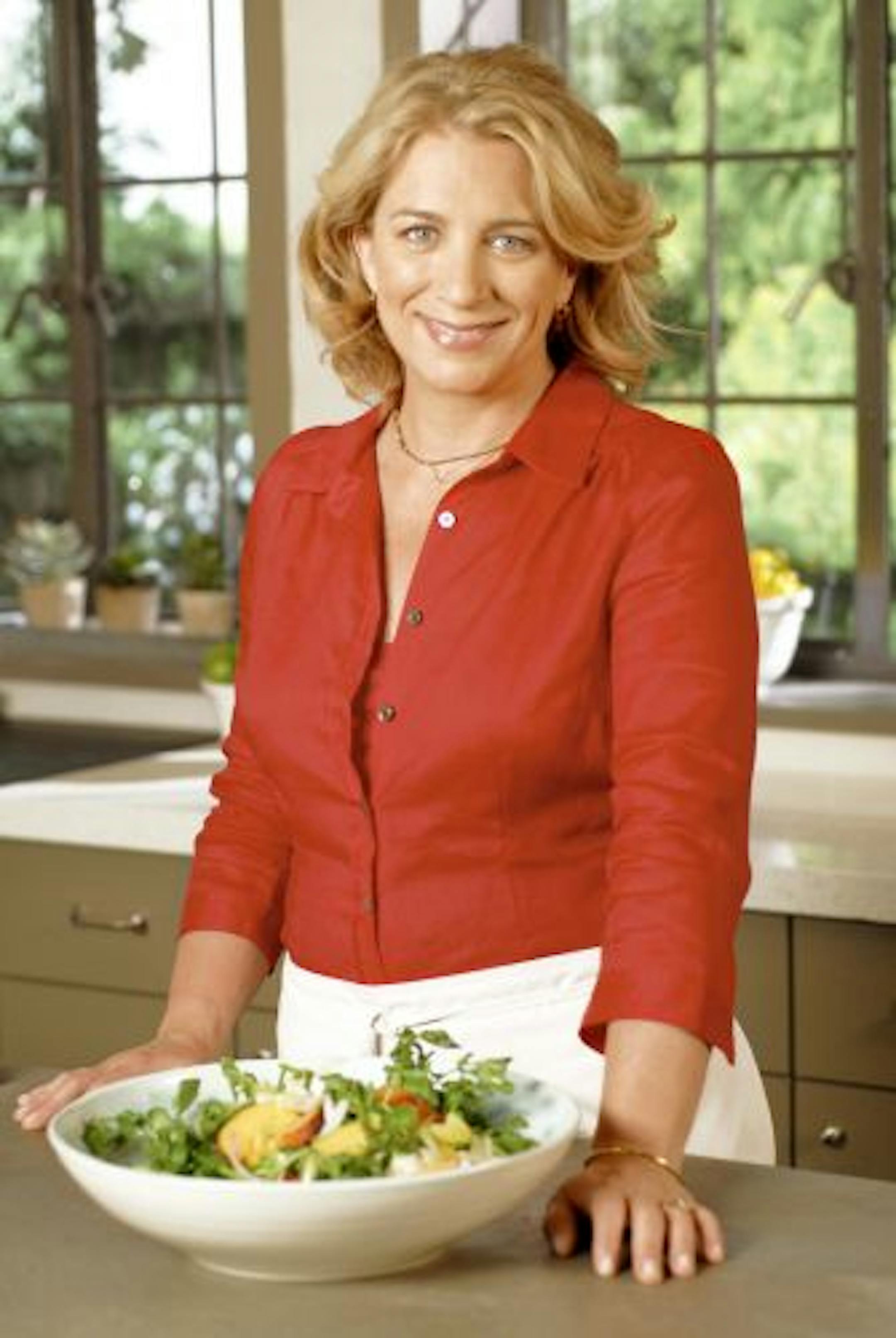
Many cookbooks claim to be the mealtime solution for busy parents and active households. The advice usually is to make big casseroles and save time by using prepared foods. But just how many noodle bakes can a family eat? Is the easiest path always the best, especially when nutrition is involved? And where does the joy of cooking come into play?
Lucinda Scala Quinn addressed those concerns last year with "Mad Hungry," a mealtime survival guide drawn from rearing three ravenous sons and pleasing a husband who loves to eat (growing up, she also cooked for four hungry brothers, so let's just say that Scala Quinn knows from feeding men and boys).
But the author, who is editorial director for food at Martha Stewart Omnimedia and co-host of "Everyday Food" on PBS, wasn't satisfied with being the one who simply put food on the table. She wanted her brood to learn to fend for themselves -- to know how to cook not just to survive but to inherit those same emotions she feels when she feeds the ones she loves. "Mad Hungry" took all of Scala Quinn's instincts as a mother and a nurturer with all her impulses for good, honest, nourishing food and baked them into one big, delicious stew.
Now she's ready to serve heaping portions to an even wider audience with "Mad Hungry With Lucinda Scala Quinn," a new daily cooking show that debuts Monday on the Hallmark Channel. Food lovers will no doubt become mad hungry for this new series.
We caught up with Scala Quinn as she was taping her show:
Q Your show is billed as getting fun, family-friendly meals to the table. Isn't that the challenge of most home cooks? How will your show demonstrate that?
A Yes, it's the challenge of most home cooks for sure. I think we sort of feel it was an easier time back in the day when Mom didn't have a job outside the home and was at home cooking.
I'm showing strategies that can only be acquired from hard-core knowledge that comes from a working mom. I show you how to multi-task and strategize so you can apportion your time. Maybe you have an hour and a half Sunday, so you can get something prepared for dinner that night and something for the freezer. I always tend to be a very frugal cook. I always look how to make three things out of one.


