

Opinion editor’s note: Strib Voices publishes a mix of guest commentaries online and in print each day. To contribute, click here.
•••
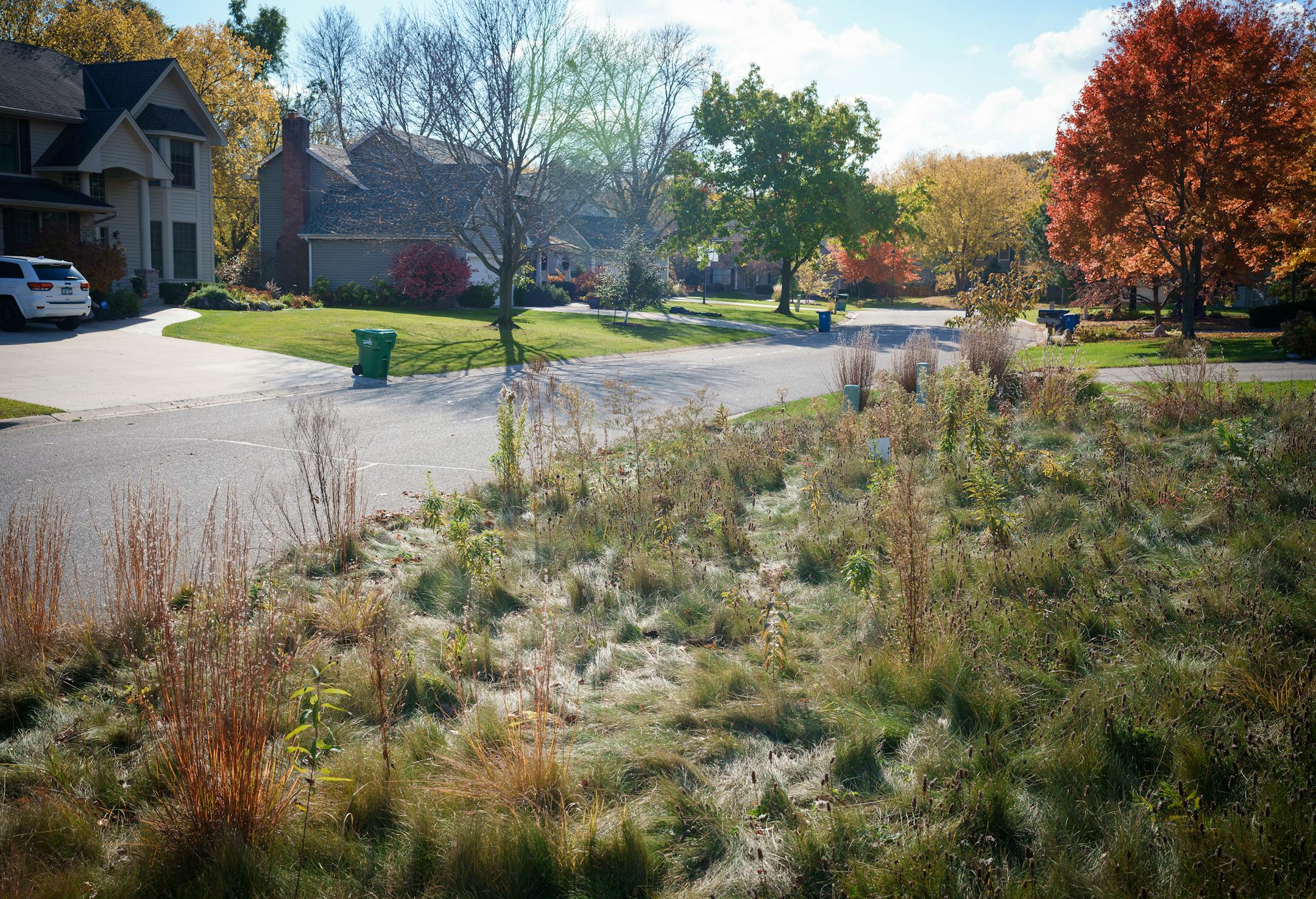
In the face of growing ecological urgency, I commend Plymouth homeowner Bonnie Scott for her principled stand in the recent dispute with the Churchill Farms Homeowners Association over her right to establish a naturally planted yard (“A lawsuit blooms in Plymouth as homeowner battles HOA over her naturally planted yard,” Nov. 9). Her action raises a vital question: Who will guard nature when it comes down to private yards, driveways and gardens? The answer is increasingly clear: We must.
The reason goes far beyond aesthetics or homeowner association covenants. It lies in the biodiversity crisis unfolding across North America. A landmark study published in the academic journal Science revealed that since 1970 the continent has lost approximately 2.9 billion breeding birds — nearly 29% of the bird population — across habitats, ecosystems and species. And official conservation messaging calls it “roughly equivalent to losing one in four adult birds in 50 years.”
Why is this happening? One of the main drivers is habitat loss and degradation — not just in far-off wildernesses, but right in our backyards and suburban lots. Native plants, if allowed to flourish, offer food (insects, seeds, nectar), nesting sites (twigs, grasses, shrubs) and structure (leaf litter, dead wood) vital for birds, pollinators and the broader web of life. But when yards are manicured to perfection, mown bare, planted with invasive ornamentals or stripped of diversity, those micro-habitats vanish.
By insisting on the right to plant and maintain a natural yard, Scott is doing something profoundly important: She is reclaiming private land as part of the ecological solution, not just the problem. Her yard can become a refuge — not just for birds, but for the countless insects, spiders and worms that support them. And multiplied across thousands of suburban homeowners, these yards collectively add up.
We must shift our view: Habitat conservation isn’t only for national parks and preserves; it begins at home. Allowing (and encouraging) native plantings on private property is one of the most accessible, effective actions we can each take. It’s low-tech, locally scalable and immediate. It directly addresses the scale of bird loss: If billions of birds are gone, we need billions of opportunities. Every yard, planting bed and garden patch counts.
Scott’s stand is therefore not a trivial homeowner dispute: It is emblematic of the larger cultural shift we must undertake to halt biodiversity collapse. She reminds us that the “wild” does not begin and end at park boundaries; it extends into our daily lives, our neighborhoods and our choices.


