

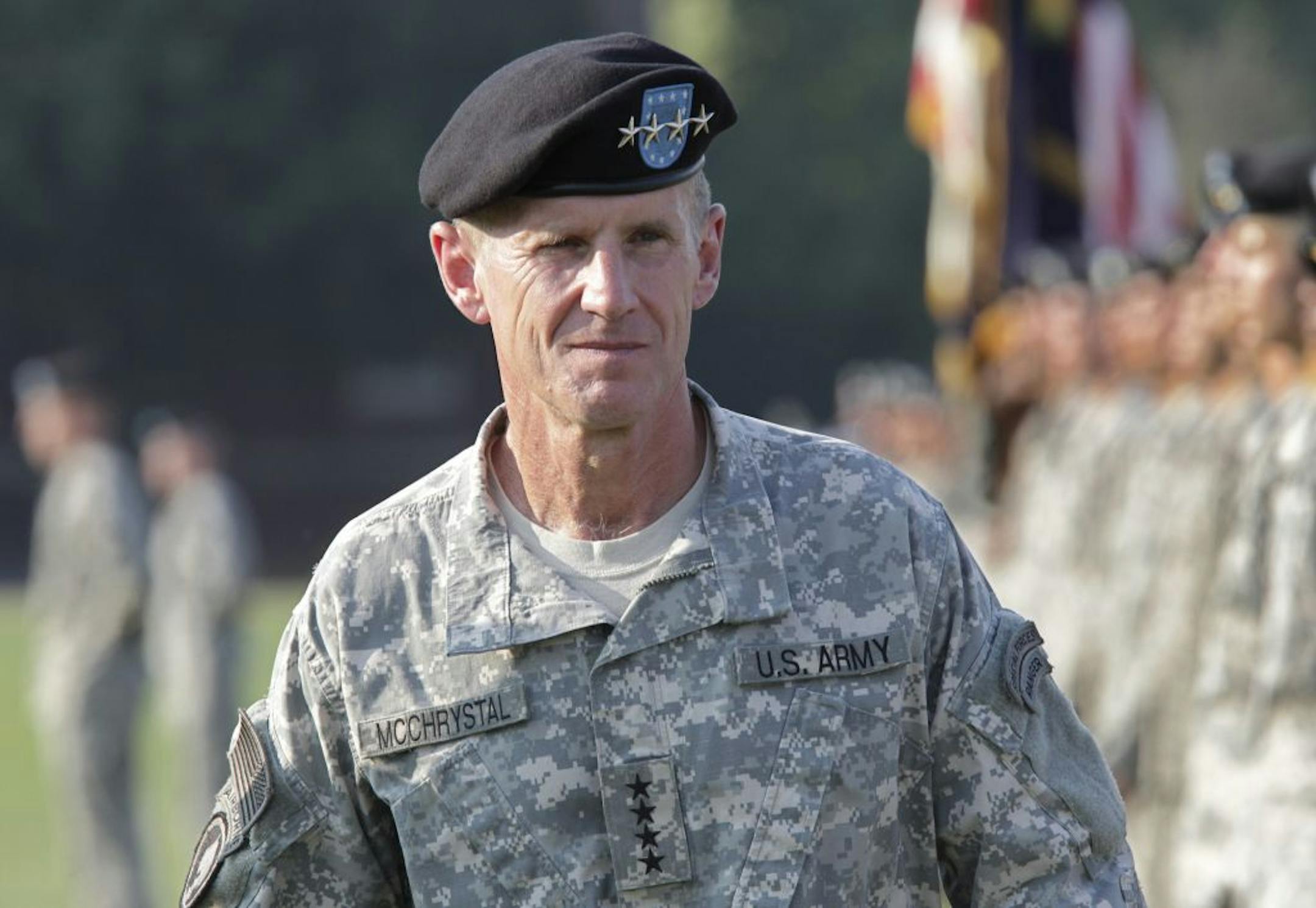
WASHINGTON - In a memoir, Gen. Stanley McChrystal, the former U.S. commander in Afghanistan, writes that tensions between the White House and the Pentagon were evident in the Obama administration from its opening months in office.
The beginning of President Obama's first term "saw the emergence of an unfortunate deficit of trust between the White House and the Department of Defense, largely arising from the decision-making process on Afghanistan," he writes in "My Share of the Task: A Memoir." "The effects were costly."
The book by McChrystal, who was fired from his post in 2010 after an article in Rolling Stone quoted him and his staff making dismissive comments about the White House, reveals glimpses of the friction over military planning and comes as Obama is weighing, and perhaps preparing to overrule, the troop requests that have been presented by the present U.S. commander in Afghanistan, Marine Gen. John Allen.
The account is all the more noteworthy since McChrystal, who retired from the Army, remains a respected voice within the military and teaches a course on leadership at Yale.
According to the book, the tensions began before McChrystal took command in Kabul, and were set off by a request from his predecessor, Gen. David McKiernan, for 30,000 additional combat troops at the end of the Bush administration. In February 2009, Obama decided that 17,000 would be sent.
From the White House perspective, McChrystal writes, "this partial decision was logical." After less than a month, the president had increased U.S. forces in Afghanistan by 50 percent. But the Pentagon pressed for an additional 4,000 troops, fearing that there was little time to reverse the Taliban's gains before the August elections in Afghanistan.
The White House later approved the 4,000 troops, but the dispute pointed to a deeper clash of cultures over the use of force that continued after McChrystal took command.
"Military leaders, many of whom were students of counterinsurgency, recognized the dangers of an incremental escalation, and the historical lesson that 'trailing' an insurgency typically condemned counterinsurgents to failure," he writes.


