

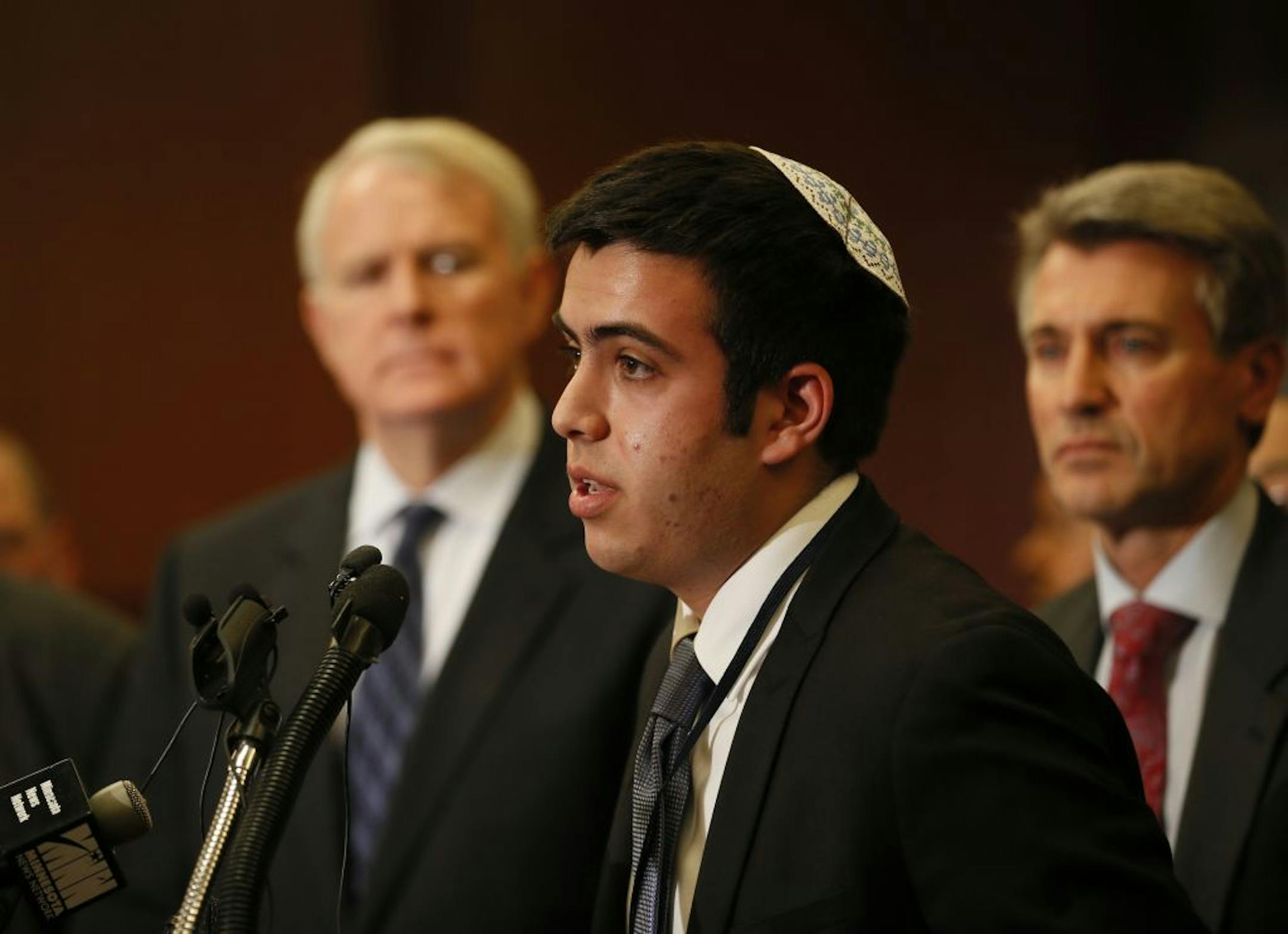
With an eye on the gun debate in Washington, Midwestern mayors and law enforcement authorities convened in Minneapolis on Thursday to discuss how to stop the illegal flow of guns that harms thousands of people in urban areas.
Mass shootings in Newtown, Conn., Aurora, Co., and Virginia Tech in recent years are "high hazard, low probability" events that bring people together to talk about gun violence, Milwaukee Police Chief Edward Flynn said.
But in U.S. cities, "there is a slow-motion mass murder taking place every year," Flynn said. "This violence is highly concentrated, highly localized, and it's a significant part of the violence problem in America." He added that it calls for different solutions than those being discussed to prevent the mass shootings like the December elementary school massacre in Newtown that killed 20 children and six educators.
Convened by Minneapolis Mayor R.T. Rybak and Milwaukee Mayor Tom Barrett, the Midwestern Regional Gun Summit brought mayors, police chiefs, sheriffs and prosecutors from at least five states to The Depot hotel complex downtown. While much of the summit was closed to the media, officials held a news conference to affirm their commitment to reducing gun violence and to call on Washington to strengthen gun laws and the main agency that enforces them.
Rybak will join other mayors in Washington next week to lobby on the issue. He wants to raise mental health requirements for gun purchasers and have Congress confirm a permanent director of the Bureau of Alcohol, Tobacco, Firearms and Explosives, a position that's been held by interim leaders for six years.
Rybak also wants Congress to ease federal restrictions -- called the Tiahrt Amendment -- on access to gun tracing data showing the origins of firearms used in a crime. He questioned why some of the statistics on Minneapolis and Milwaukee crime guns presented were more than a dozen years old.
He said, "When I'm at a murder scene, when I'm standing with the mother over the body of her dead child, she deserves to know where that gun came from."
Maya Rao • 612-673-4210


