

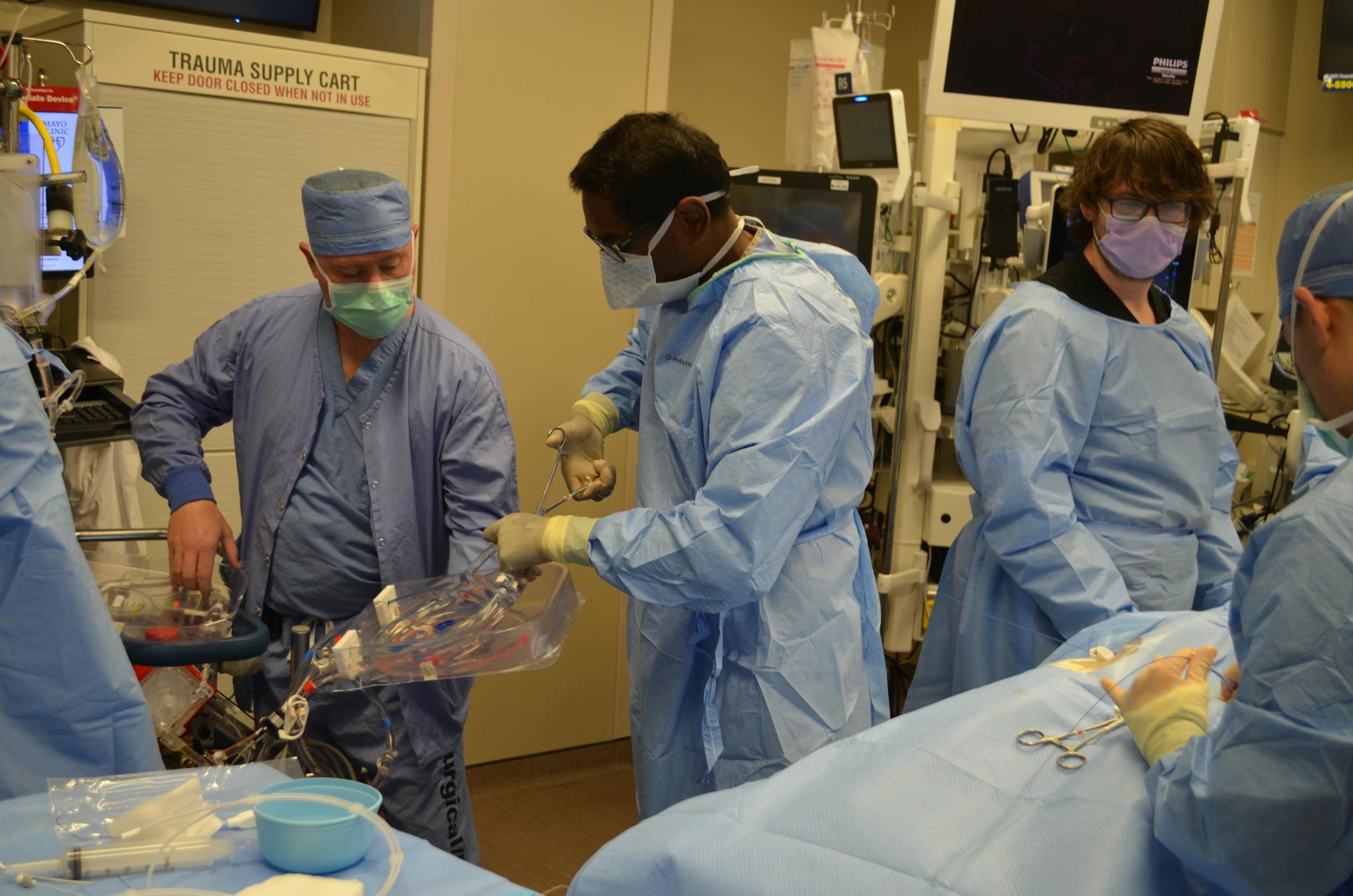
ROCHESTER – Mayo Clinic doctors here might try to save you from a cardiac arrest by sticking large tubes in your groin.
Those tubes, along with wiring and needles, are connected to an extracorporeal membrane oxygenation (ECMO) machine. ECMO machines have been used in heart surgeries for decades by pumping oxygen and blood through the body — in essence, taking over the role your heart plays through arteries in your legs.
Mayo Clinic plans to expand its ECMO use to treat more patients suffering from cardiac arrest as emerging research shows it could save more lives than previously thought.
Mayo will shift its protocols later this month to treat emergency room patients who experience arrest throughout Rochester and anywhere within 30 minutes of St. Marys Hospital.
"This is one of the newer technological steps that we have had ... in a long time," said Suraj Yalamuri, an anesthesiologist and intensivist at Mayo Clinic. "It's nice to be able to expand the role of who this is being offered to."
Mayo officials say Rochester is among a handful of communities in the U.S. treating cardiac arrest patients with ECMO devices, though Minnesota is leading the charge. The University of Minnesota Medical School equipped a mobile ECMO truck in 2021 to serve patients in the southwest metro area.
The shift comes as there is growing awareness about cardiac arrest — which happens when your heart suddenly stops beating, rather than a blockage that causes heart attacks — in the wake of Buffalo Bills defensive back Damar Hamlin's cardiac arrest during an NFL game in Ohio last month.
Hospital systems have been reluctant to use ECMO in treating cardiac arrest in the past because there wasn't enough data supporting the idea, according to Dr. Ashish Panchal of The Ohio State University Wexner Medical Center.


