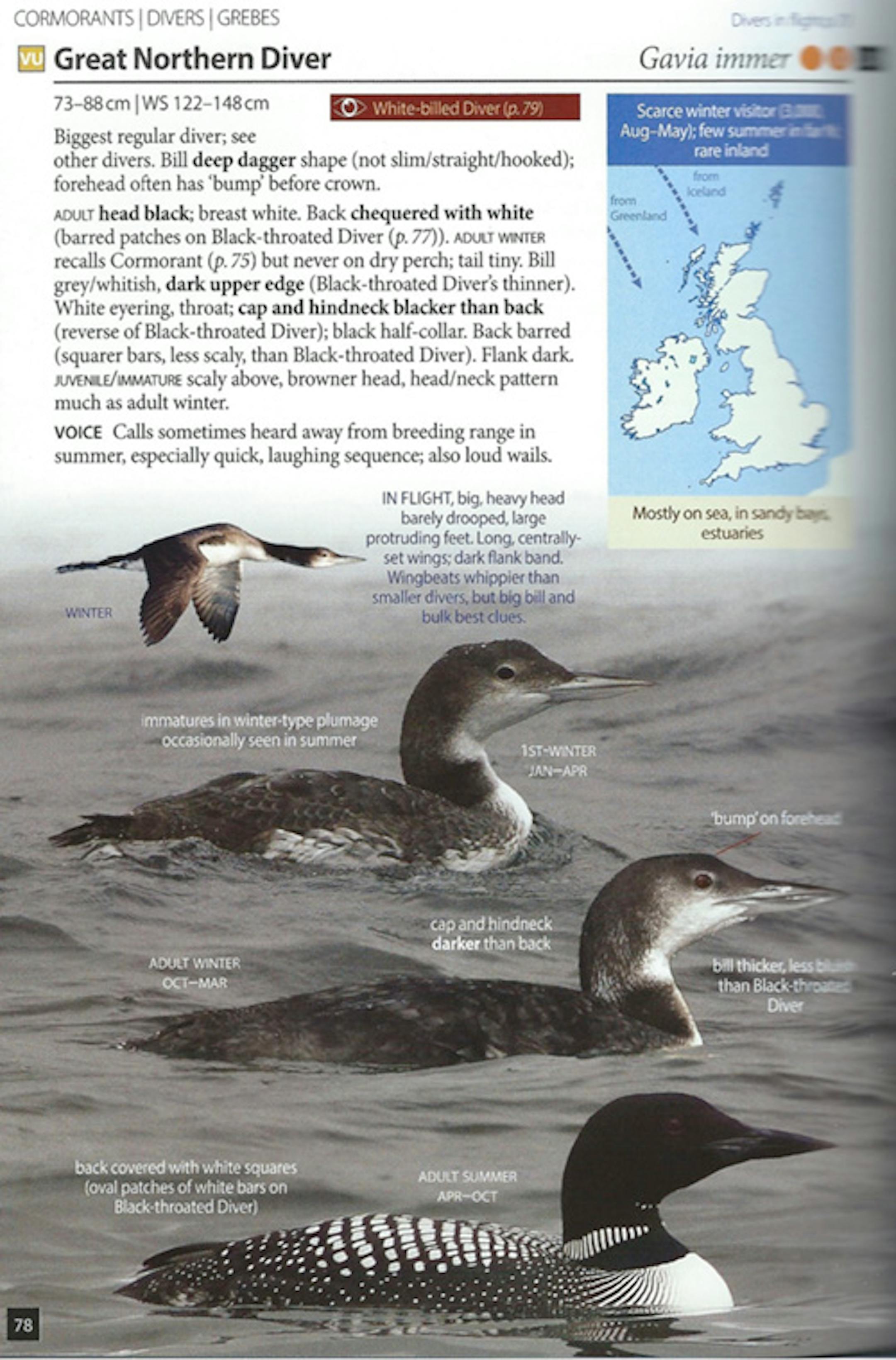
The best-designed field guide for the identification of birds that I've ever seen is, unfortunately, of limited use to North American birders. That doesn't mean you should overlook it. On the contrary. Find it. Page through it. Use it when you can. You might even buy it as a piece of bird-publishing art.
The book is "Britain's Birds: An identification guide to the birds of Britain and Ireland," distributed by Princeton University Press.
This is a beautiful book, useful, complete, and extremely well designed. That's why I like it so much: It is well done, right down to cover stock and binding.
Perhaps you remember a few years back the ID guide created by Richard Crossley. He used photos of birds, many photos, a given bird from several points of view, flying, perching, swimming. He imposed these photos on a scenic photo background to place the birds in their habitat.
Nice idea, but it didn't work for me. It was too much. The pages looked cluttered. The book was poorly done.
This Britain / Ireland guide uses pretty much the same idea, but to perfection.
If you have a Sibley guide, open to any page. No criticism meant here for this is my go-to book, but his pages are almost sterile. Well-drawn birds on white backgrounds, with minimal text.
Pages in the Britain guide are filled with photos, background images, and text, no white space. Not filled-busy. Filled by design. The pages are visually warm. The information here is more than complete. Necessary information and textual enhancements obviously have been well considered. Much is done within the limitations of a page.