

A program that improves local water quality one property at a time is making its way into the west metro.
The Master Water Stewards program is finishing its debut year in Minneapolis and will extend its reach in 2014 to Edina, Hopkins, St. Louis Park and other western suburbs that line Minnehaha Creek.
The program trains and certifies 25 volunteers each year to advise their neighbors about rain gardens, rain barrels and other ways to protect local lakes and streams from stormwater runoff. It is modeled after the Master Gardener and Master Naturalist programs and includes 50 hours of training, mostly in three-hour evening classes, and a capstone project that puts their training to the test.
Many of the projects reduce stormwater runoff, which carries fertilizer, bacteria, pet wastes, salt, dirt, litter, leaves and other pollutants directly into creeks, lakes and wetlands. Rain barrels and rain gardens capture the water to feed plants and shrubs instead of flushing into streets.
The program began accepting online applications last week for next year's class at www.masterwaterstew ards.org.
"It's not just about getting a certification and then talking to neighbors," said Peggy Knapp, director of programs at the nonprofit Freshwater Society, which organized the classes. "We're asking people to take action, which we think is really attractive to a lot of folks."
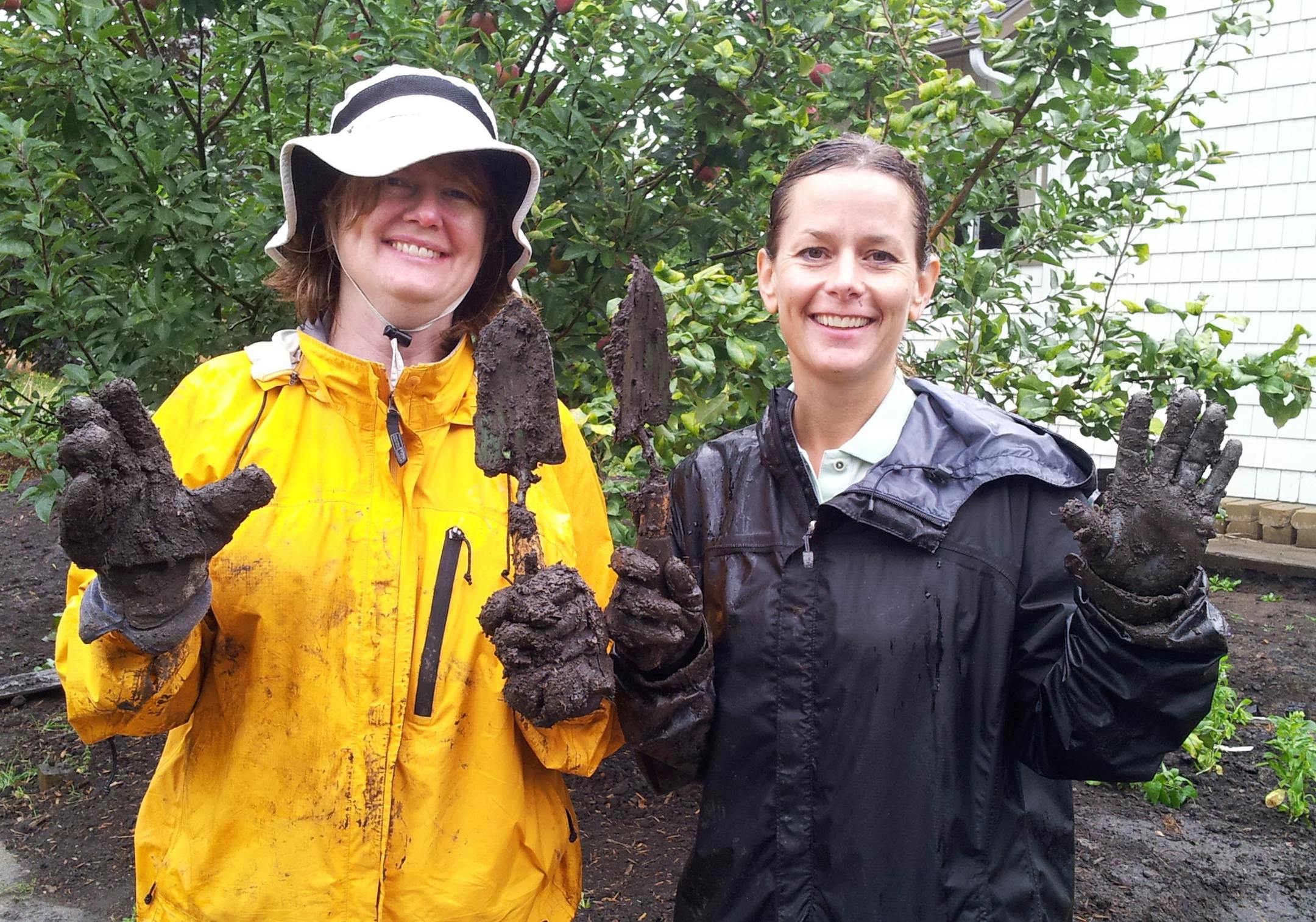
That was evident recently when stewards and others worked on a project near the corner of 42nd Street and Nokomis Avenue in south Minneapolis during a rainy afternoon. Volunteers planted a rain garden on part of a yard on private property that had been excavated earlier. Rain gardens are shallow basins that collect rain from roofs, driveways and sidewalks so it doesn't run off into streets.
At the bottom of the garden where water can pool, volunteers planted sedges, bee balm and black chokeberry — "wet feet" plants that can tolerate a certain amount of standing water. Further up the slope they installed blazing star, liatris, black-eyed susans and purple coneflower — all perennial native plants.


