

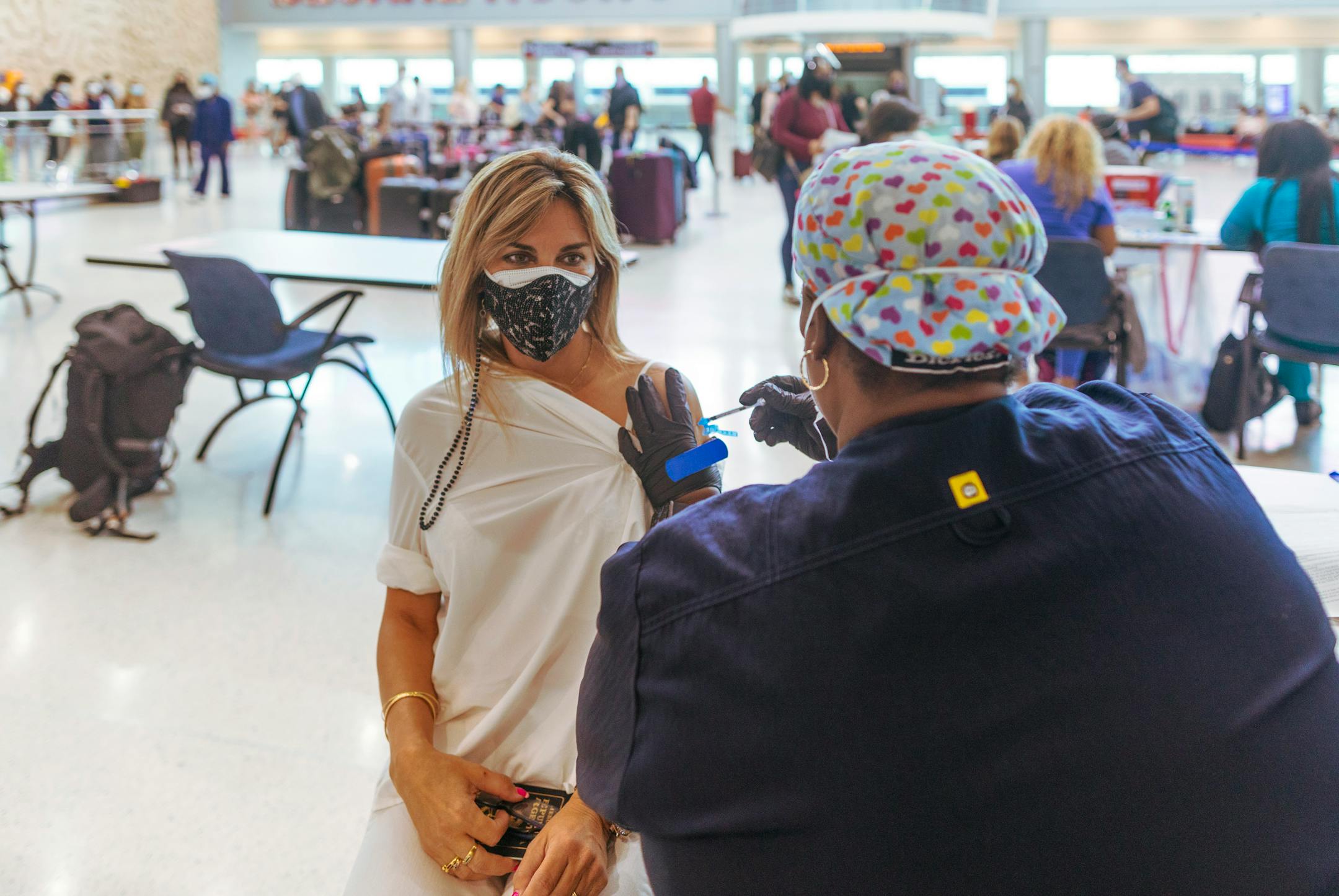
Throughout the pandemic, masks have ranked among the most contentious public health measures in the United States, symbolizing a bitter partisan divide over the role of government and individual liberties.
Now, with a new variant of the coronavirus rapidly spreading across the globe, masks are again the focus of conflicting views, and fears, about the course of the pandemic and the restrictions required to manage it.
The renewed concerns follow the wildfire growth of the Delta variant, a highly infectious form of the virus first detected in India and later identified in at least 85 countries. It now accounts for 1 in 5 infections in the United States.
In May, federal health officials said that fully vaccinated people no longer needed to mask up, even indoors. The advice signified a sea change in American life, setting the stage for a national reopening that continues to gain momentum.
But that was before the spread of the Delta variant. Worried by a global surge in cases, the World Health Organization last week reiterated its long-standing recommendation that everyone — including the inoculated — wear masks to stem the spread of the virus.
On Monday, health officials in Los Angeles County followed suit, recommending that "everyone, regardless of vaccination status, wear masks indoors in public places as a precautionary measure."
Barbara Ferrer, the county's public health director, said the new recommendation was needed because of upticks in infections, a rise in cases due to the worrisome Delta variant, and persistently high numbers of unvaccinated residents, particularly children, Black and Latino residents and essential workers.
Roughly half of Los Angeles County residents are fully vaccinated, and about 60% have had at least one dose. While the number of positive tests is still below 1% in the county, the rate has been inching up, Ferrer added, and there has been a rise in the number of reinfections among residents who were infected before and did not get vaccinated.


