

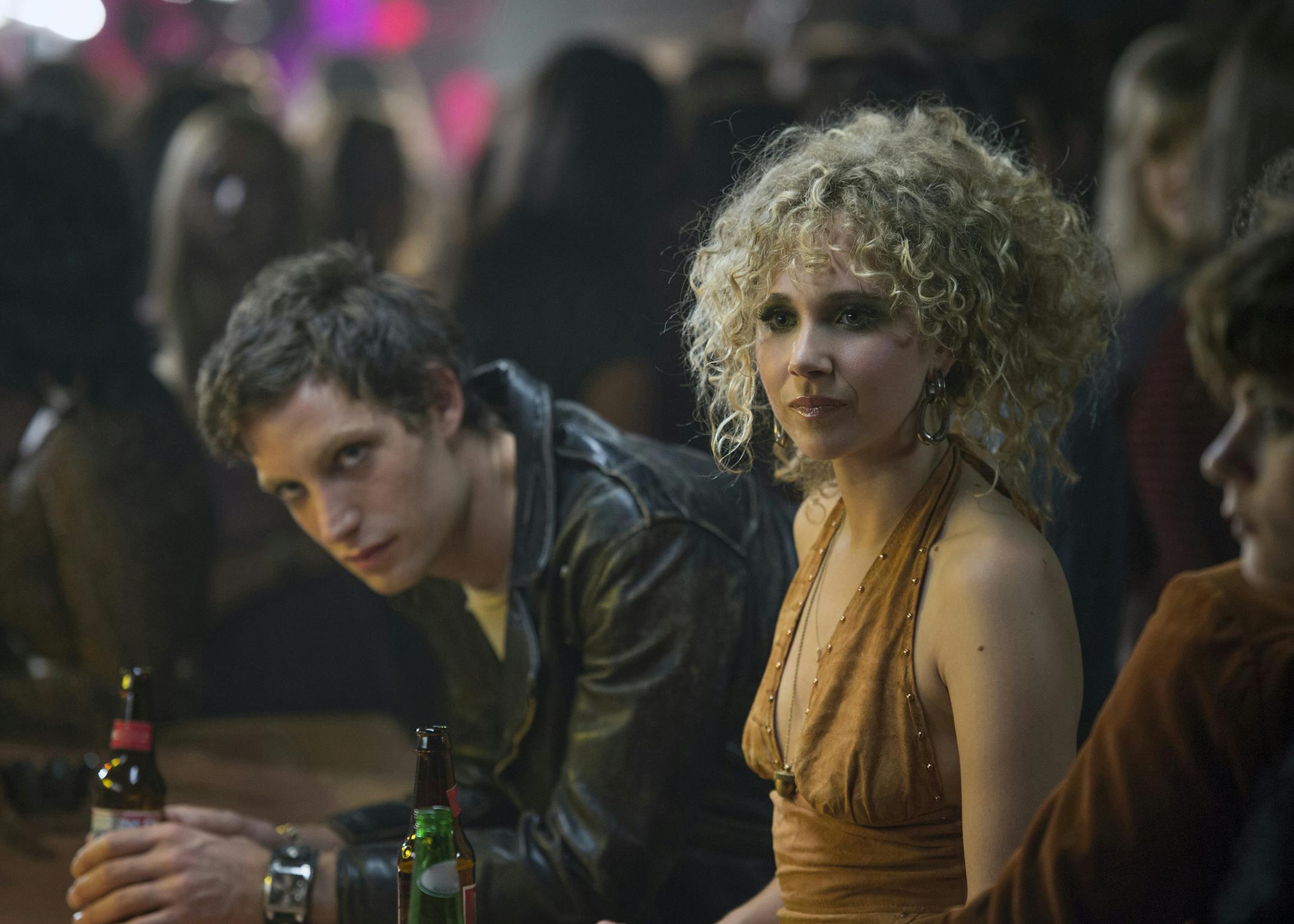
LOS ANGELES – Martin Scorsese will forever be married to the mob, but his most lasting legacy may be as a music man.
The soundtrack to the director's professional life has had its fair share of hits ("The Last Waltz," which documents the 1976 all-star salute to the Band, remains the quintessential concert film) and neglected deep cuts (1977's "New York, New York," a scruffed-up tribute to MGM musicals, has more to offer than Liza Minnelli belting out the title song). And what would that scene from "Goodfellas" with corpses popping up across the mean streets of the city be without the coda to "Layla"?
But Scorsese has never rocked out as hard as he has for "Vinyl," a new series about a label executive's inner war between a love for power and his love for soul music. The battleground: 1973, a year in which roots-inspired records were starting to get nudged off the charts by strains of punk and disco.
It's no coincidence that Scorsese's collaborator, at least when it comes to the drama's concept, is singer Mick Jagger, whose understanding of the business has played an often overlooked factor in the Rolling Stones' durability.
"Before Marty, people used music occasionally, but Marty was one of the first people to use rock 'n' roll in movies wall to wall," said Jagger, who doesn't appear in the series but is somewhat represented by an image-conscious punker played by his son James Jagger.
It made complete sense for Mick Jagger to reach out to Scorsese, who used "Gimme Shelter" in three of his films and specializes in bringing out the charm in seedy characters, much in the same way the Stones challenge listeners to consider sympathizing with the devil.
"I'm his audience," Scorsese said. "It's stuff that is basically the inspiration for a lot of the visualizations throughout my films, particularly 'Mean Streets,' 'Raging Bull' and all the way up to 'The Wolf of Wall Street.' His songs are tough and strong and reflect the attitudes of the people and the lives I grew up with. It was natural for us at some point to do something together."
Not that the pilot, Scorsese's first directorial effort for nonscripted TV since laying the foundation for "Boardwalk Empire," is simply a two-hour music video.


