

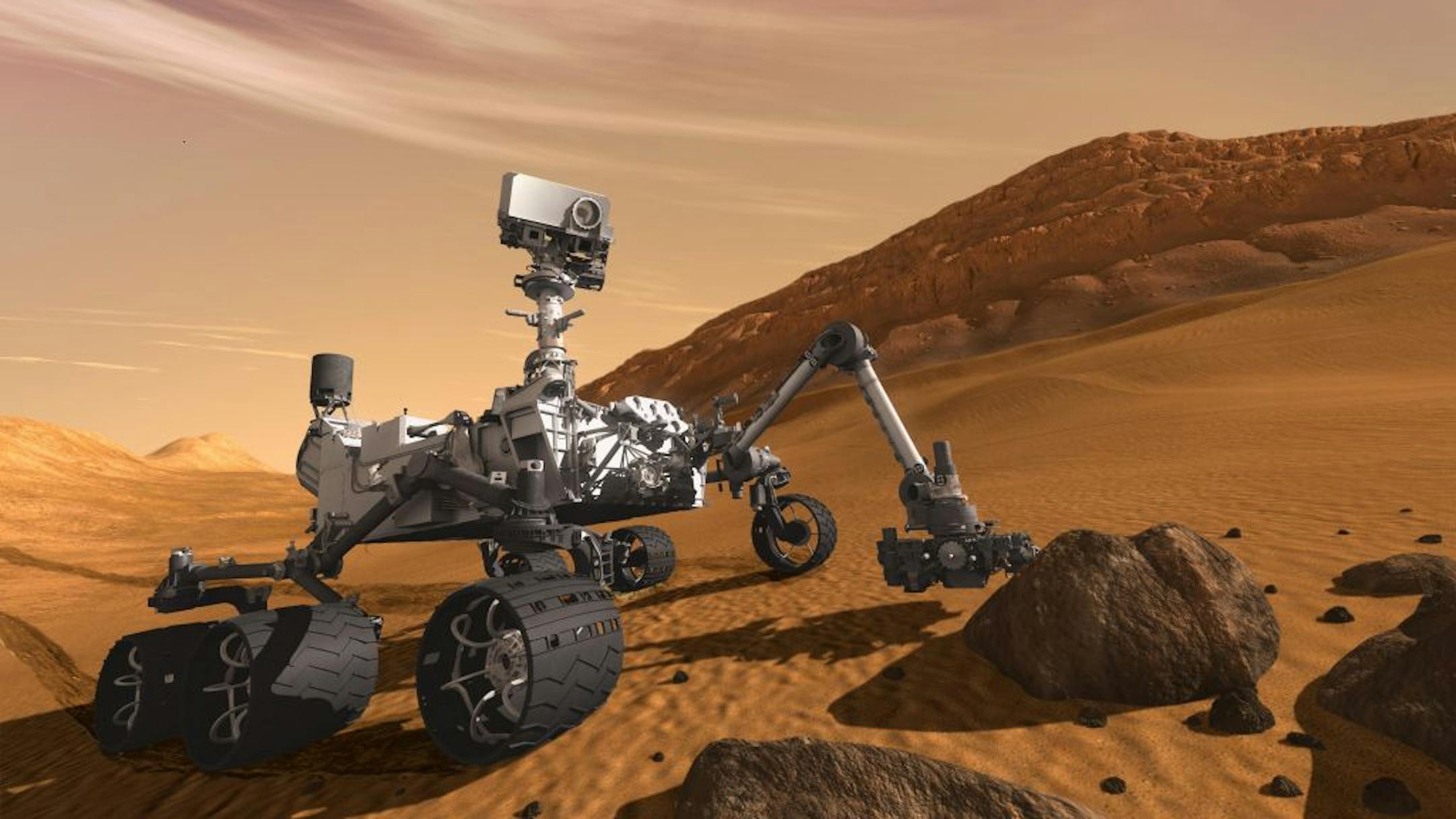
The Mars rover Curiosity has found something noteworthy in a pinch of Martian sand. But what is it?
The scientists working on the mission are not saying. Outside that team, lots of people are guessing.
The intrigue started last week when John Grotzinger, the mission's project scientist, told National Public Radio: "This data is going to be one for the history books. It's looking really good."
And then he declined to say anything more.
Fossils? Living microbial Martians? Maybe the carbon-based molecules known as organics, which are the building blocks of life?
That so much excitement could be set off by a passing hint reflects the enduring fascination of both scientists and nonscientists with Mars.
"It could be all kinds of things," said Peter Smith, a planetary scientist at the University of Arizona who was the principal investigator for NASA's earlier Phoenix mission to Mars. "If it's historic, I think it's organics. That would be historic in my book."
Grotzinger and other Curiosity scientists will announce their latest findings on Monday in San Francisco at a meeting of the American Geophysical Union.


