

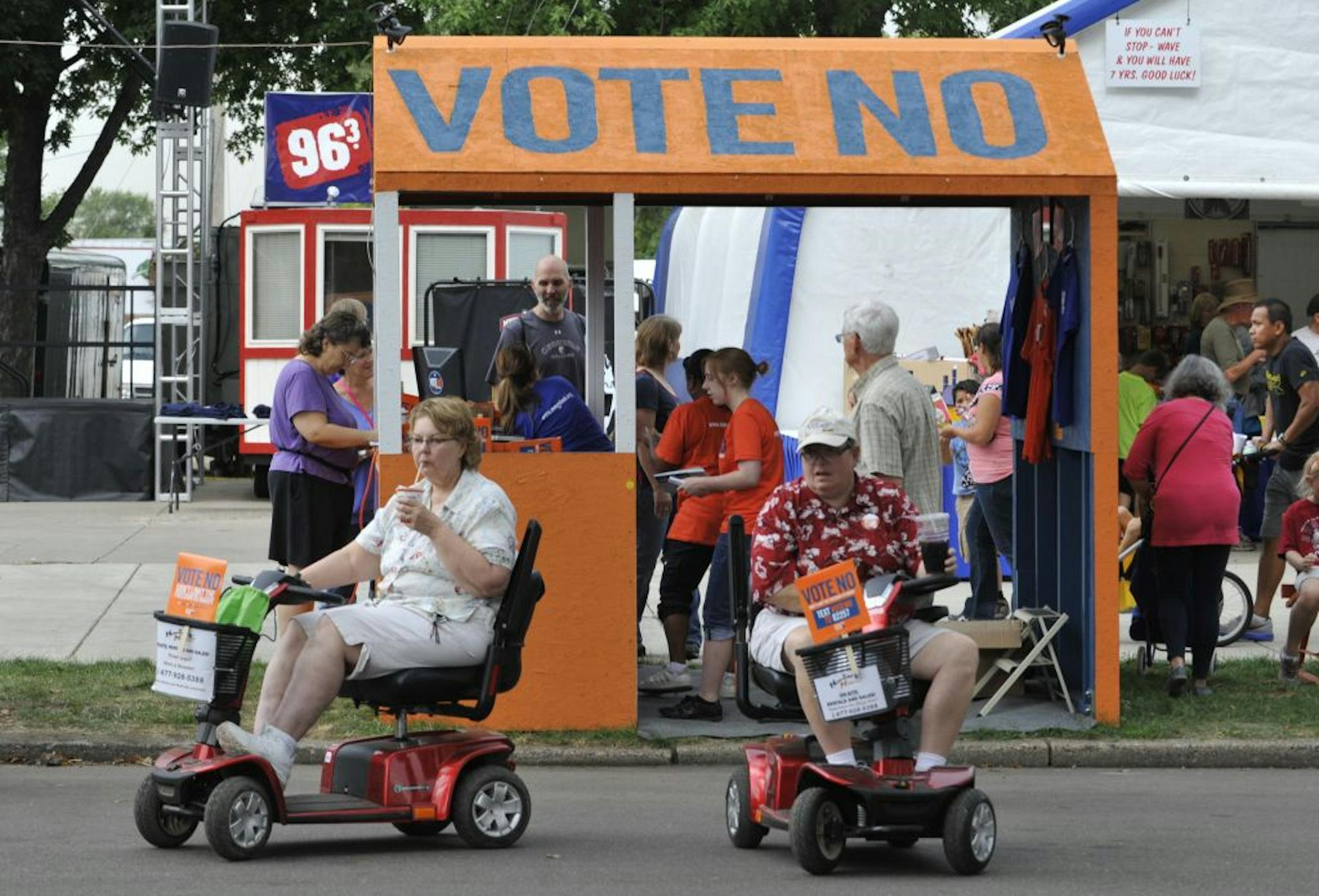
Counterpoint
I read with interest Dan Olson's defense of the "lost honor and sacredness of marriage" ("Those who'd redefine it think like those who'd despoil the wilderness," Aug. 24). While I think his metaphor is stretched beyond boundaries, he makes some valid points regarding communities, civil and religious.
Olson defines the ideal community as consisting of like-minded, supportive persons who agree to live according to the laws and standards of that community. The wisdom of our Constitution is that they are free to do so as long as the rights of others are not infringed upon.
More so in a religious community. If, for instance, the religious community decides that a particular person or group may not be married in their rite according to their beliefs and scriptures, that is up to them.
f they decide a divorced person may not fully participate in their rituals, that is up to them. In most cases, because the individual members choose to live as a community and abide by these rules, there is an inevitable and harmonious outcome, a sense of stability within the community.
However, to make the illogical leap, as does Olson, that the history of marriage up to the present is the bucolic pastorale he presents is ludicrous.
The history of marriage, including the biblical version, is replete with tribalism. The extreme of this is best viewed today through the lens of the Taliban. Or we can look at it via the Middle Ages and even into the 18th century in the pursuit of power and wealth through the dowry system where women were often traded as chattel.
Even if we go back to the idyllic pre-1960s, marriage can be seen as supporting the dichotomy of Woman on the Pedestal/Woman in her Place, both equally repressive.


