On Jan. 23, 2011, Cincinnati joined a number of other NFL cities in need of a franchise quarterback when Carson Palmer requested a trade following a 4-12 season.
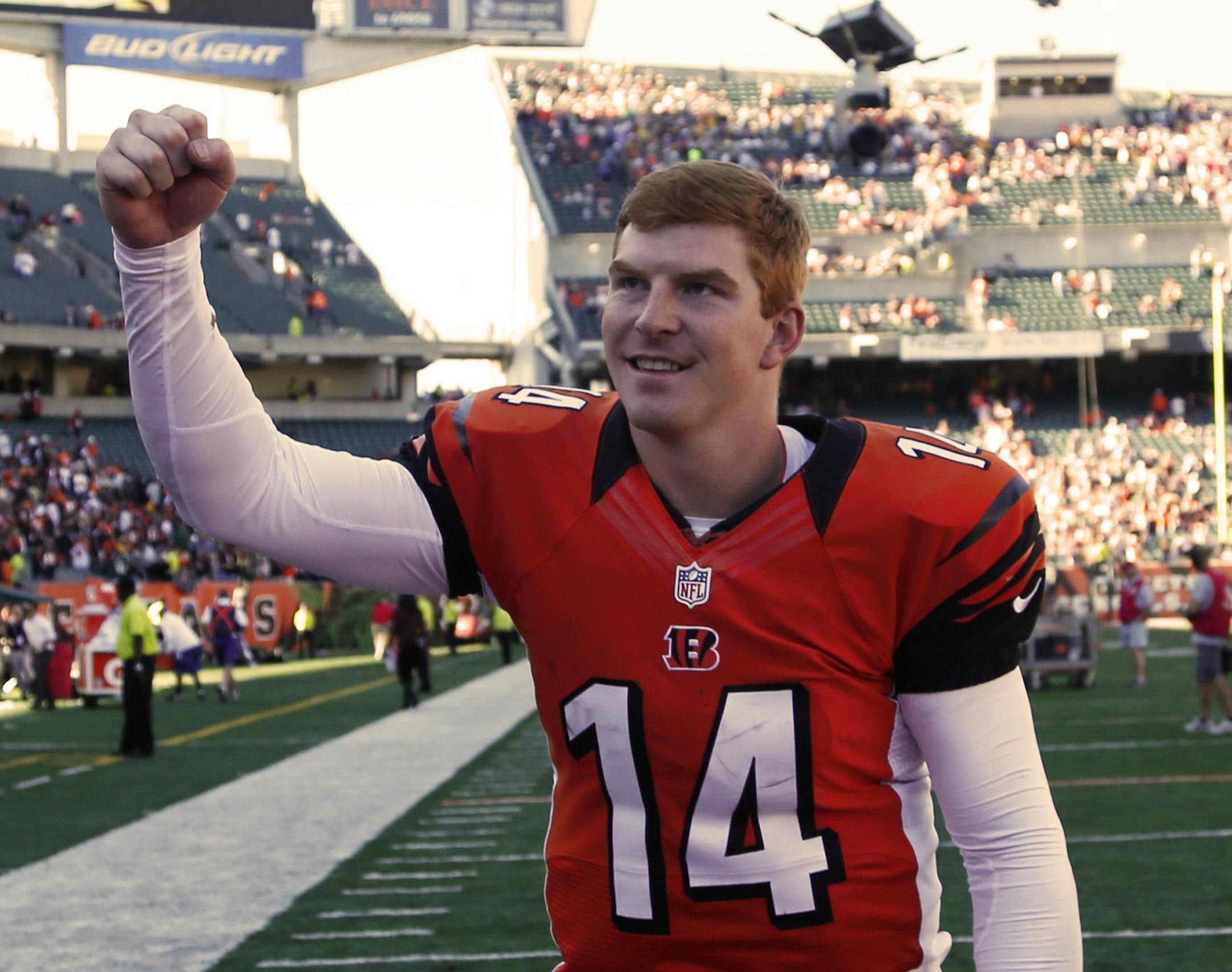
The Bengals had the fourth overall pick and an unorthodox plan to boost its passing attack. They would build in reverse order, taking the receiver, A.J. Green, first and the quarterback, Andy Dalton, second.
"I was a big Andy Dalton fan since the start of our evaluation process," Bengals offensive coordinator Jay Gruden said this week.
Cincinnati, obviously, hit a home run with Green. But the tail end of the plan required waiting through another 31 selections until the Bengals were back on the clock with the third pick of the second round.
Cam Newton already had gone No. 1 overall to Carolina. Jake Locker went next at No. 8 to Tennessee. Jacksonville, knowing the Vikings also needed a quarterback, traded from No. 16 to No. 10 and took Blaine Gabbert. After Houston took defensive end J.J. Watt, the Vikings took Christian Ponder 12th overall.
"I was holding my breath, hoping [Dalton's] name would be written on our ticket and taken to the podium," Gruden said. "To me, he was the most accurate and poised quarterback available. Anticipation and accuracy are important in any offense, and particularly in this one."
Gruden and the Bengals aren't bragging. And critics would argue they aren't in position to brag too much since the 49ers took Colin Kaepernick one spot after Dalton.
But for what the Bengals were looking for, they believe they targeted the right quarterback for several years to come. At 6-2, 215 pounds, the so-called "holes" in Dalton's résumé were a lack of size and questionable arm strength.