

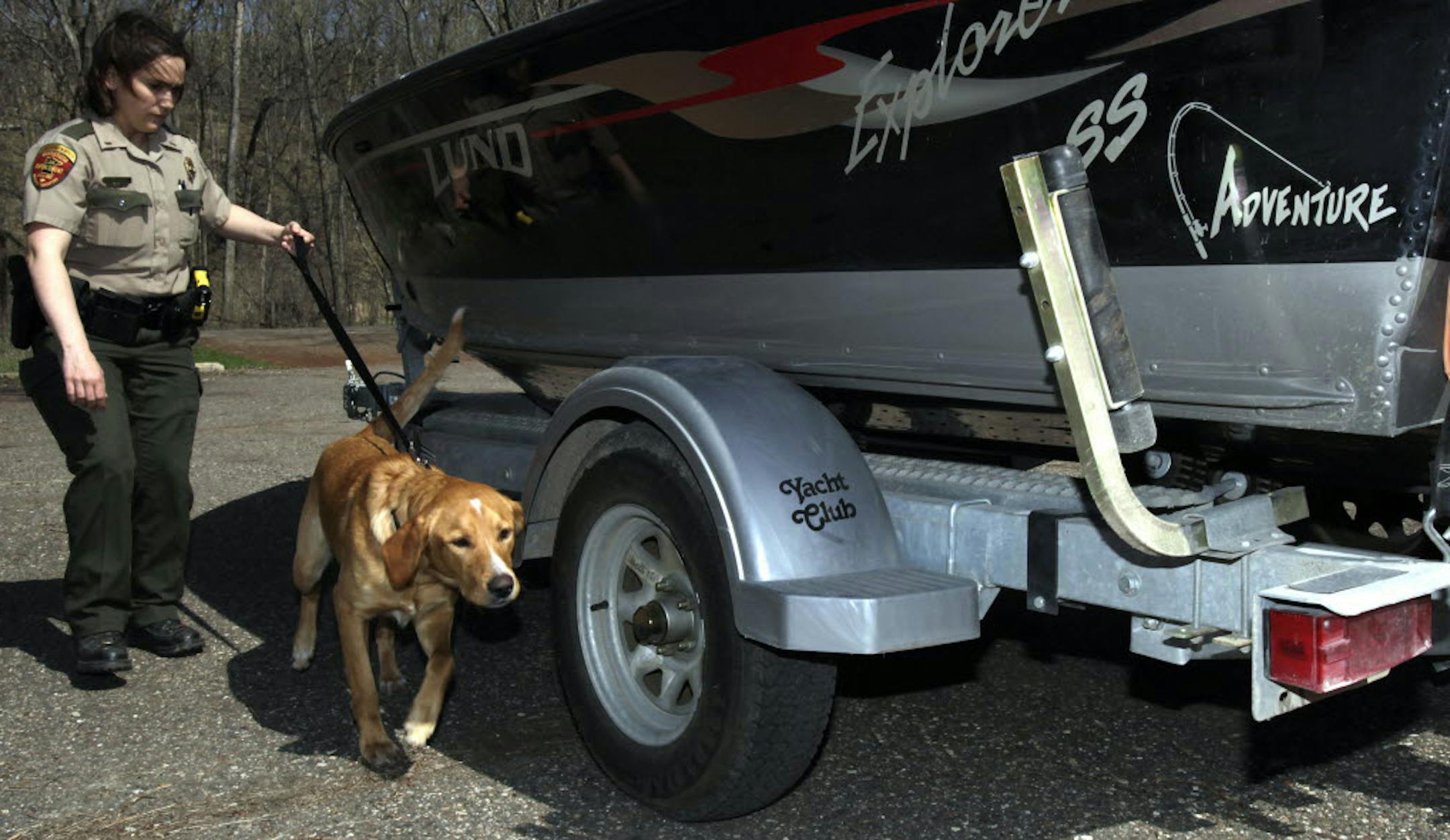
There's still a hefty layer of ice on area lakes, but park and natural resource crews are ramping up for another year of boat inspections and washdowns to prevent the spread of zebra mussels and other aquatic invaders.
City councils, county boards and park systems are allocating money and hiring seasonal inspectors. State natural resource experts are training them. Boat manufacturers are developing filters to keep invaders out of ballast water. All are aware that it's only a few weeks before Minnesota's 800,000 registered boaters begin to head onto open waters to fish, cruise, paddle and sail.
Last year, roadside inspections of boats and trailers showed a 19 percent violation rate of invasive species laws, said Ann Pierce, invasive species program supervisor at the state Department of Natural Resources. Those rules require boaters to pull plugs and drain bilge water that can carry invasives into uninfested lakes. Bait buckets and live wells also need to be emptied, and weeds and other debris must be removed from all boats, trailers and equipment.
"We need to get to a point where people understand what the laws are," Pierce said. "It's not so much focusing on the violation rate as realizing that getting to zero [violations] means protecting our lakes."
The DNR will launch a marketing campaign with TV and radio public service announcements and billboards to raise awareness about aquatic invasives, she said.
Expensive nuisance
Zebra mussels have infested about 40 state lakes and rivers, Pierce said, and are suspected of being in another 100 connected to them. The nonnative mussels have been confirmed in some of the state's most popular lakes, including Mille Lacs, the lower St. Croix River and Lake Minnetonka.
They attach themselves to boats, docks, rocks, native clams, and other solid surfaces, and proliferate by the millions. They grow only to fingernail size, but clutter beaches with razor-sharp shells, clog motors, change habitat for fish and insects, and jam intake pipes for water and power plants.
Pierce said the DNR will certify about 300 inspectors to work for city, county and park systems to check boats entering clean lakes and leaving infested lakes. About 150 DNR inspectors will be assigned to high-risk sites with lots of boat traffic, and will operate 23 portable decontamination units to disinfect boats and trailers with high-pressure hot water.


