

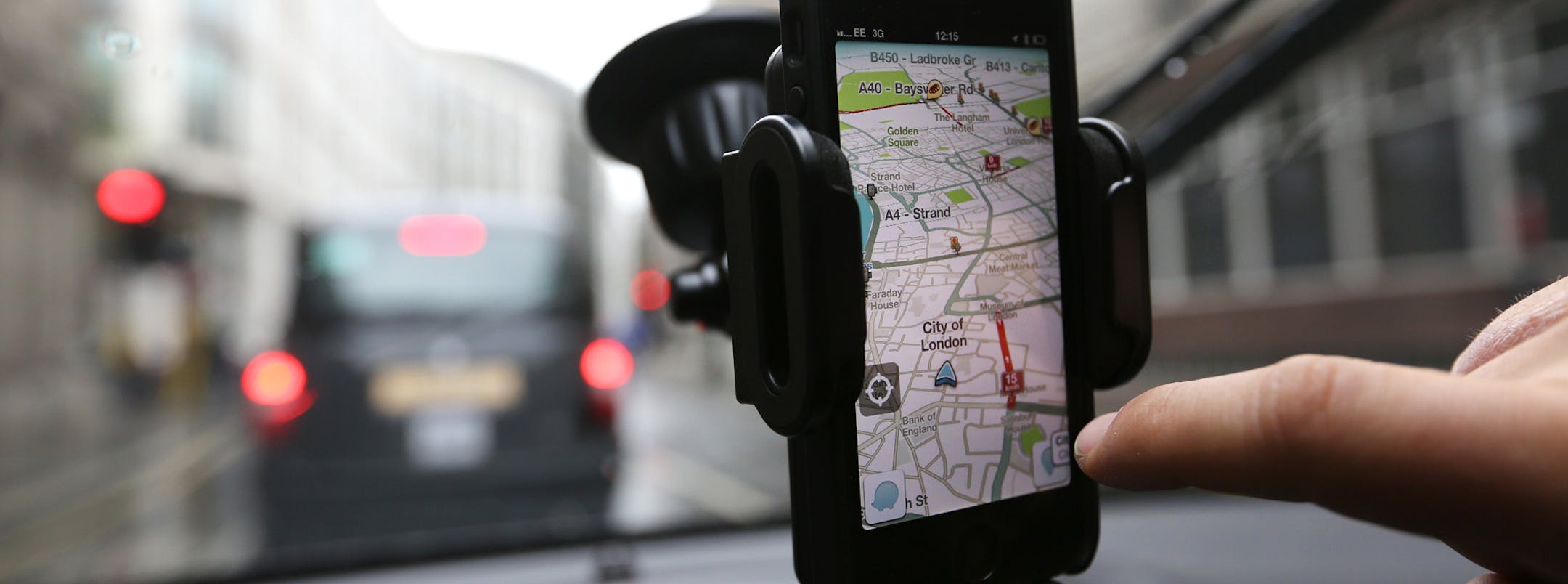
Tim Nixon, chief technology officer of General Motors's OnStar service, knew something was amiss when he saw his two sons taking the "suction-cup approach" to in-car navigation: They would turn their iPhones sideways, stick them to the windshield and use a free map app to find their way.
That represented a rejection of their father's work: convincing car buyers to pay $1,500 or more for a dashboard navigation system with an 8-inch screen and elaborate graphics.
Nixon came up with an answer: GM now offers a $50 map application for iPhones that can play on the dashboard touchscreen of a $12,170 Chevrolet Spark.
"We've historically had these onboard, embedded nav systems," Nixon said. "That's just not going to cut it anymore. The game has changed and the bar has been raised by these always-connected devices that bring fresh information into the car."
As more people use smartphones to traverse their daily drive, automakers' pricey and profitable in-car navigation systems are threatened. The reason is simple: Many map apps are free while embedded nav systems run from $500 to more than $2,000.
Even more compelling is the emergence of social-networking map apps like Waze. "Wazers," as the app's 48 million users call themselves, touch prompts on their smartphone to report traffic jams and accidents and then the app reroutes them onto a faster path. Last month, Google outbid Facebook to acquire Waze, paying about $1.1 billion for the app maker with offices in Israel and Palo Alto, Calif.
"If you have a choice between paying a lot of money on an expensive in-car nav system or a free app on your iPhone, which are you going to choose?" Di-Ann Eisnor, head of Waze's U.S. business, said in an interview. "It is a considerable threat" to automakers.
Even mapping-device providers, such as Garmin and TomTom, now offer apps that run on phones.


