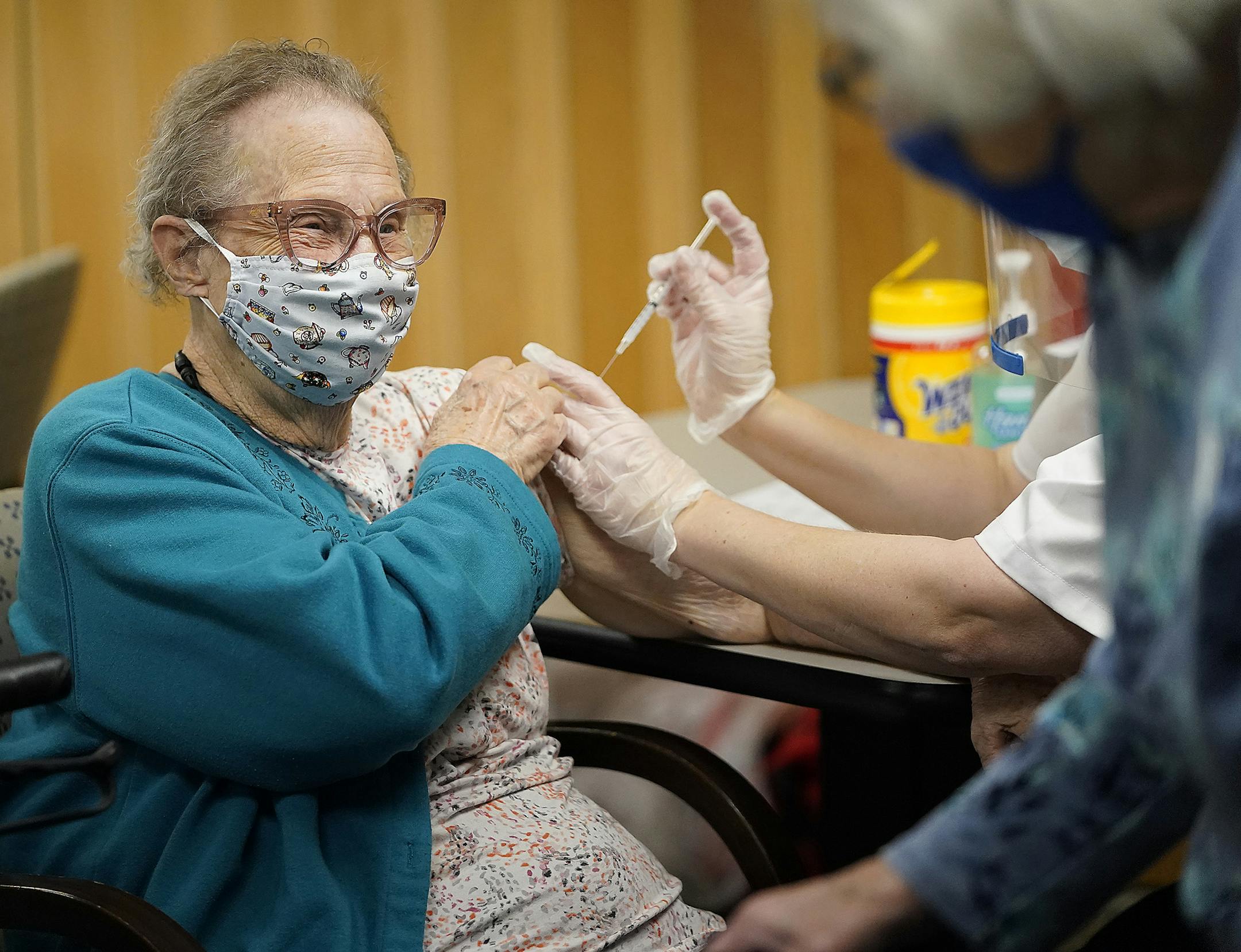
![Resident Arlene Studerman was among 200 elderly residents and workers who received the first of two Moderna vaccinations at the Oak Meadows Senior Living complex Thursday in Oakdale. Giving Studerman her vaccination was Walgreen's pharmacist Kelli Johnson. ]](https://arc.stimg.co/startribunemedia/JYMEZ7ENBQH27GYTLUO6IPTYJY.jpg?&w=1080)
It was a devastating autumn for residents and staff of Oak Meadows Senior Living. Over a two-week period in November, 10 residents of the assisted-living complex in Oakdale died suddenly from COVID-19 and 31 residents and workers fell ill from the virus.
After witnessing the horror of people gasping for air and dying, administrator Deborah Veit expected front-line workers to leap at the opportunity to be inoculated against the deadly virus when vaccines finally arrived at the facility this week. Instead, nearly half the 75 staff members who care for residents at Oak Meadows are refusing the shots out of fear of side effects and distrust in the vaccine's efficacy. "After all that we've been through, I was blown away that staff wouldn't want [the vaccine]," said Veit, executive director of Oak Meadows, which no longer has active coronavirus infections. "There's too much fear of the unknown."
Across Minnesota, senior homes and public health officials are facing an unexpected obstacle in their efforts to roll out the coronavirus vaccines and stem the relentless tide of infections: resistance from front-line workers who have witnessed the virus' deadly toll.
Long-term care facilities are reporting that 30 to 60% of their employees are refusing to take the initial doses of vaccines that were developed at record speed. Many workers are reluctant to be vaccinated until they see more evidence that people aren't suffering serious side effects and the shots are working, say the providers.
Senior home administrators said some front-line workers are convinced that the vaccines were rushed without rigorous testing. Many have read news reports of rare incidents in which people have suffered dangerous reactions, administrators say. Others are reacting to misinformation online, including unsubstantiated reports that the vaccines cause fertility problems or alter a person's genetic makeup.
Alarmed by the skepticism, some long-term care providers have started to turn up the pressure on employees by requiring them to accept the vaccinations as a condition of their employment or by screening out job candidates who aren't willing to take the shots. Other senior care facilities have begun offering gift cards, free meals and other incentives to get workers to roll up their sleeves, according to Care Providers of Minnesota, a long-term care industry group.
The surprising pushback threatens to disrupt state efforts to vaccinate 500,000 health care workers and long-term care residents by month's end. Front-line staff in long-term care facilities are a top priority because of their exposure to the virus and their critical role of preventing more infections among older adults, who are especially susceptible to dying from the respiratory illness. So far, 64% of the 5,817 COVID-19 deaths in Minnesota have occurred in long-term care communities, including 23 of the 43 fatalities reported Wednesday, state records show.
The phenomenon of elderly residents enthusiastically embracing the vaccines — while their younger and often healthier caregivers are apprehensive — has played out across the state.