

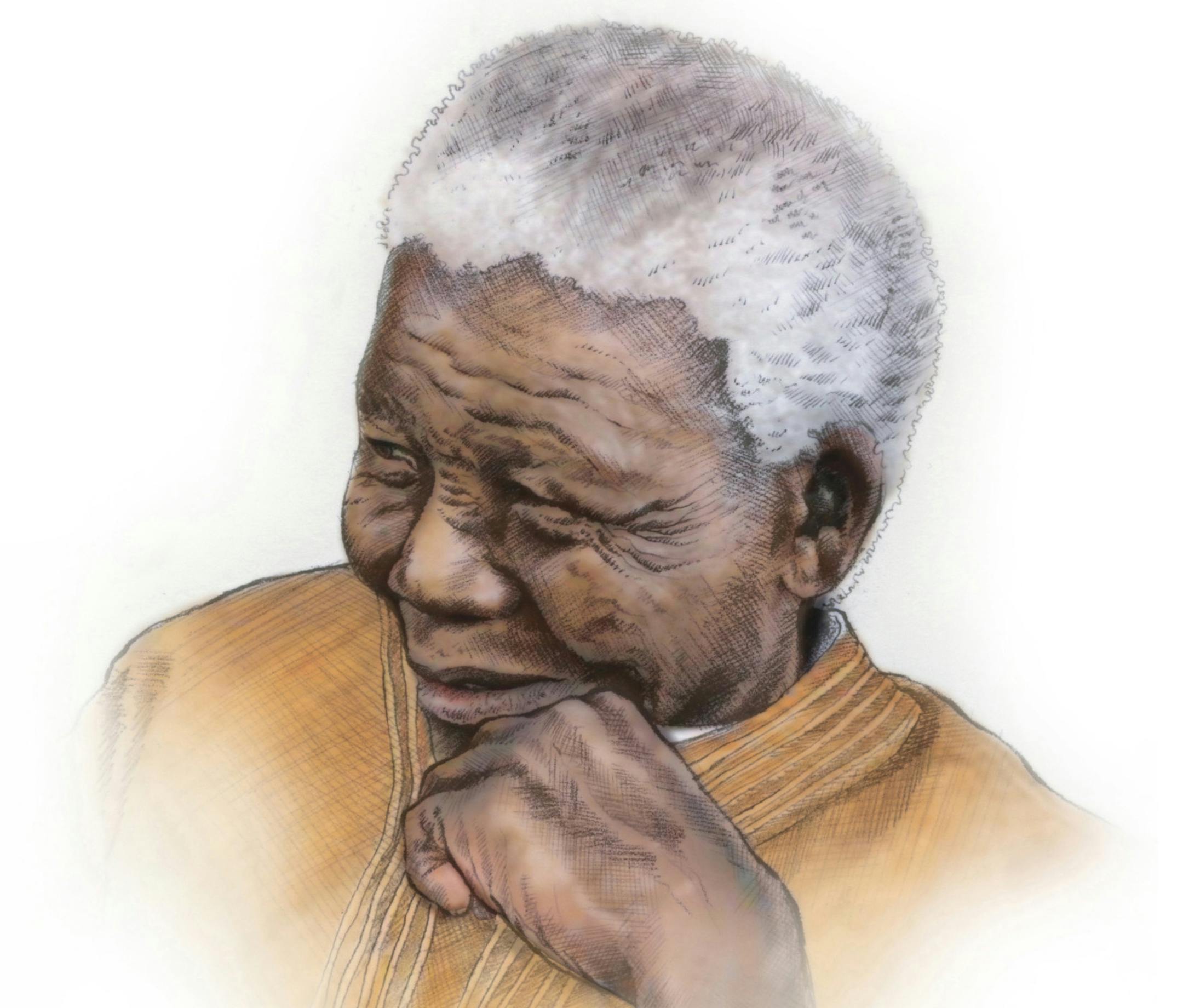
The day in 1990 when Nelson Mandela walked to freedom, I waited hours in the hot sun outside city hall in downtown Cape Town, in a crowd of thousands of blacks and mixed-race coloreds dying to glimpse their hoped-for savior. Mandela, who died yesterday at 95, had been locked away in prison for more than 27 years. As it happened, the excitement of witnessing history that day was tarnished by mishaps.
The mood grew ugly because of a five-hour delay in Mandela's scheduled arrival, partly due to his wife, Winnie, who had failed to show up on time at the Victor Verster Prison, 45 minutes outside Cape Town, where Mandela was last held. Some hotheaded youths had taken to skirmishing with police around the fringes. Gunshots and tear gas were in the air, while colored thieves were hard at work pickpocketing whites and blacks alike, even foreign journalists like me. (I lost a tape recorder ripped from my hands.)
Many coloreds gave up and drifted away long before his arrival, reflecting what I assumed was their deep ambivalence over the prospect of black rule given their own minority status and frequent alignment with the country's white minority.
Everyone in the crowd did, however, have one thing in common. No South African outside his white jailers and his fellow inmates had any idea what the 71-year-old Mandela looked like, or what he thought. Since his imprisonment in 1962, the government had banned the media from publishing his photo or words. The man so long awaited to lead his people out of the nightmare of apartheid to the promised land of democracy was a total mystery.
Would he lead a black uprising and call for the overthrow of the white minority government? Or would he continue negotiations with his former white captors for a peaceful transfer of power, talks that he had begun in 1985, from prison, in secret, with the iron-fisted Afrikaner president, P.W. Botha?
Mandela's first day of freedom offered one intriguing hint that he intended to make a determined effort to befriend the jittery white population. On his way to Cape Town, Mandela smiled and waved to the few whites who turned out along the road to see him. He even stopped to say hello to one very surprised white family he beckoned to come over to talk to him.
Still, I remember his debut before the nation and world as a bit of a letdown. He had never made a speech before a mass of television cameras, and the one he gave that day didn't excite the thinning crowd so much as did just his appearance. South African blacks were simply mesmerized to finally behold the man who embodied all their hopes, while whites stared at him with trepidation and culled his words for signs of their fate under black rule.
There was, however, one near tragedy on this historic occasion. The American black civil-rights leader Jesse Jackson was apparently determined to be photographed standing next to Mandela while he uttered his first words in freedom: His car plowed through the crowd up to where Mandela was to speak, almost running over several angry blacks who tried to stop it. And Jackson ended up as part of South African history that day.


