

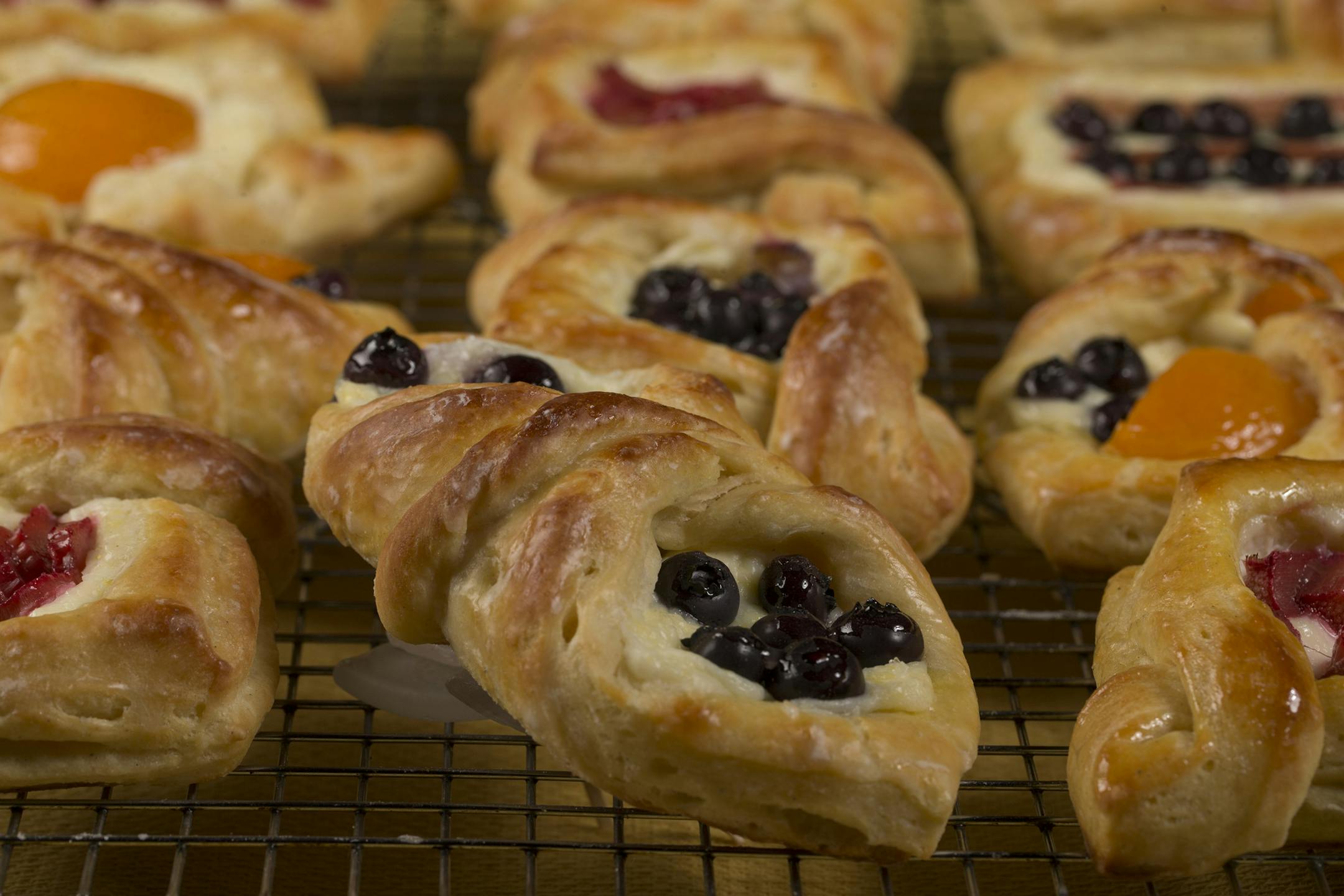
Denmark often has topped the United Nations' annual World Happiness Report, which rates countries' degree of contentedness.
Surely, one reason is Danish pastry.
Eating this tender treat is a joy, of course. But making Danish also can produce a deep sense of calm and satisfaction with its series of clear and deliberate steps.
You can't be in a hurry, can't watch the clock. Give yourself over to rolling and folding, to measuring and cutting, to filling and glazing. When you finally look over a cooling rack filled with jewel-toned fruits in golden pastries, you may be amazed at how content you feel.
A few years ago, the Wall Street Journal reported how therapists and mental health professionals across the country had begun instituting cooking and baking classes as a way to help people with depression. Baking, it found, requires people to focus on a singular activity, which gets their minds off their thoughts and feelings.
In other words, when you bake something, it's like taking a mini-vacation. With butter.
Danish pastry is a laminated dough, meaning that butter is distributed throughout the dough to create a flaky effect. But unlike a shatteringly crisp puff pastry, Danish dough has eggs, which makes the pastry more tender, more bread-like.
Now, you may not achieve pastry shop perfection the first time out, but that's the cool thing about baking: We learn something more each time we repeat a recipe — how the dough should feel, how much flour to use when rolling, the importance of cutting precise squares.


