

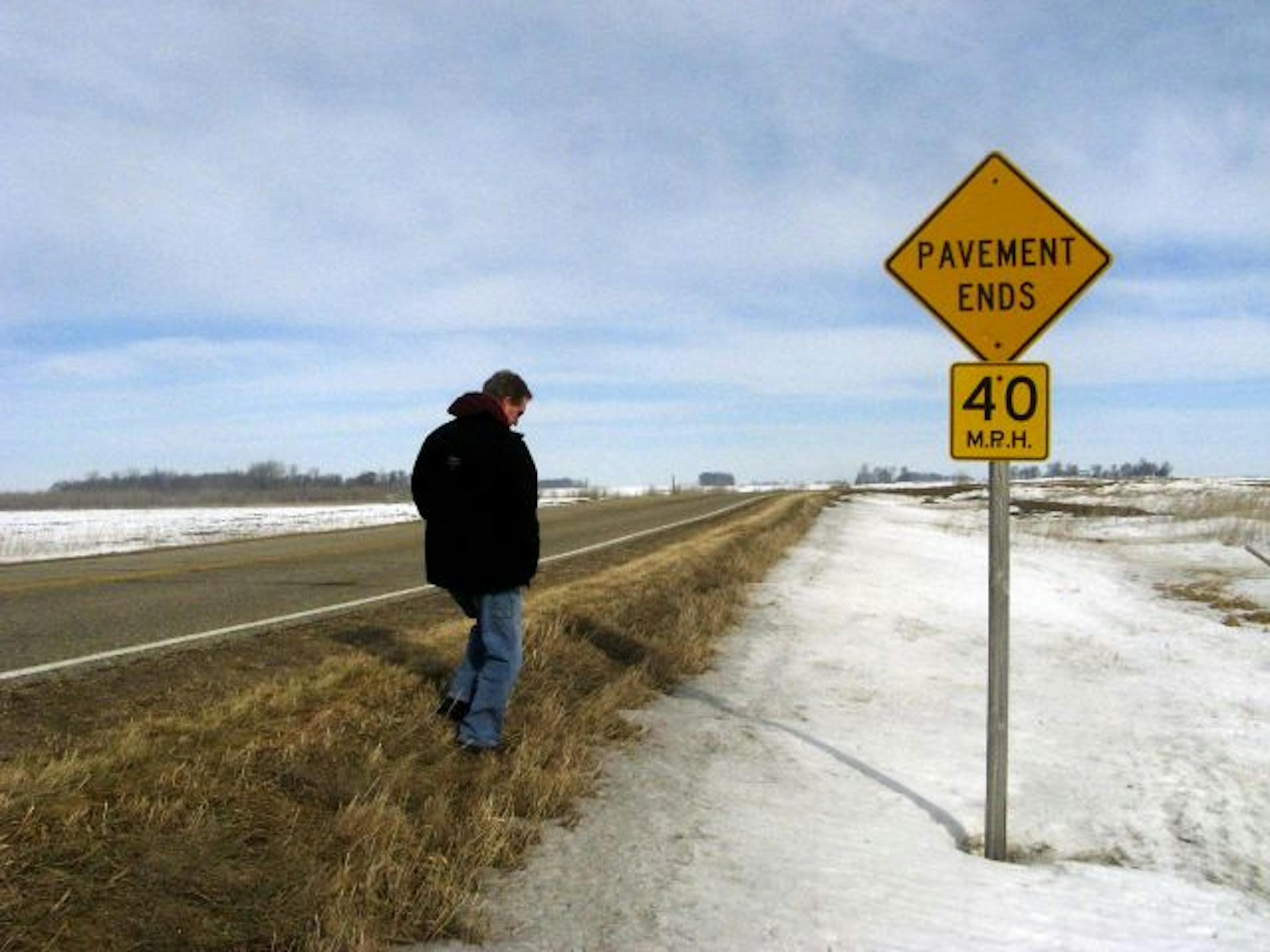
LANSING, IOWA - In the rolling countryside along the Minnesota border, the lonesome, dusty roads seemingly outnumber the people. So when Tony and Gertie Monat were looking for a place to live 14 years ago, they were happy to find a house with the bonus of a paved surface in front of it.
Now that pavement has been pulverized. The county government couldn't afford to resurface it, and the road in front of the Monats' white rambler is back to soft gravel. Amid the regular swirl of dust and flying stones, they can't help but feel they've lost a piece of modern life.
"We definitely miss the hard surface," Gertie Monat said. "I'm like, how can you take that away now?"
The paved roads that finally brought rural America into the 20th century are starting to disappear across the Midwest in the 21st. Local officials, facing rising pavement prices, shrinking budgets and fewer residents, are making tough decisions to regress. In some places, they have even eliminated small stretches of gravel road altogether.
In states like South Dakota and Michigan, the reversions are bringing substantial changes to the landscape. Minnesota has managed to mostly escape so far, but at a conference in Shoreview last month some engineers acknowledged changes might be looming.
"In a way, this is a step backwards," Otter Tail County Engineer Rick West told the group, as he kicked off the discussion about reverting to gravel. "But I think it's reality."
Michigan has changed more than 100 miles of pavement to gravel. After one road was torn up a year and a half ago, the County Road Association of Michigan bottled the millings and asphalt and sent them to state legislators as a message.
In North Dakota, a couple of stretches nearly 10 miles long have gone to gravel along with a sprinkling of smaller patches. County leaders are discussing more such changes, a transportation official there said.


