

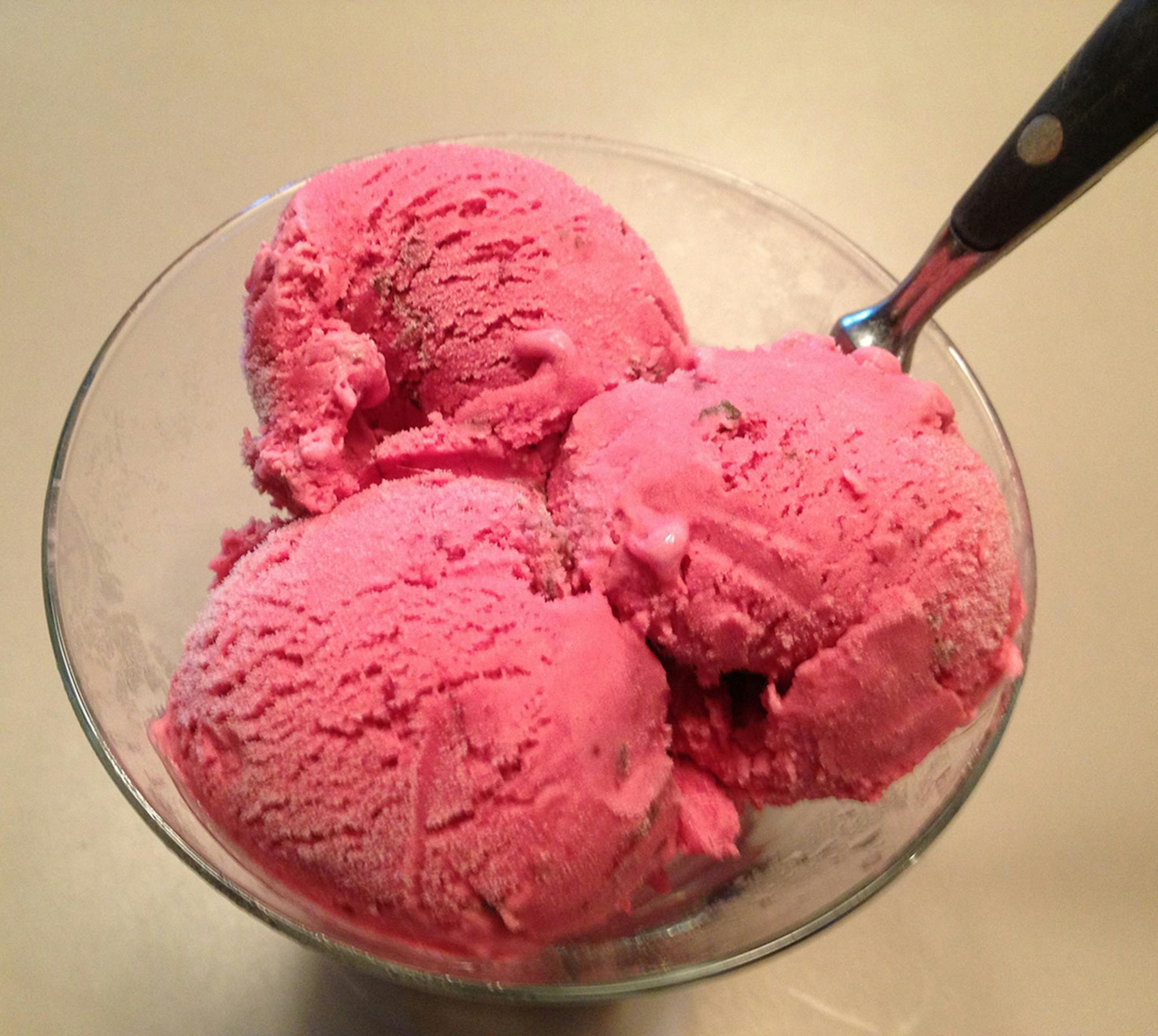
In my extended family, there were uncles who were more successful than my dad, aunts more affectionate than my mom, and cousins far more endearing than me or any of my siblings.
But two things kept the whole clan flocking to our house summer after summer: an enormous White Mountain ice cream freezer, and (thanks to Dad's reliable little herd of Holsteins) enough fresh cream and milk to get it cranking whenever the impulse struck.
The attraction to ice cream runs deep. As food science writer Harold McGee puts it, "Ice cream is a dish that manages to heighten the already remarkable qualities of cream. By freezing it, we make it possible to taste the birth of creaminess, the tantalizing transition from solidity to fluidity."
You could say ice cream is a miracle that happens in the mouth — a feat that required a serendipitous combination of will, work and wisdom.
Storing winter ice to relieve the summer heat dates back to the ancient civilizations of Mesopotamia, China, Greece and Rome, where servants harvested mountain snows and hauled it great distances for the comfort of the royals.
It was only natural that chefs would put that ice to use. A frozen combo of rice and milk was reportedly eaten in China around 200 B.C. And the Roman emperor Nero (37-68 A.D.) is said to have liked his fruit mixed with ice — cooling himself with something that sounds a whole lot like a snow cone.
Forerunners existed in several cultures. But historians generally agree that the dish we'd recognize as ice cream was born much later, in Italy sometime in the 1600s.
Sicily claims to be ground zero. And despite what "The Godfather" led you to believe about Sicilian integrity, the lore is hard to refuse. Sicily's imposing volcanic peak, Mount Etna, has been described as a natural refrigerator, providing both snow and volcanic ash to keep it insulated. What's more, the island's Arab occupiers brought citrus, sugar and, quite possibly, a truly vital ingredient — the scientific knowledge that made ice cream's invention possible.


