

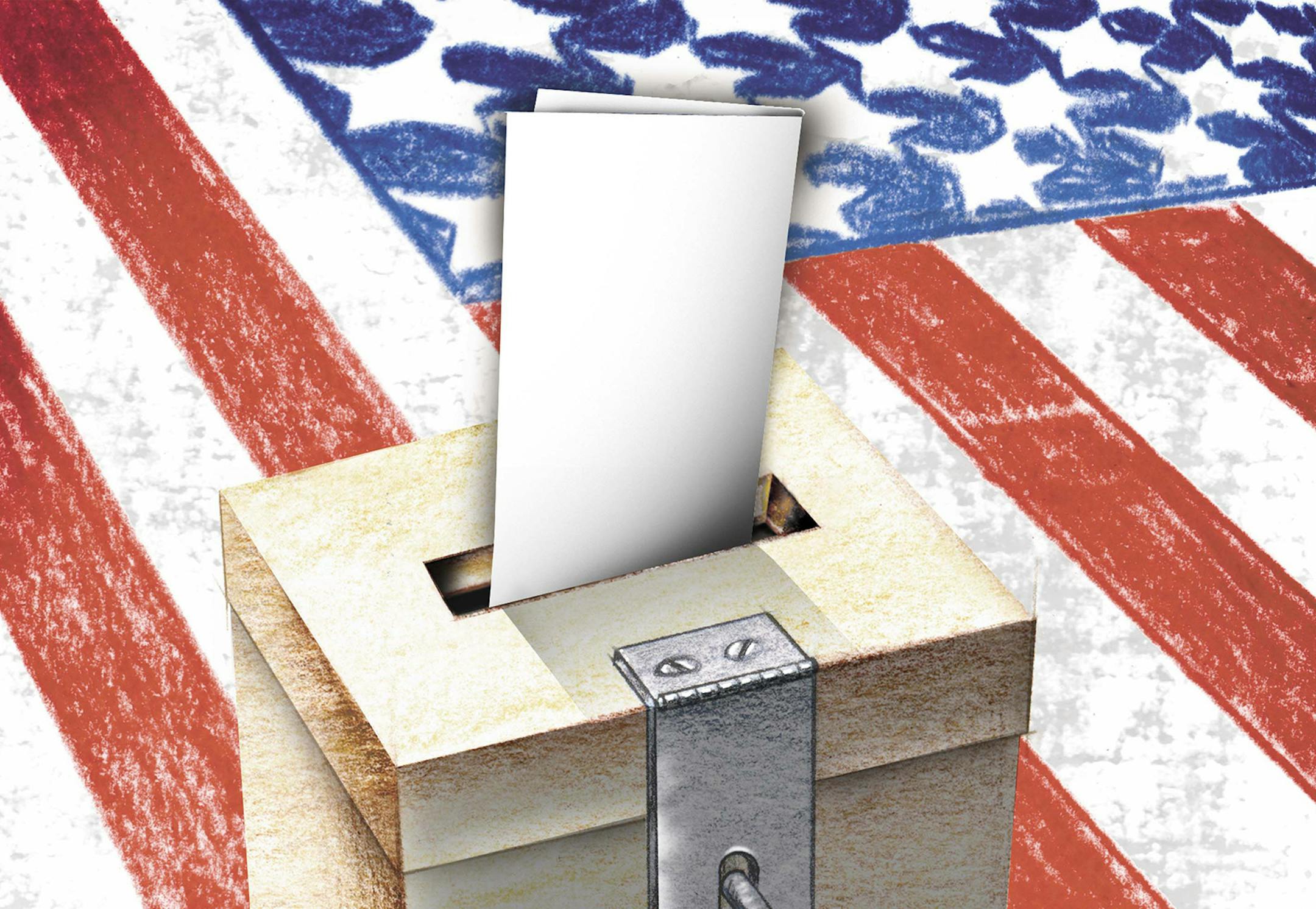
The Republican wave that washed over much of the nation Tuesday didn't completely bypass Minnesota. It was strong enough — particularly in Greater Minnesota — to flip the changeable Minnesota House back into Republican hands, ending two years of DFL grip on both chambers of the Legislature. (The Senate was not on Tuesday's ballot and remains in DFL hands.)
That result provided one big bright spot for Minnesota Republicans on Wednesday, after an election in which DFLers won every statewide race and re-elected all five DFL members of the U.S. House. It also sobered the DFLers, who know how difficult governance in St. Paul can be when power is divided, as it was from 1990 through 2012.
That's a valid concern. Yet we welcome the resurgence of a state GOP that was on the mat just two years ago, mired in debt and plagued with internal division. Minnesota needs at least two strong parties — and after this election, it's plain that it does not have three. The Independence Party that elected Gov. Jesse Ventura in 1998 lost its major-party status Tuesday, diminishing its chances of being a competitive force in the next several elections.
We also believe that despite the bad example set in hyperpartisan Washington, Minnesota Republicans and DFLers are capable of collaborating sufficiently to produce positive results.
The new House GOP majority would do well to learn from the mistakes of new majorities of both parties in previous years. That would include the last time a DFL governor and Senate and a newly elected Republican House were in charge, in 1985-86, when a Republican push for oversized tax cuts and deep reductions in welfare assistance for low-income single parents made for two rocky legislative sessions and a short tenure for the GOP. DFLers were back in charge of the House after the 1986 election.
The lessons from that year and all of the years since when the House changed hands (1986, 1998, 2006, 2010 and 2012): Don't overreach. Don't aim to please your own base in a way that neglects — or offends — the rest of the state. Don't stake out positions with the sole aim of putting the opposite party in a bad light, lest that light reflect back on you. Win-win solutions with the Senate and DFL Gov. Mark Dayton should be the new House majority's goal.
Such solutions ought to be achievable in 2015, particularly in these areas:
• Education tenure reform: A Republican House should bring improved chances for a bill to allow teacher performance as well as seniority to be considered when public school staffing adjustments are made. Dayton vetoed a 2012 bill with bipartisan backing that would have made that change, saying he wanted a new teacher evaluation system implemented first. That system is up and running this year. Given the new lineup at the Capitol, Dayton would do well to summon his political allies at Education Minnesota, the teachers' union, and invite them to help craft a compromise that helps retain high-performing young teachers.


