

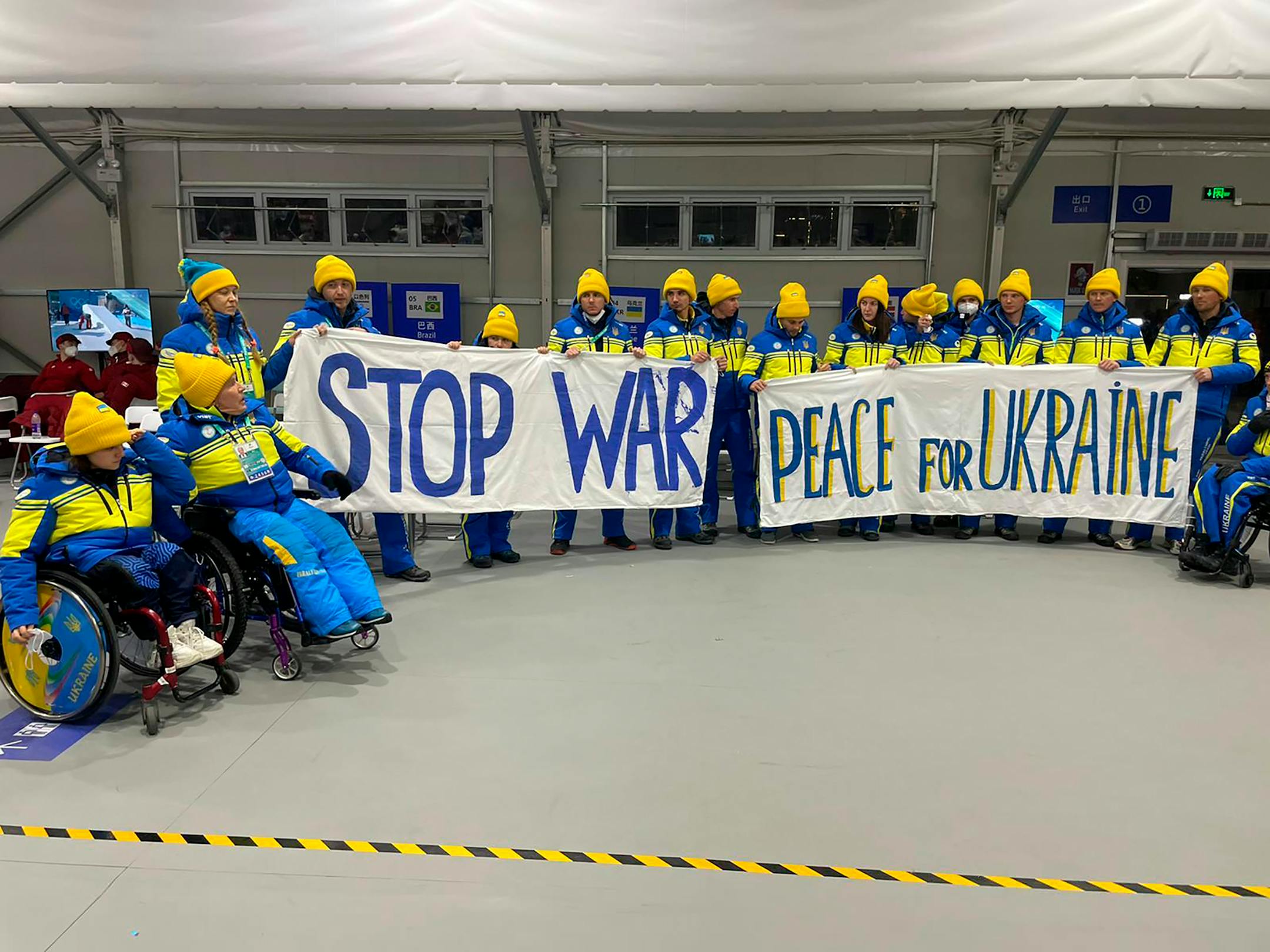
Before Beijing hosted the Winter Olympics in February, a more consequential competition between authoritarianism and democracy played out as Chinese President Xi Jinping and Russian President Vladimir Putin issued a 5,000-word statement declaring a partnership with "no limits."
That pact, and those words, might be put to an early test if recent reports of Russia requesting military and financial aid from China prove true. After a seven-hour meeting between U.S. National Security Adviser Jake Sullivan and his Chinese counterpart Yang Jiechi in Rome on Monday, Beijing should have no doubt that the U.S. and its revitalized allies would vigorously respond to material support of Russia's invasion of Ukraine.
Sullivan telegraphed as much on Sunday, telling CNN, "We are communicating directly, privately to Beijing that there will absolutely be consequences for large-scale sanctions evasion efforts or support to Russia to backfill them."
While the meeting in Rome was private, the public description of it as "intense" and "candid" by a senior administration official to the Washington Post suggests that the tension that existed between Washington and Beijing before the war has only intensified. The U.S., the official said, has "deep concerns about China's alignment with Russia at this time."
The U.S. — and democracies everywhere — should share that concern. Two authoritarian geopolitical giants seeking territorial expansion (Russia in Georgia and Ukraine, and China with its eyes on Taiwan) and expanded influence is a threat to free people across the world.
Short of turning this new Cold War into a hot one, coordinated financial sanctions are the most effective lever in an interconnected global economy. China should know that it will face its own sanctions if it bails out Russia.
"Any decision by Beijing to provide arms to Russia in the midst of its invasion of Ukraine could have seismic implications," Ryan Hass, senior fellow at the Brookings Institution's China Center and Center for East Asian Policy Studies, told an editorial writer in an e-mail interview. "It likely would hasten the cleavage of the world into adversarial blocs, with China and Russia on one end and much of the rest of the world on the other side. I expect the U.S. and Europe would respond strongly and swiftly to condemn such transfers and impose economic sanctions on China for aiding Russia's belligerence."
For its part, China denied responding positively to Russia's alleged request for military aid. But how can Beijing be believed when it's lied about its heinous human-rights record and other key issues, including its refusal to refer to Russia's savagery as a war?


