

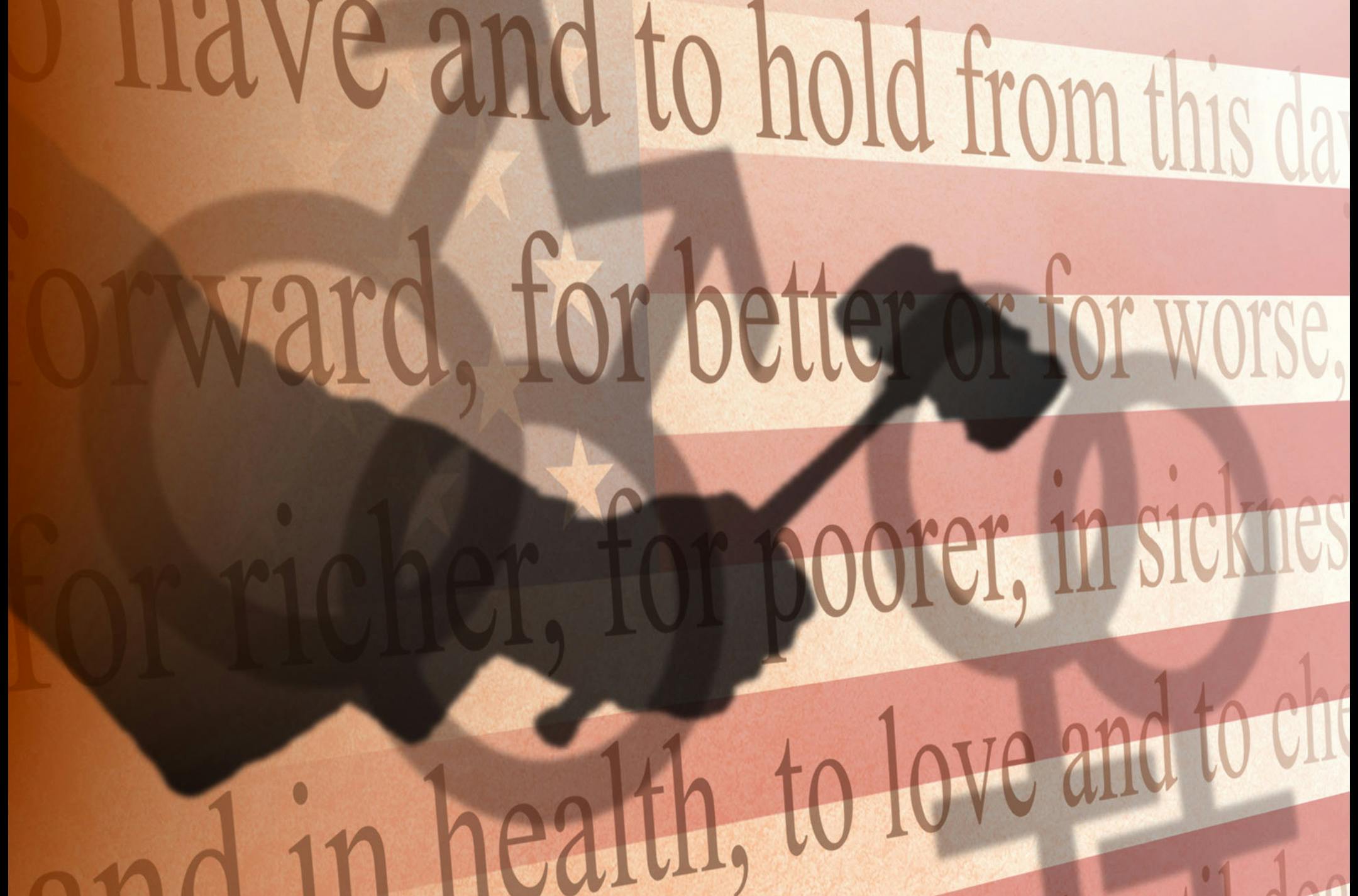
The federal Defense of Marriage Act, known as DOMA, was always a misnomer — an inaccurate, lofty-sounding label for legal discrimination. Since it was approved by Congress and President Bill Clinton in 1996, and reinforced in a majority of states, it was held up as a way to "protect'' heterosexual marriage and families.
But marriage between men and women was never in jeopardy simply because some gays and lesbians wanted to wed. What really needed defending were the basic equal rights of same-sex couples.
Finally, in two major decisions announced Wednesday, the highest court in the land has come to their defense. The U.S. Supreme Court ruled in a New York case that married, gay couples are entitled to federal benefits — effectively overturning a major provision in DOMA. The decision came in a case involving an elderly New York woman who challenged a $363,000 federal estate tax bill after her partner of 44 years died in 2009. The two were married in 2007 in Canada, and had her spouse been male, her tax liability would have been zero.
In the second case, the court left in place a trial court's declaration that California's Proposition 8 ban on same-sex marriage is unconstitutional.
The rulings represent major victories for GLBT rights. And they are important steps toward eliminating one of the last bastions of legal discrimination in America.
In the 5-4 DOMA decision, Justice Anthony M. Kennedy, who wrote the majority opinion, said: "The federal statute is invalid, for no legitimate purpose overcomes the purpose and effect to disparage and injure those whom the State, by its marriage laws, sought to protect in personhood and dignity. By seeking to displace this protection and treating those persons as living in marriages less respected than others, the federal statute is in violation of the Fifth Amendment."
Justices decided the California case on more technical grounds, with a different configuration in another 5-4 vote. In the California case, Chief Justice John Roberts wrote for the majority that the action was not properly before the court because Prop 8 supporters had no standing. Because California officials did not appeal a trial court's decision and because amendment supporters were not legally entitled to act on the state's behalf, the court ruled that it could not act.
The decision left in place a California trial court decision approving the marriages of two same-sex couples.


