

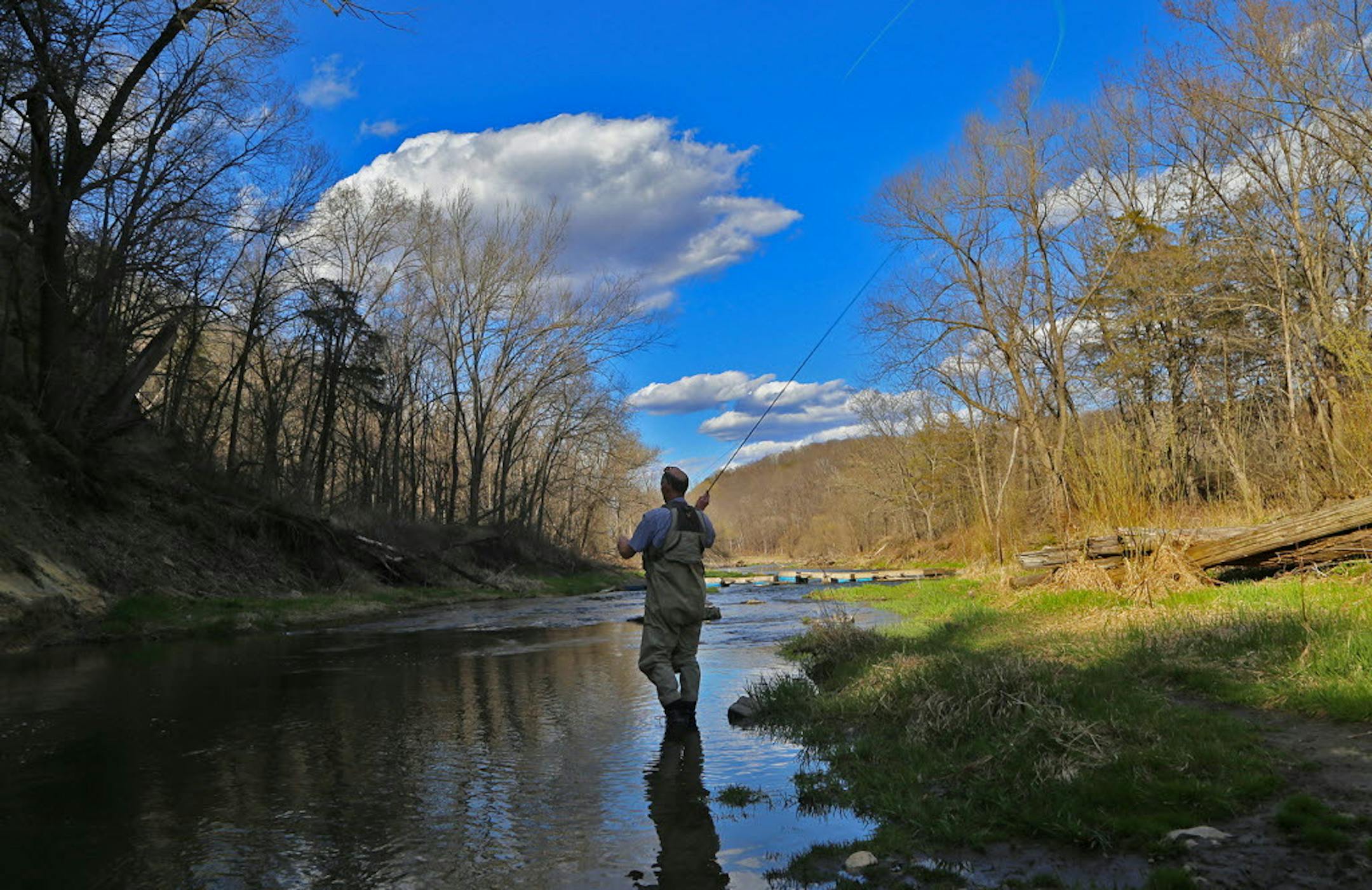
The question of what killed about 10,000 fish along a 6-mile stretch of the popular south branch of the Whitewater River on July 28 will remain a mystery.
A four-month investigation by three state agencies could not identify the cause, officials announced Tuesday. They concluded that though pesticides, fungicides, manure and compounds with heavy metals were applied to the farmland around that stretch of river around the time of a 1- to 2.5-inch rainstorm, none of those contaminants was found in high enough concentrations to kill the fish.
However, about two days elapsed between the thunderstorm and when a fisherman reported seeing thousands of dead fish along the banks of the river after the water receded, according to the 360-page report that detailed the investigation. By the time state investigators were able to collect samples, whatever caused the toxic event was long gone down to the Mississippi River, and the dead fish had decomposed, making them difficult to test.
Fish kills are common, but this one drew widespread attention because it occurred in a popular trout stream near Whitewater State Park. The state's report said that most often fish kills are tied to agricultural runoff, phytoplankton blooms and chemical pollution. Most go unreported — probably up to 90 percent in Minnesota — and among those that are, the cause cannot be determined about a third of the time.
Jeff Broberg, president of the Minnesota Trout Association who fishes the Whitewater and lives nearby, said that despite the effort that went into solving the mystery, he's disappointed with the conclusions.
"It's obvious from the get-go there is some agricultural land use problems that killed the fish," he said. At minimum, rather than focusing on finding a "smoking gun," the state could lay out what the possible risks were in the watershed, he said.
"That is condemning us to repeat this," he said.
Three agencies involved
Chris Niskanen, spokesman for the Minnesota Department of Natural Resources, which was one of the agencies involved in the investigation, said that it was exhaustive and that every possible contaminant was reviewed. The investigation did not draw the same conclusion as Broberg concerning the possible role of agricultural practices, Niskanen said.


