

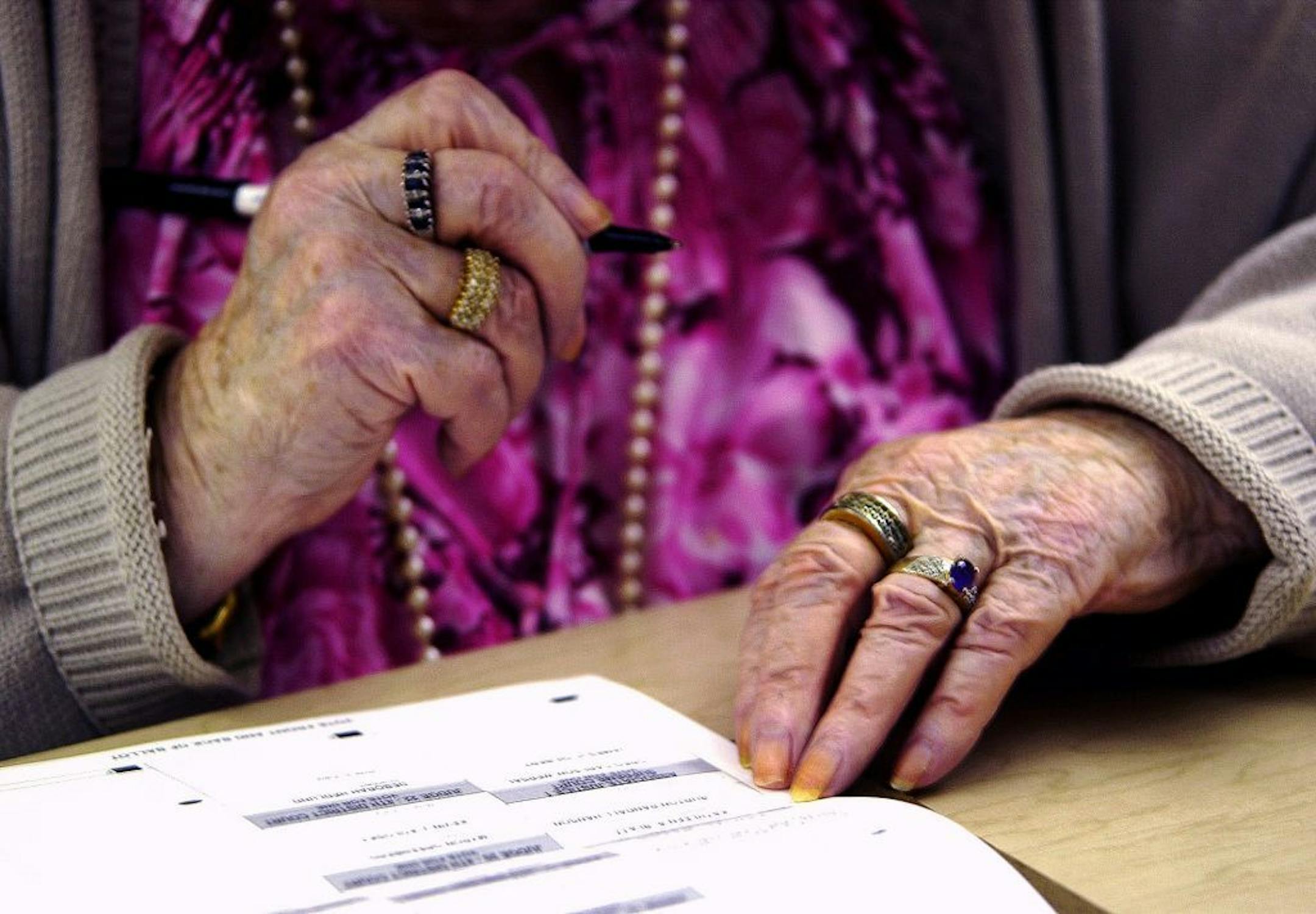
In the little southeastern Minnesota town of Bellechester, population 177, holding elections can be kind of a pain.
The town straddles two counties -- Goodhue and Wabasha. It must have at least two election judges from each county, but the Wabasha side has only 29 mostly older residents, so recruiting judges to sit all day waiting for some fraction of 81 registered voters to dribble in is a daunting challenge.
So Bellechester is considering leaving its community center closed in the next election and joining the growing number of Minnesota precincts where voters receive and cast ballots by mail.
"We think we'll save at least $600," said City Clerk Jill Buxengard, who added that she hopes it'll boost turnout by making voting more convenient for the elderly residents who make up, by her estimate, about 60 percent of Bellechester's population.
Since 1987, when voting by mail was first allowed in small, isolated Minnesota precincts, the practice has grown slowly and steadily to now include 535 mostly rural townships and small cities, or about 13 percent of all precincts.
Minnesota is one of 17 states that allow certain elections to accept mail ballots, according to the National Conference of State Legislatures. Two other states -- Oregon and Washington -- handle all elections that way.
Minnesota Secretary of State Mark Ritchie said the state's rising number of mail precincts is part of a growing national trend of expanding early voting options to make the process more convenient and efficient. "In many states we don't have a voting day any more; we have a voting period," Ritchie said.
A primary advantage


