

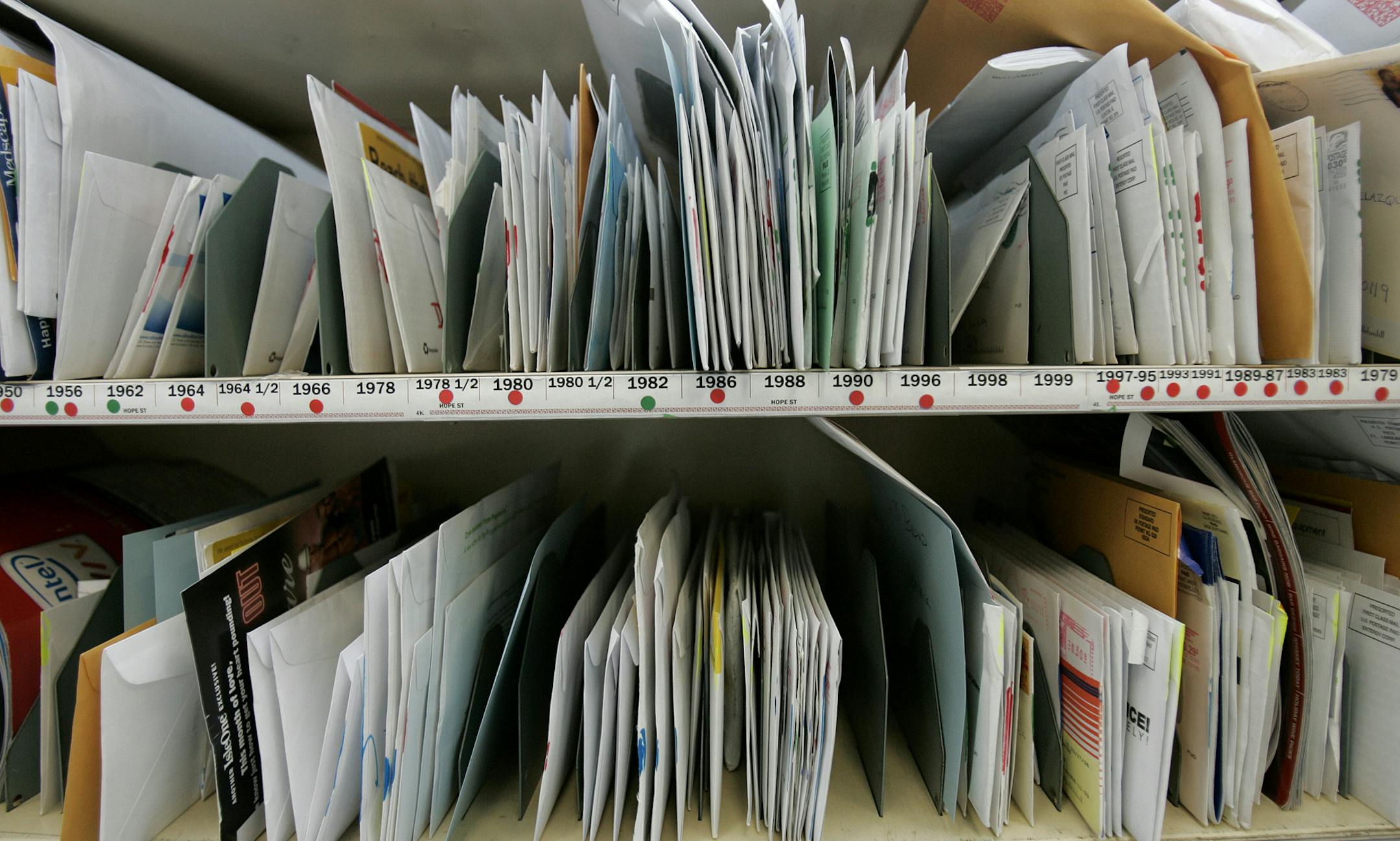
WASHINGTON – The U.S. Postal Service granted 49,000 requests by law enforcement to track people's mail in 2013 under a program that often lacked proper approval, adequate justification and required annual reviews, a recent audit found.
Those deficiencies can "hinder the Postal Inspection Service's ability to conduct effective investigations, lead to public concerns over privacy of mail, and harm the Postal Service's brand," according to an inspector general's audit published in May. Names of the agencies and police departments that requested the tracking were redacted.
The report shows yet another layer of the U.S. government's surveillance tactics at a time when the public is on edge about the extensive electronic spying. The Postal Service program's "insufficient controls" cited in the audit only add to the alarm for privacy advocates.
"This sort of fast and loose surveillance of individuals' communications is unacceptable," said Harley Geiger, senior counsel for the Washington-based Center for Democracy & Technology. "A program like this, which can reveal sensitive correspondence, must have proper oversight, authority, and justification — and it appears that privacy controls were developed, but not followed."
The program lets authorities ask to record the names, addresses and other information on the outside of mail to help protect national security or help in criminal probes. Local law enforcement uses the program often to locate fugitives, or to obtain evidence or identify forfeitable assets in criminal investigations, according to the report.
Of 196 tracking requests reviewed, "21 percent were approved without written authority and 13 percent were not adequately justified or reasonable grounds were not transcribed accurately," the Postal Service's inspector general office said in the audit.
"Also, 15 percent of the inspectors who conducted did not have the required nondisclosure form on file."
The New York Times published details on the little-noticed audit in its editions Tuesday.


