

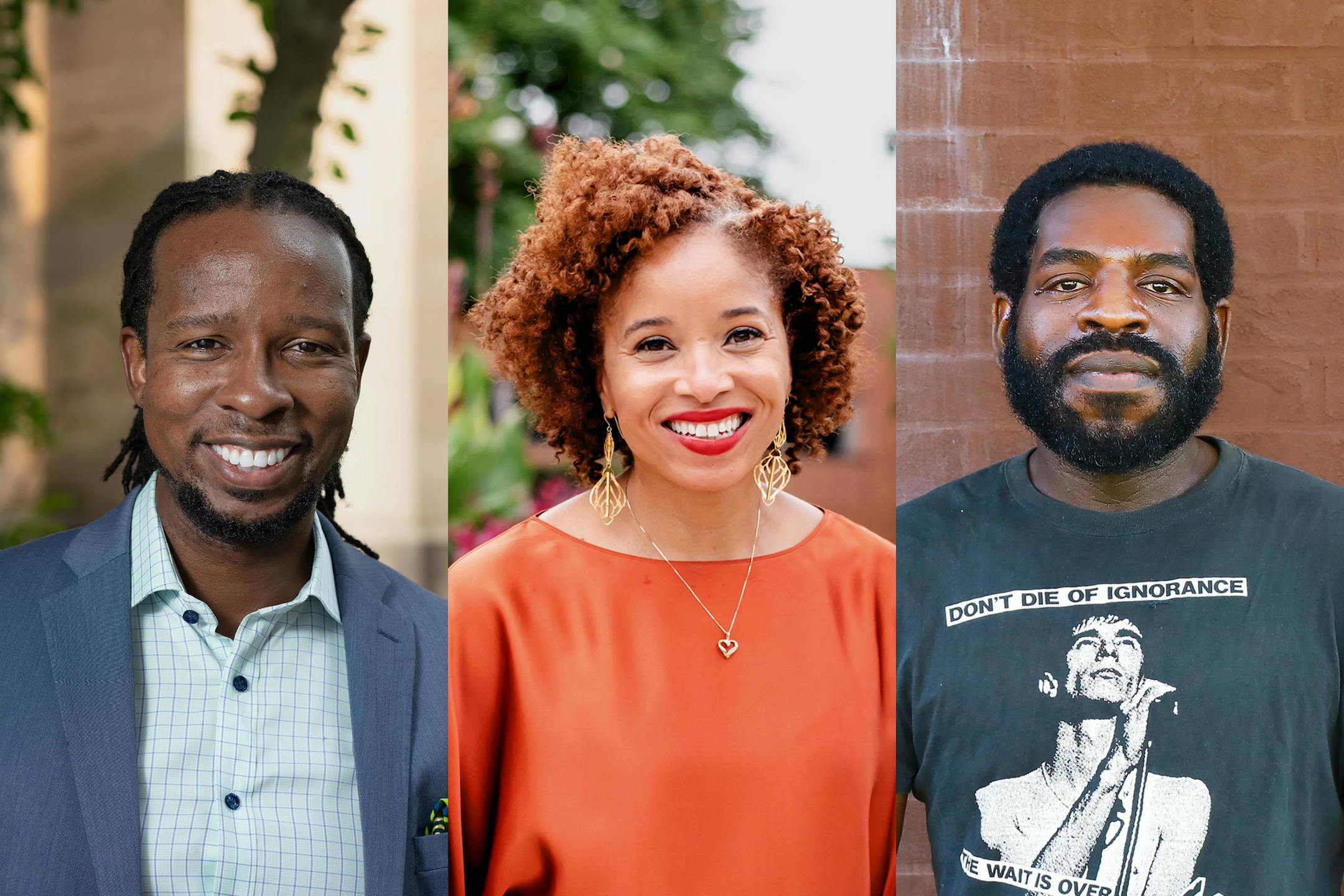
Historian and social critic Ibram X. Kendi is used to getting hate mail. And sometimes the disdain for him and his work takes the form of a phone call. So when he does not recognize the number he does not often answer.
Such was the case on a recent day when Kendi, who wrote the bestselling book "How to Be an Antiracist," ignored a call from Chicago. It would take a text-message exchange with the caller and a little online sleuthing, but he eventually discovered that the person calling was from the John D. and Catherine T. MacArthur Foundation. He was intrigued: Were they calling to talk about a potential research collaboration — or was it something else?
Kendi let them call again. And when he picked up, he would learn that the foundation was calling to convey happy news — the something else he had allowed as a possibility: He had been awarded a prestigious (and lucrative) MacArthur Fellowship.
"My first words were 'Are you serious?' " he recalled. Indeed, they were.
Kendi, 39, is perhaps the most widely known of the 25 people in this year's class of MacArthur Fellows. His 2019 book, "How to Be an Antiracist," has sold 2 million copies and established him as one of the country's leading commentators on race since the George Floyd protests last year.
The MacArthur Fellowship comes with a no-strings-attached grant of $625,000, to be awarded over five years. And it is known colloquially as the "genius" award, to the sometime annoyance of the foundation.
Cecilia Conrad, managing director of the program, said the goal of the awards is to recognize "exceptional creativity," as well as future potential, across the arts, sciences, humanities, advocacy and other fields.
Most of the 2021 fellows, while esteemed in their fields, have yet to become household names.


