(The Minnesota Star Tribune)
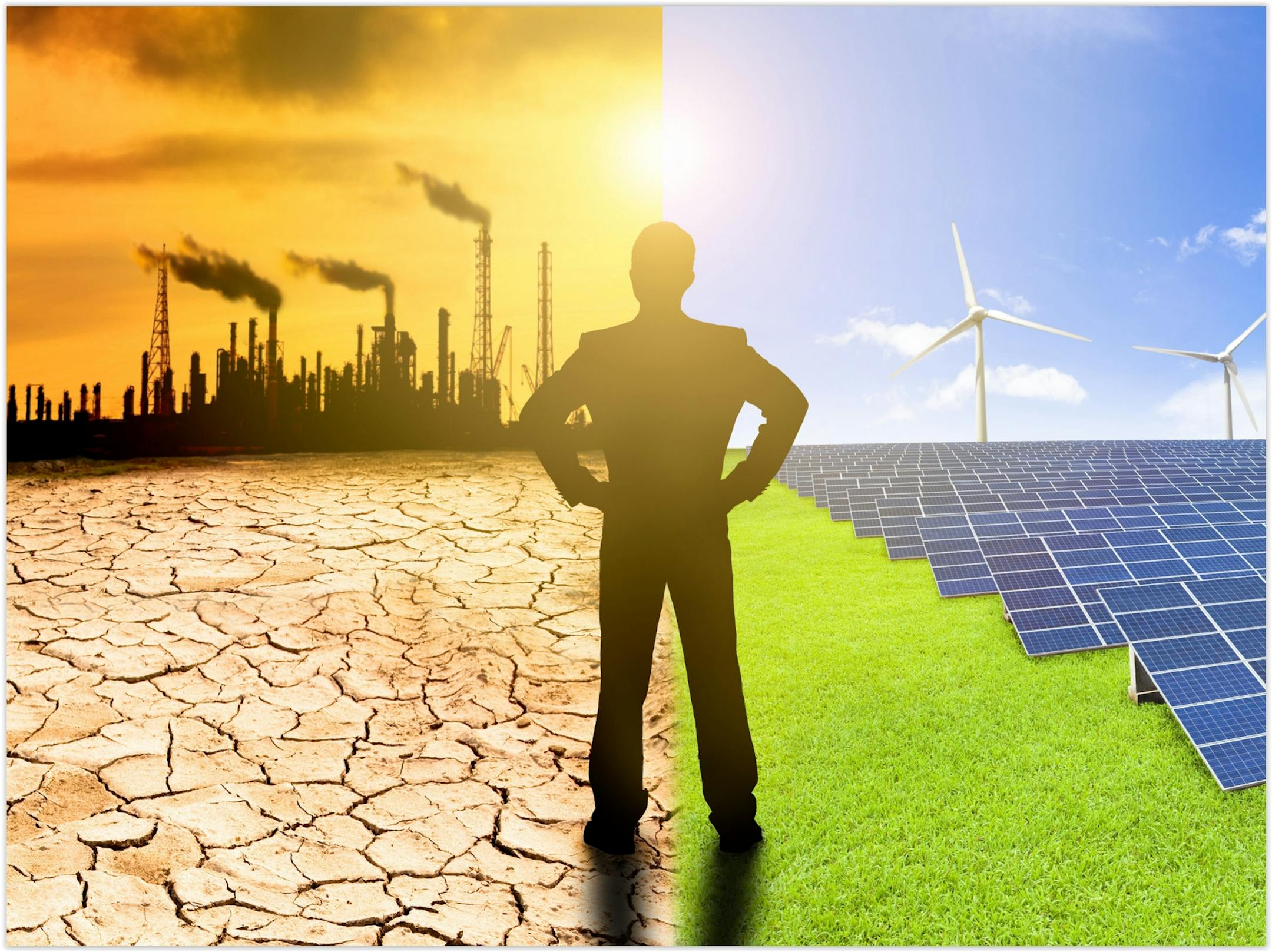
COP26: Document Leak Reveals Nations Lobbying to Change Key Climate Report. BBC News has details: "A huge leak of documents seen by BBC News shows how countries are trying to change a crucial scientific report on how to tackle climate change. The leak reveals Saudi Arabia, Japan and Australia are among countries asking the UN to play down the need to move rapidly away from fossil fuels. It also shows some wealthy nations are questioning paying more to poorer states to move to greener technologies. This "lobbying" raises questions for the COP26 climate summit in November. The leak reveals countries pushing back on UN recommendations for action and comes just days before they will be asked at the summit to make significant commitments to slow down climate change and keep global warming to 1.5 degrees. The leaked documents consist of more than 32,000 submissions made by governments, companies and other interested parties to the team of scientists compiling a UN report designed to bring together the best scientific evidence on how to tackle climate change..."
(Climate Central/The Minnesota Star Tribune)
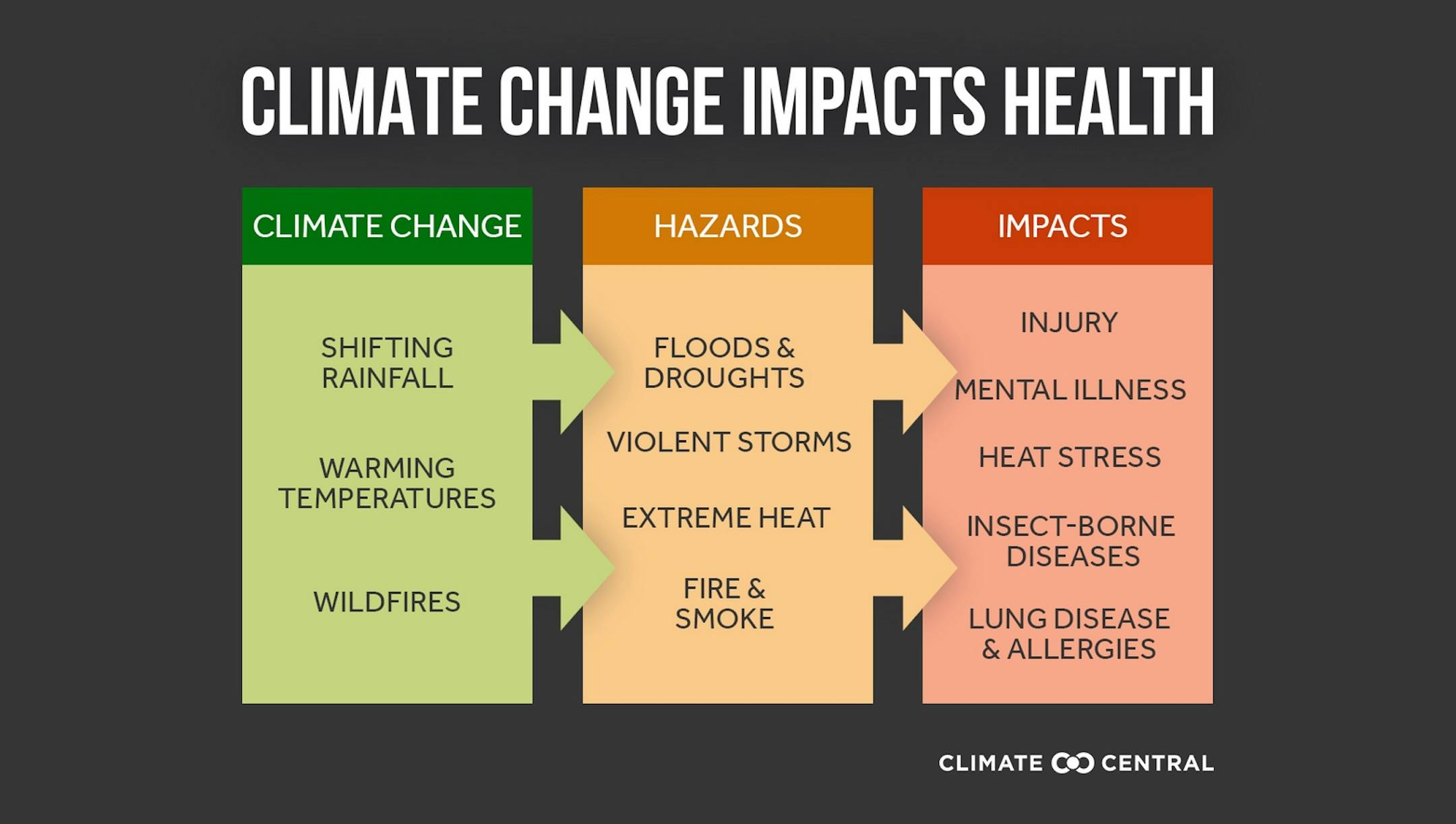
Climate Change and Health. Climate Central takes a deep dive and examines the health implications of a warming planet; here's an excerpt: "Climate change threatens the health and well-being of people around the world and health impacts are expected to worsen with additional warming, according to the sixth annual report from The Lancet. Our warming climate exposes more people to hazardous conditions—including extreme heat, wildfire, drought, floods, and air pollution. These conditions can harm our health in many ways, including heat-related illness, lung and heart disease, infections carried by insects or polluted water, mental or physical trauma, and even death. Americans are already feeling these effects. The Lancet's global report is accompanied by a policy brief focused on the climate-related health risks of recent heatwaves, drought, and wildfires across the U.S. Unequal heatwave health risk - American seniors and infants were exposed to far more heatwaves in 2020 compared to the 1986-2005 average, accounting for population increases. Rural impacts of drought - The cascading health impacts of drought—from the spread of diseases like Valley Fever in dry conditions, to mental illness tied to economic losses in the agriculture sector—are acutely felt by farmworkers (nearly 65% of whom identify as Hispanic) and Indigenous communities in rural areas of the Western and Central U.S..."
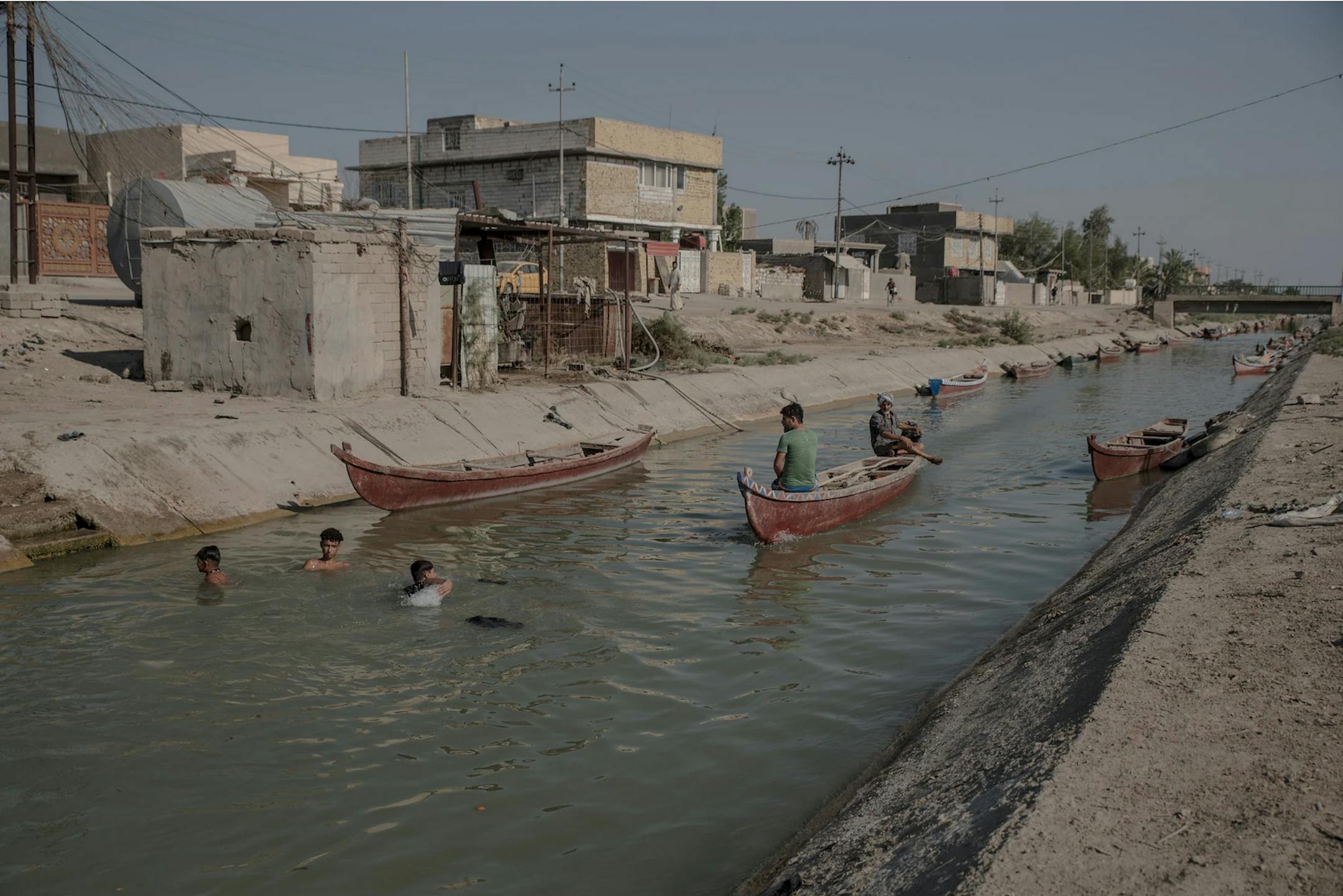
Children splash around a canal that connects the Euphrates River to the central marshes in Chibayish. (Emilienne Malfatto/The Minnesota Star Tribune)
From Cradle to Grave. Climate change is transforming much of the Middle East, including the birthplace of civilization, according to a story at The Washington Post (paywall): "No one lives here anymore. The mud-brick buildings are empty, just husks of the human life that became impossible on this land. Wind whips through bone-dry reeds. For miles, there's no water to be seen. Carved from an ancient land once known as Mesopotamia, Iraq is home to the cradle of civilization — the expanse between the Tigris and Euphrates rivers where the first complex human communities emerged. But as climate change produces extreme warming and water grows scarcer around the Middle East, the land here is drying up. Across Iraq's south, there is a sense of an ending..."
(TechCrunch/The Minnesota Star Tribune)
Your Green Credentials May Be Linked To Your Genes, Study Says. The Guardian has a summary of new research: "Some people are more environmentally conscious than others, and scientists say the reason could be in their genes. A study has found that identical twins have more similar views on conservation and environmentalism than non-identical twins. The researchers say this suggests there could be a link between people's genetic makeup and their support for green policies. "The goal is to understand why people are different, and such differences come from the combination of genes and environments," said Chia-chen Chang, a research fellow at the National University of Singapore and lead author on the paper, published in the journal BioScience..."
(NASA/The Minnesota Star Tribune)
Greater Than 99% Consensus on Human Caused Climate Change in Peer-Reviewed Scientific Literature. Here is the abstract from a new paper summarizing the consensus on man-made warming, courtesy of IOPscience: "While controls over the Earth's climate system have undergone rigorous hypothesis-testing since the 1800s, questions over the scientific consensus of the role of human activities in modern climate change continue to arise in public settings. We update previous efforts to quantify the scientific consensus on climate change by searching the recent literature for papers skeptical of anthropogenic-caused global warming. From a dataset of 88125 climate-related papers published since 2012, when this question was last addressed comprehensively, we examine a randomized subset of 3000 such publications. We also use a second sample-weighted approach that was specifically biased with keywords to help identify any skeptical peer-reviewed papers in the whole dataset. We identify four skeptical papers out of the sub-set of 3000, as evidenced by abstracts that were rated as implicitly or explicitly skeptical of human-caused global warming. In our sample utilizing pre-identified skeptical keywords we found 28 papers that were implicitly or explicitly skeptical. We conclude with high statistical confidence that the scientific consensus on human-caused contemporary climate change—expressed as a proportion of the total publications—exceeds 99% in the peer reviewed scientific literature..."
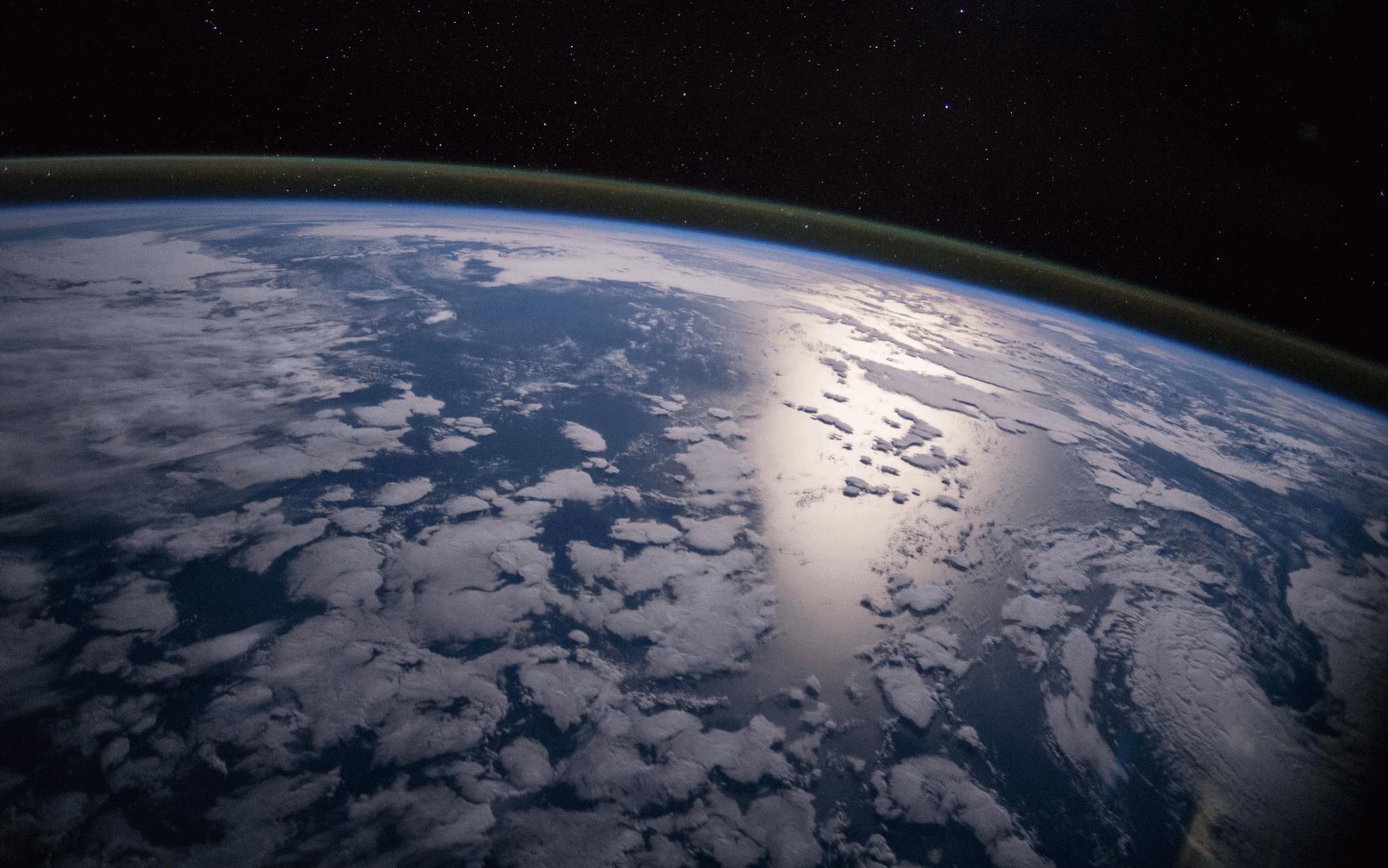
File image (Scott Kelly, NASA ISS/The Minnesota Star Tribune)
Study Of Studies Finds 99.9% Scientific Consensus On Human-Caused Climate Change As Impacts Ravage The Globe: Climate Nexus has headlines and links: "The scientific community's level of certainty on humans' causation of climate change is now on par with its agreement on evolution and plate tectonics. A review of scientific literature, published in Environmental Research Letters, found just 28 papers linked to climate scepticism in its trawl of more than 88,000. The findings support the IPCC's declaration in August that the science of human influence on the heating atmosphere is "unequivocal," and refute the concerted disinformation campaign by fossil fuel interests seeking to sow doubt and uncertainty about their products' causation of the crisis — the impacts of which are visible around the world. A UN report released Tuesday warned all of Africa's glaciers could vanish in the next two decades. Africa is responsible for just 4% of greenhouse gas pollution, but the continent and its people are exceptionally vulnerable to the ravages of the climate crisis. Climate change accelerates glacier melt, intensifies droughts, and worsens extreme precipitation events like those that cause flash flooding. Meanwhile, on Tuesday: the governor of California expanded a drought emergency to cover the entire state; Indian officials said flooding caused by torrential rain has killed at least 22 people in Uttarakhand state; and a separate UN report said climate change exacerbated the worst flooding to hit South Sudan in almost 60 years." (Scientific consensus: The Guardian; African glaciers: AP, New York Times $, Reuters, The Hill, Axios, CNN, USA Today, The Independent; Newsom declares drought emergency across California (CAL Matters, LA Times $, San Francisco Chronicle, Axios, CNN, USA Today; India: AP; South Sudan: Reuters; Climate Signals background: Glacier and ice sheet melt; Drought; Extreme precipitation increase)