
Lucky longspur survives unexpected trip

A handful of helpers and rehab center give a small bird another chance.

March 13, 2018 at 4:32PM
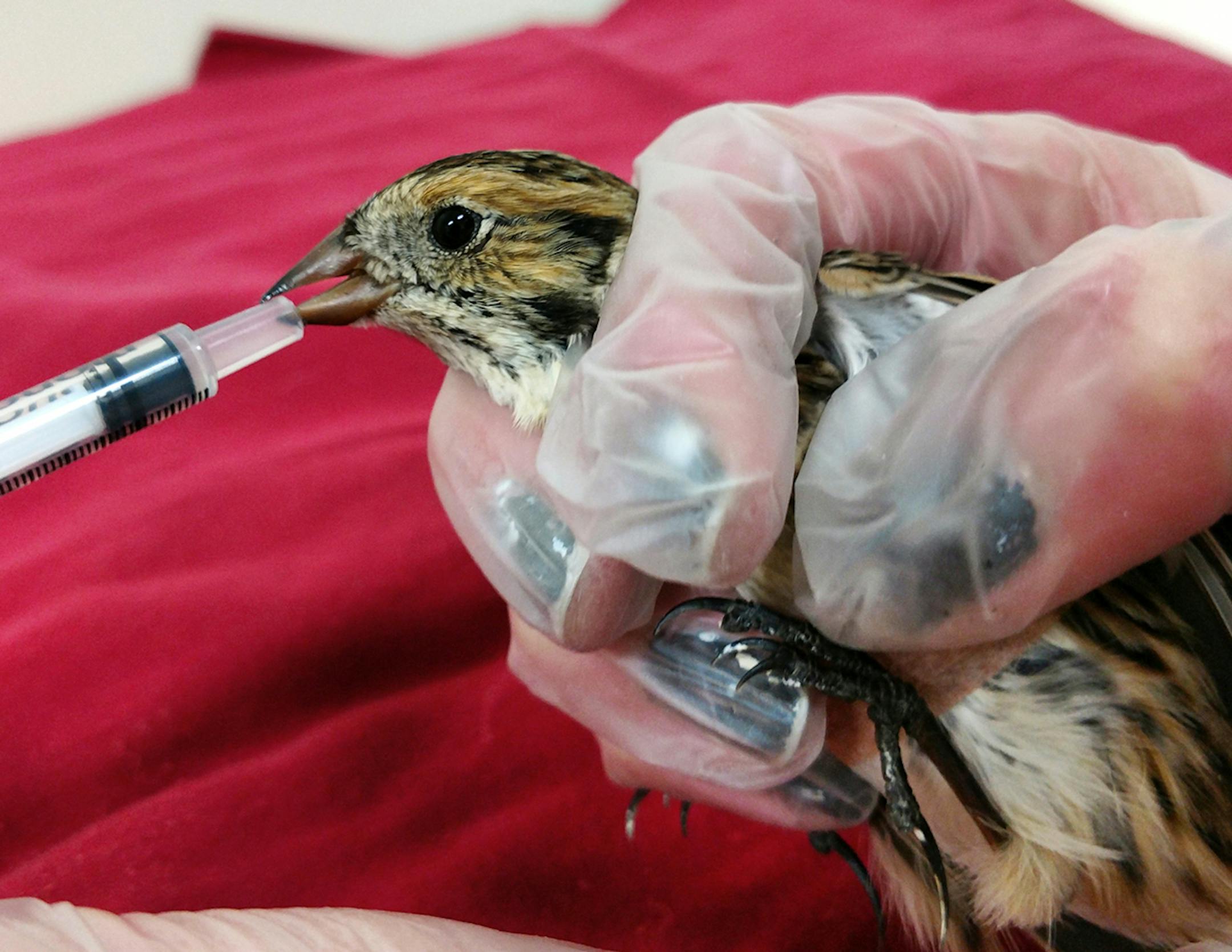
The longspur was treated at the Wildlife Rehabilitation Center in Roseville. (Photo by rehab staff.)
The longspur was treated at the Wildlife Rehabilitation Center in Roseville. (The Minnesota Star Tribune)

This is a story of three compassionate women and a bird that should have died but didn't.

It was late December, very cold, with snow blowing across a highway near Slayton, in southwest Minnesota. Karen Schmitz of Slayton was driving. She never saw the birds rise from the highway shoulder. There is no bump when a bird the size of a sparrow is hit by a car.

Part of a flock, a Lapland longspur flushed and flew up as the car passed. You've seen roadside flocks as they fling themselves into the air when you pass, looping back to land where you saw them foraging in the first place. This bird went the wrong way.

"When Karen got home she heard a noise and thought it was snow falling off the car," said her sister, Mary Lynn Fabro of Eagan, who told me the story.

There was a bird behind the grille. It had been trapped there for several miles, exposed to snow and windchill, but still running back and forth, trying to get out.

Karen's husband removed the grille to get at the fluttering bird.

"The bird looked pretty good, but it couldn't fly," said Fabro.

The longspur went into a box with food and water. Now what?
The women decided the bird should go to the Wildlife Rehab Center in Roseville. A friend, Lisa Wilson of Eagan, was enlisted to make that drive.

The longspur had a broken shoulder and some minor scrapes. Center veterinarians treated the bird, then caged it for recovery.

"It was remarkable," said Tami Vogel, communications director for the center. "I'm stunned the bird survived the initial impact," she said. "And it was a brutally cold day."

The longspur was released in Dakota County after 41 days of recovery.

Some Lapland longspurs winter here. They can be seen in open crop fields as well as along roadways. Often with them are snow buntings and horned larks.

There are four longspur species, two of which — the Lapland and snow bunting — are easily seen in Minnesota in appropriate habitat. They can be seen in all seasons but summer. They nest in the high Arctic.

Chestnut-collared longspurs nest in small numbers in three western Minnesota counties and one county on the Iowa border.

Smith's longspur is a migrant seen here rarely, in the fall. Sightings of McCown's longspur are accidental.

All are grassland birds found in winter in grain stubble and the grassy margins of airports — as well as highway shoulders. Their winter plumages are similar. In breeding season, they often are seen and heard making high, sweeping courtship flights.

In many cases identification is made by flight calls, quite similar calls. Very good birders can identify them this way. Keen ears really help.

On the road, it's difficult to make the quick identification required as the birds jump up in a blur, hopefully out of the way of your passing car.

Read Jim Williams' birding blog at startribune.com/wingnut.

Lapland Longspur has a mouthful of baby food.
Photo by Jim Williams
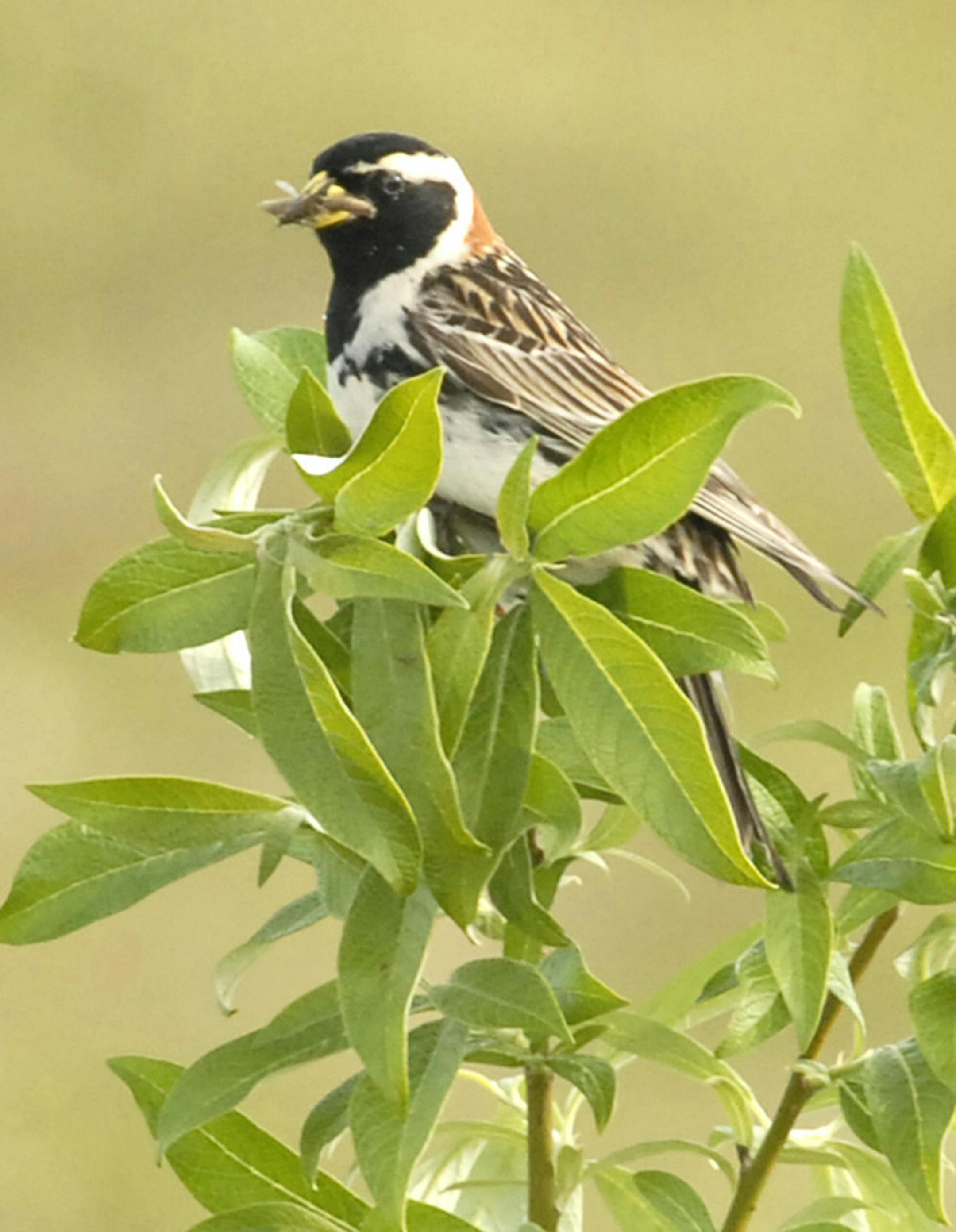
Lapland longspurs are among birds you’ll see foraging along roadsides in winter. They nest in the Arctic. (The Minnesota Star Tribune)
about the writer

about the writer

Jim Williams, Contributing writer

More from No Section

See More
FILE -- A rent deposit slot at an apartment complex in Tucker, Ga., on July 21, 2020. As an eviction crisis has seemed increasingly likely this summer, everyone in the housing market has made the same plea to Washington: Send money — lots of it — that would keep renters in their homes and landlords afloat. (Melissa Golden/The New York Times) ORG XMIT: XNYT58
Melissa Golden/The New York Times

It’s too soon to tell how much the immigration crackdown is to blame.