

Every year, more efficient machines are made for the kitchen: faster blenders, tougher food processors, spatulas made to withstand the heat of spurting hot caramel.
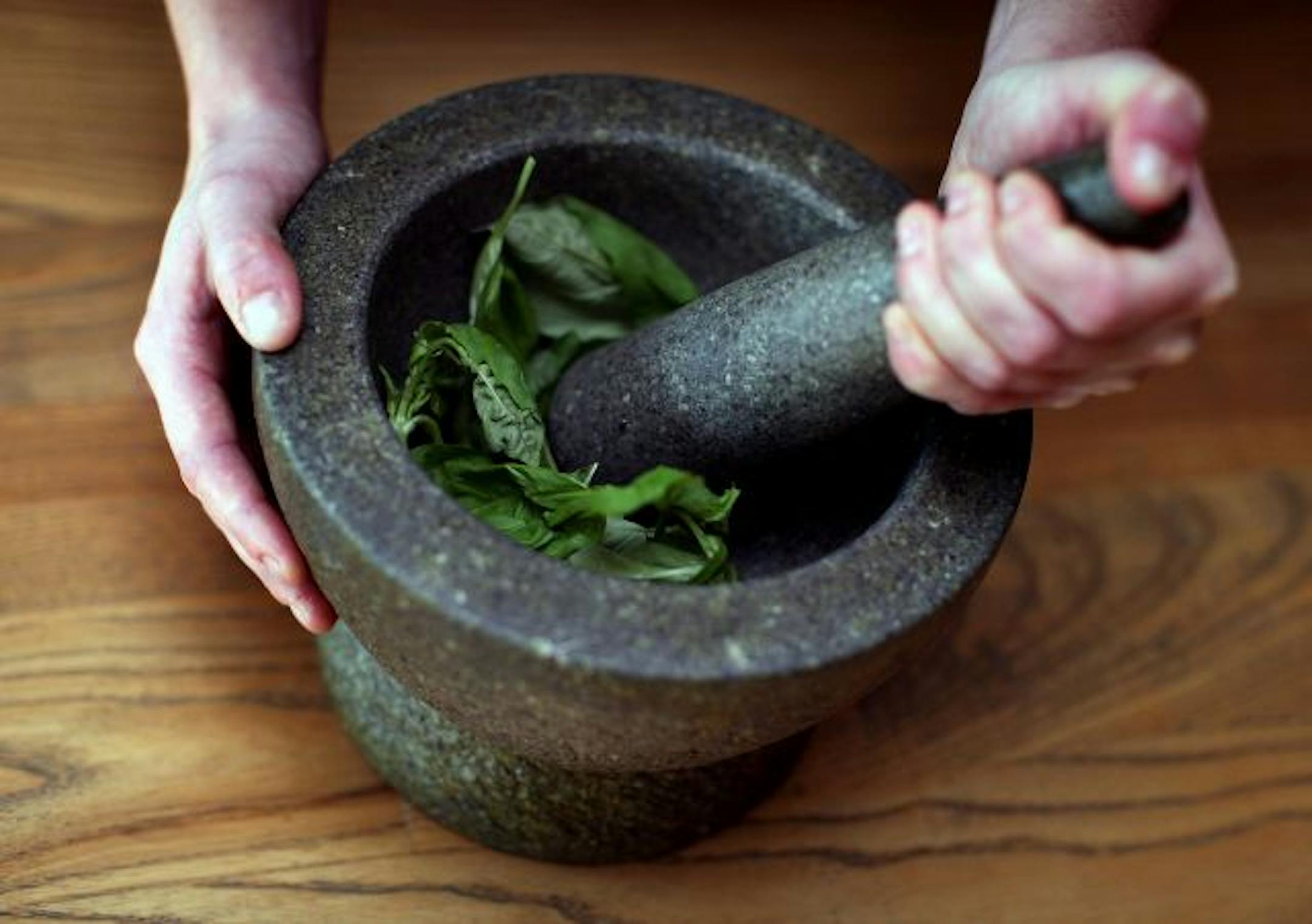
But nothing we've invented in the past 100 years can produce a better-tasting sauce than the ancient-looking granite pair, the mortar and the pestle, squatting on your countertop. Shiny electric machines may do it quicker, but a hollowed-out rock and its blunt pounder do it better.
If you're going to compare the mortar and pestle (and the large stone or granite ones are the best) with its contemporary equivalent, the food processor, the machine will win on some counts: speed and ease, for one thing. Cleaning time? If you include the minute for dragging it out and the time spent picking fibers of raw garlic from the serrated blade, I would say it's a toss-up.
When you want to pulverize a small amount of spice (a little black pepper, for example), a mortar and pestle works much better than a spice grinder. And on taste, arguably the most important aspect of cooking, the stone set often wins by a nose.
For sheer cooking pleasure, on that rare occasion when engaging in a repetitive mindless action (whether podding peas, skimming broth or pounding garlic) causes the present moment to hang in suspension and yourself to fall into a reverie, the mortar and the pestle blows all modern implements out of the water.
Yet when I set out to make all of my favorites sauces the old-fashioned way in a mortar and pestle, I wasn't too happy. My first aioli separated. I fixed it, but sat through dinner beneath a black-mood cloud, undone by a broken sauce but loath to admit it.
Take your time
My mind was set on the wrong tempo. Working in the mortar brings you into instant contact with old kitchen wisdom, the details we've forgotten, and advice from the elders is non-negotiable for a reason. The grandmothers were not kidding: Crush the garlic fully with the salt first and add the oil drop ... by ... drop.


