

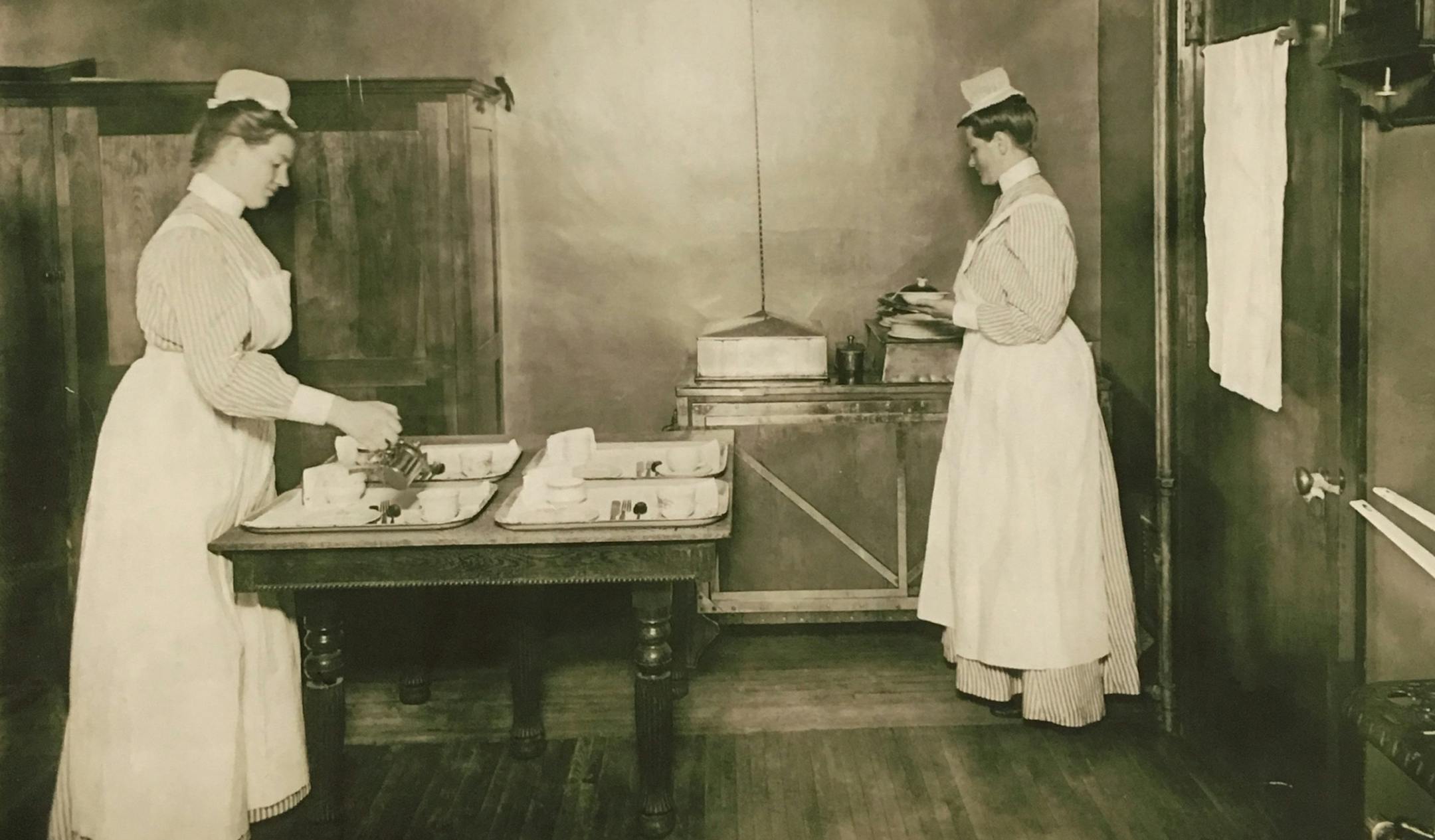
It's a museum hiding in plain sight.
Take the elevator down from the chaotic lobby to the basement of Hennepin County Medical Center in downtown Minneapolis on Thursdays between 10 a.m. and 2 p.m. Follow the Blue Building's painted blue floor stripe through the labyrinth — dodge some orderlies, nurses and doctors — and you'll stumble upon the Hennepin Medical History Center.
That's where a band of retired nurses volunteer to curate a spectacularly odd collection of artifacts that includes a 1916 electric bone saw, a 1960s kidney transporter, a polio-era iron lung machine, a stained-glass window from the old Swedish Hospital and its first patient's discharge papers from 1898.
That patient, Levald Andwood, was a 33-year-old bachelor laborer by way of Norway and North Dakota. His discharge form doesn't say what ailed him, only that he was "cured" after a 19-day hospital stay. Total bill: less than $15.
"The amazing thing about that first patient is that he was Norwegian and they had just opened Swedish Hospital in 1898 to take care of Swedish immigrants," said Carol Oeltjenbruns, 78, one of the three retired nurses who served as volunteer docents during a recent visit.
A petrified orange and a six-sided ceramic floor tile were two of my favorite artifacts. The hollow orange, now brown as a walnut, sits in a clear plastic cylindrical display case. It's carved with the words "St. Barnabas Hospital, Mpls." and the date: "Nov. 29, '06."
In 1977, 89-year-old Chester Leusman stopped by the hospital complex and pulled out an old story along with the old orange, which he donated to the museum.
In October of 1906, 71 years earlier, Leusman had just turned 18. The middle of five siblings, his farmer father had died when Chester was 9. After graduating from high school in Albert Lea, Chester headed up to Minneapolis and worked in a restaurant. But the $65 he earned that summer wasn't enough to pay the tab at the University of Minnesota. So he took a job at Donaldson's department store.


