

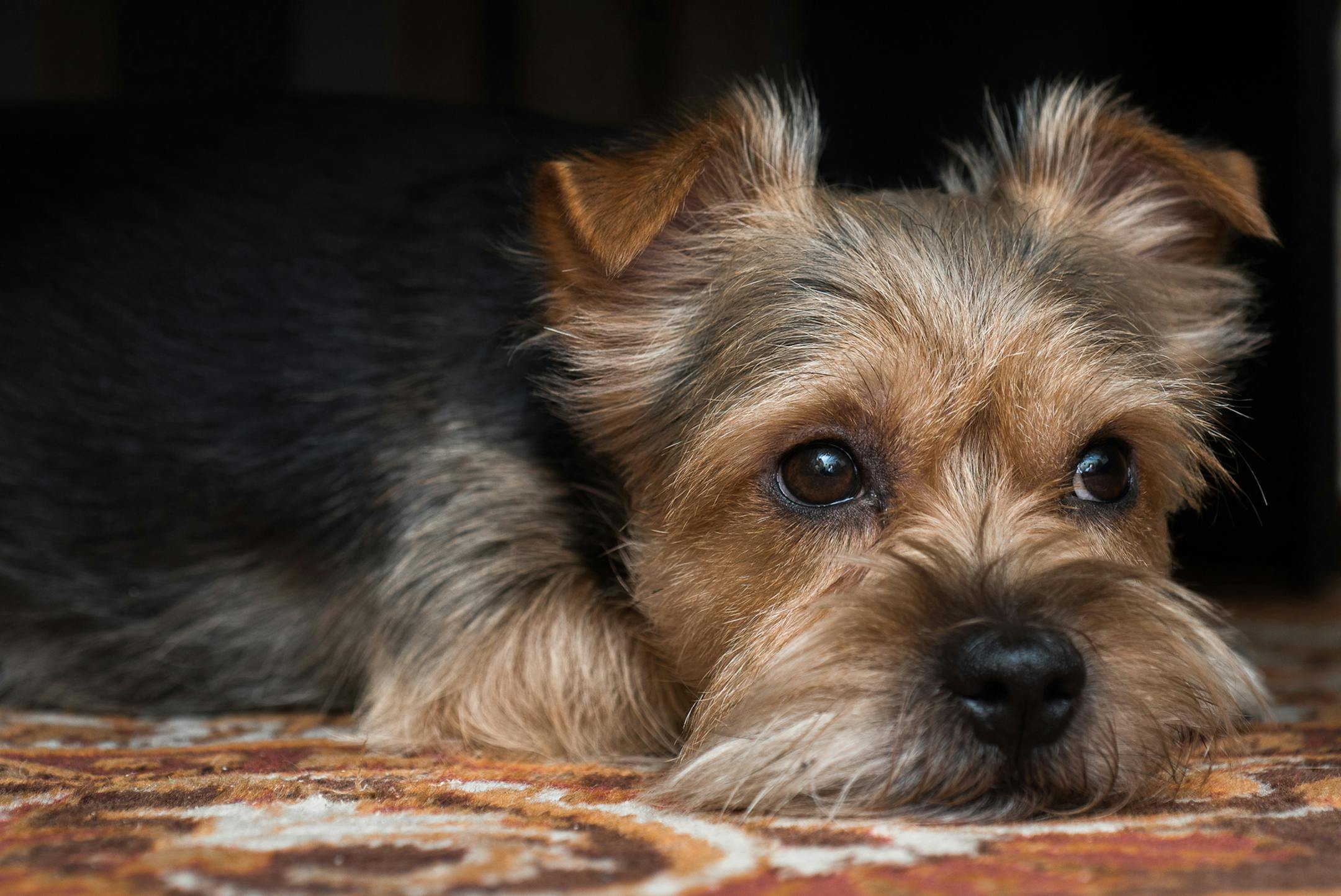
When a family pet dies, naturally the humans in the household grieve the death of their beloved companion. However, surviving animals in multipet households may also react to the loss in a variety of ways.
In her book "How Animals Grieve," Barbara J. King, a professor of anthropology at the College of William & Mary, cites studies and observations that show that animals in the wild, from elephants to birds, exhibit grieving behaviors, as do household pets.
She defines grief as:
"When a survivor animal acts in ways that are visibly distressed or altered from the usual routine in the aftermath of the death of a companion animal who had mattered emotionally to him or her."
The Companion Animal Mourning Project, a study conducted by the American Society for the Prevention of Cruelty to Animals, found that more than 60 percent of dogs and cats exhibited four or more behavioral changes after the death of a fellow pet in the household. Changes include eating less or possibly not at all, craving more attention from their owners, changes in vocalization (barking or meowing more or less than usual) and changes in sleeping places or other habits.
"Most of the behaviors fall under the category of distress reactions," said Katherine Pankratz, clinical behavioral medicine resident and American College of Veterinary Behaviorists resident at the North Carolina State University College of Veterinary Medicine. "It can be because of the loss of their companion or the change in routine or the owners' reactions."
Companion animals are attuned to owners' moods, so they can pick up on the sadness the humans are experiencing. The death can also cause a break in the social structure among the pets.
Pankratz said dogs often have relationships with each other that can be disrupted by a death.


