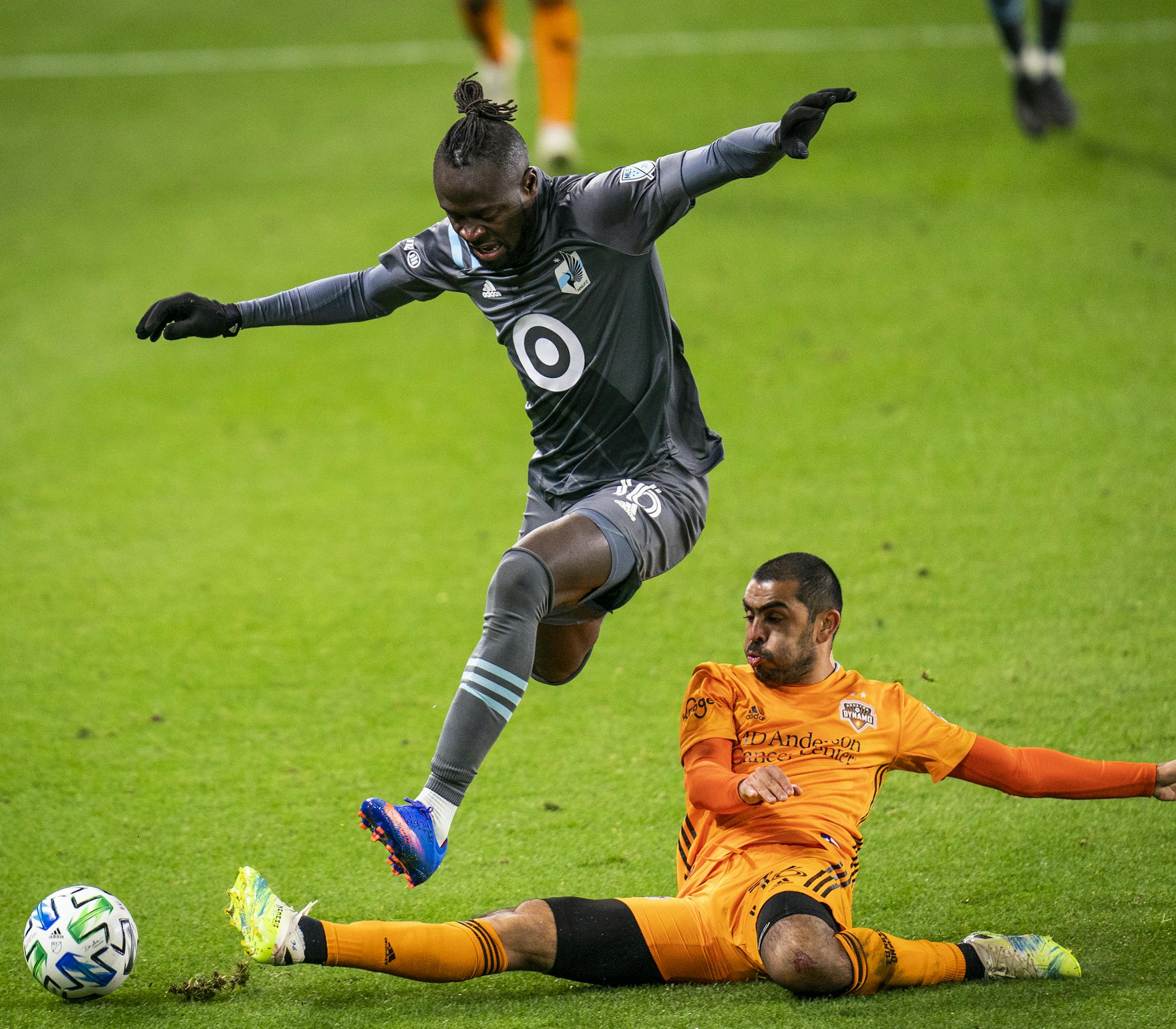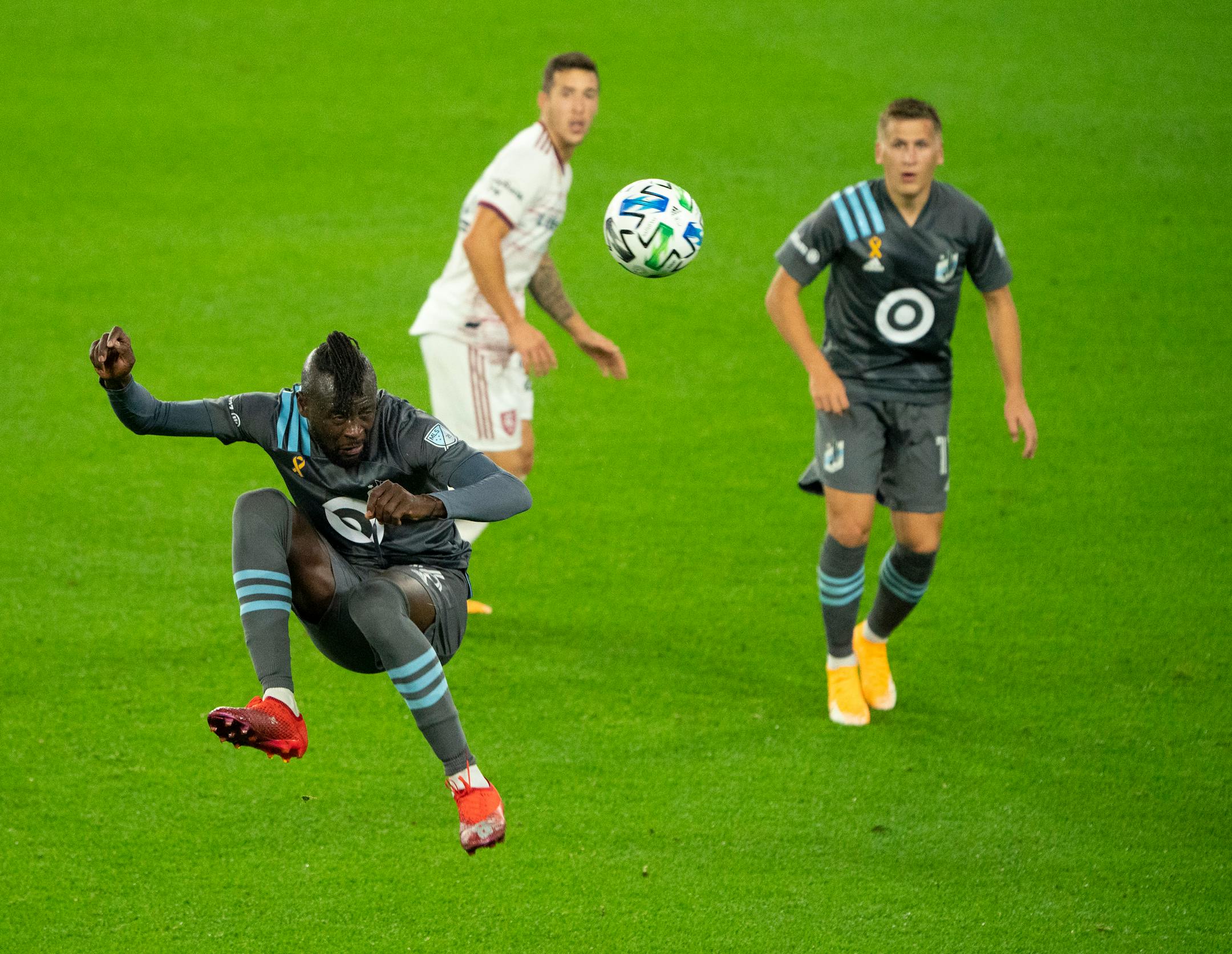
Just like his life, new Minnesota United striker Kei Kamara's first electoral ballot marked and submitted is well traveled.
His wife, Kristin, three young children and mother brought it with them from Denver to his new city this month. He carried it with him when all six visited the Minneapolis memorial that commemorates the life and death of George Floyd, a Black man killed by a white police officer in May when Kamara still played in Colorado.
"It just happened," Kamara said. "The morning we went, I just said I'm going to take my ballot with me and pay my respect because this is a man who's not going to be able to vote. It was cold, and snow was coming down. I had my ballot in my hand. I paid my tribute. I came back home and cast it in the mail. It really did feel special."
A Muslim teenage refugee who escaped Sierra Leone's long civil war in a leaky fishing boat, Kamara has been a U.S. citizen since 2006 but never voted until now.
Separated from his mother when he was 6, raised by an aunt and a multitude of cousins until he was 14, Kamara survived his West Africa country's strife without becoming a casualty or child soldier. He saw "too much for a kid" long before he found acceptance and success in a new land and new life where he has become MLS' fifth-leading all-time goal scorer.
Outspoken with what Loons coach Adrian Heath calls a "big personality," Kamara now at age 36 plays for his ninth MLS team in 14 seasons after a September trade.
"I'm just a dream walking," he said. "I never could have guessed all that can happen."
Saw too much
Kamara's mother, Fatima, won a 1990 immigration lottery and left for Los Angeles to help support the family she left behind. She sent her son to live with her sister in a house with five wives and filled with children just as Sierra Leone's civil war between its army and anti-government rebels erupted. It lasted 11 years, killed at least 50,000 people and consumed the country.