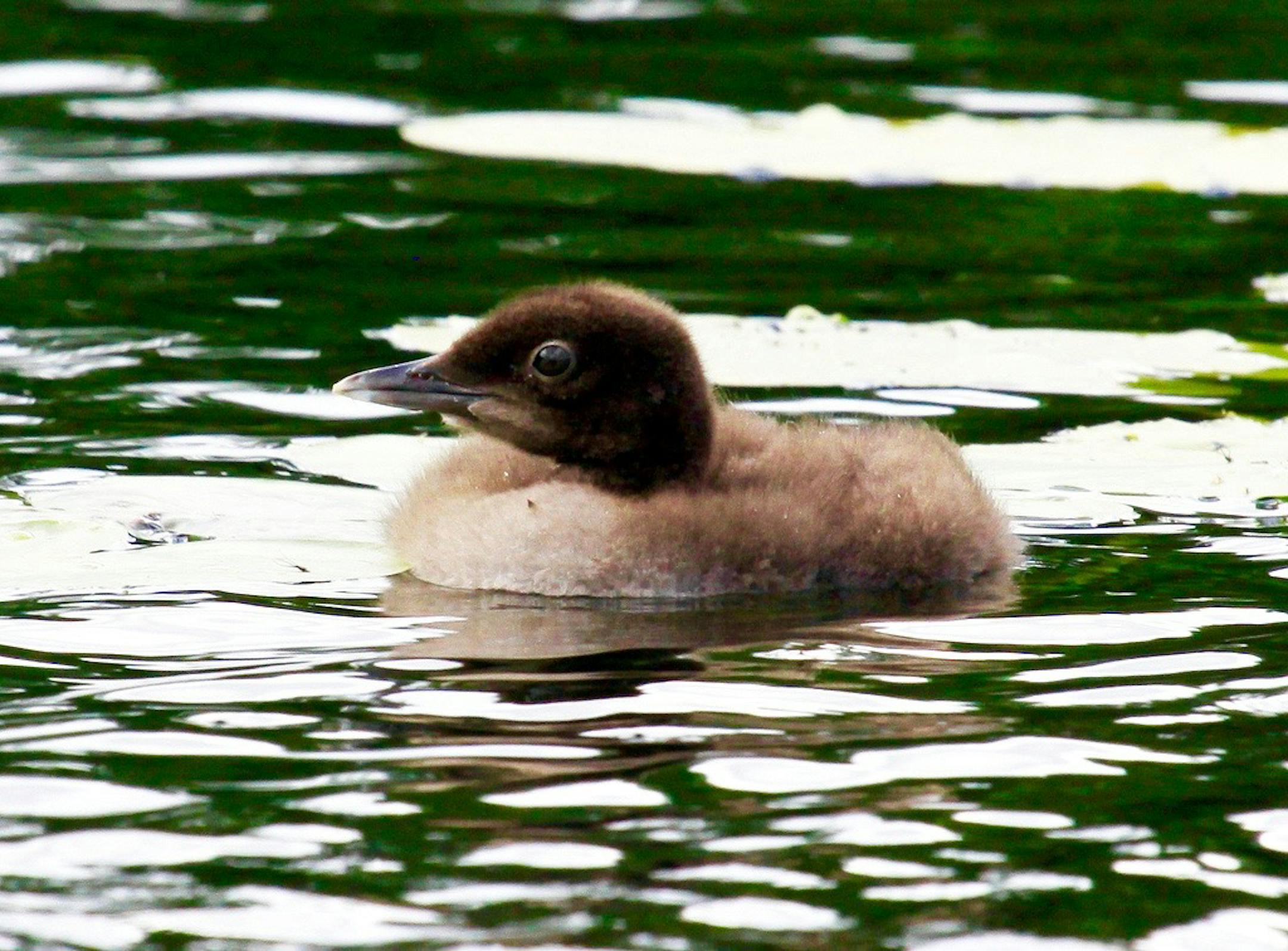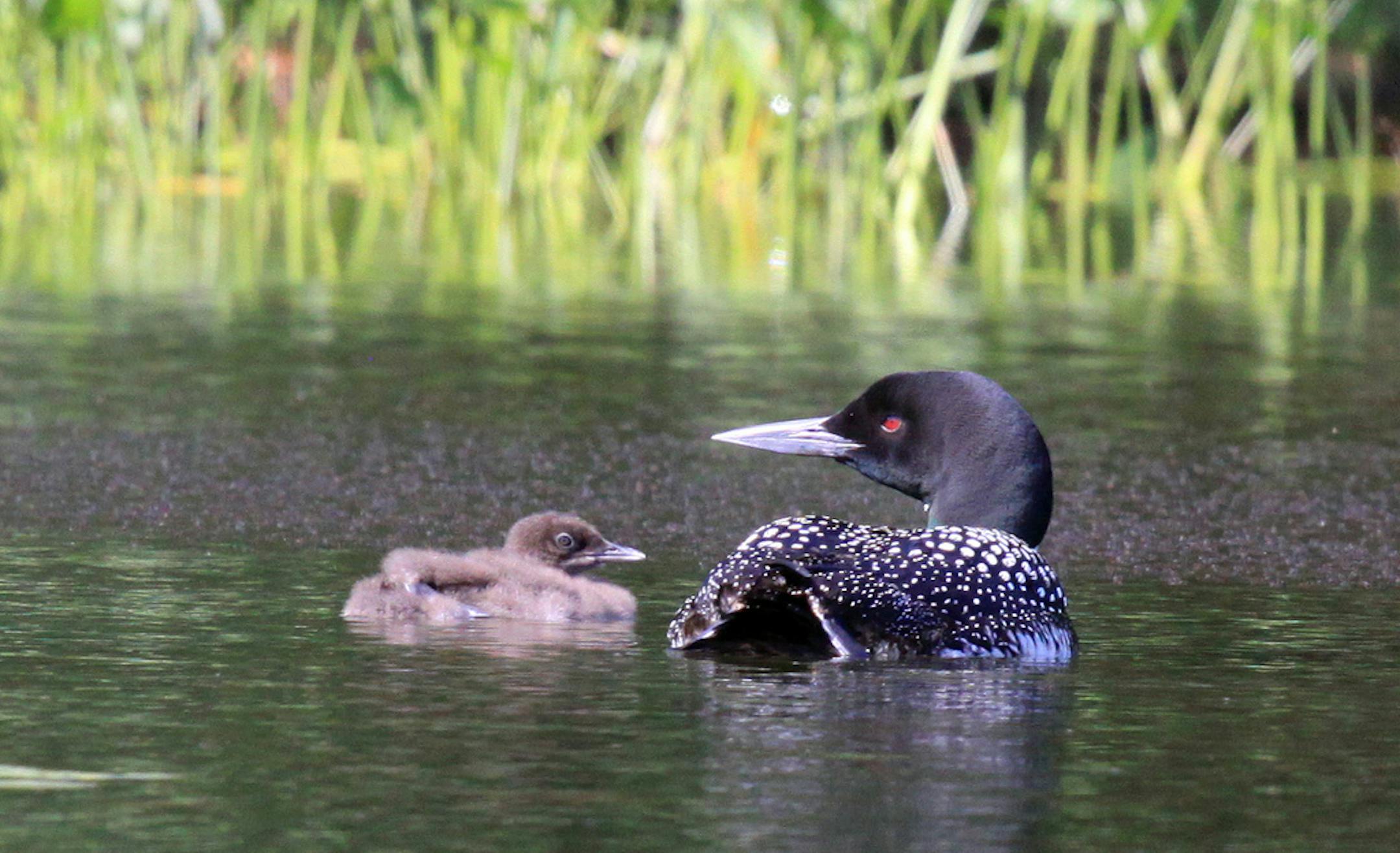
Q: Two loons and their baby were floating on our lake when they started calling and kept it up for about five minutes. There didn't appear to be any danger, so I'm wondering what they were doing.
A: It's likely you were hearing the loons making their tremolo call, a sign of distress. I checked with someone who knows a lot about loons, Carrol Henderson, who heads up the Department of Natural Resources' Nongame Wildlife Program. "I suspect those loons may have spotted a passing eagle and were giving ample warning to ward off an attack," Henderson says. Since birds are much better at spotting birds of prey than we are, the loons probably saw a far-off eagle that you missed. And eagles are known to watch for unprotected loon chicks to make an easy meal.
Quivering wings
Q: A pair of house finches nested in the wreath on our front door and we enjoyed watching the whole process. When the male was feeding the young birds, the female would rapidly flap her wings and quiver, then stop when he stopped feeding them. Why did she do this?
A: I conferred with Duluth bird-book author and naturalist Laura Erickson on this one and here's her explanation: "Wing quivering is a solicitation behavior, almost always used when a bird is soliciting food or sex, and female house finches during courtship are seeking both. Very often during the time that birds are feeding their young, there are still some high levels of hormones that lead a female to beg even when she and her mate are focused on feeding their young."
Identifying bird call
Q: I've been trying to learn the songs of our common birds by listening to a CD so I can identify them while out walking. Call notes really confuse me, especially one I was hearing in July, a very raspy "reep" coming from high in the trees. Any ideas?
A: Good for you for learning the sounds birds make — this should add a great deal of enjoyment to your walks. Two possibilities come to mind for your "reep" bird: This might be the call of a great crested flycatcher (hear it here, especially the call described as "harsh": allaboutbirds.org/guide/Great_Crested_Flycatcher/sounds). Your description also sounds very similar to the sounds made by many species of very young birds while begging a parent for a feeding.
Wood ducks vanished
Q: Before we went on vacation there was a family of wood ducks on our pond. When we got back 10 days later, they were all gone. What could have happened?
A: My first suspicion was that a big snapping turtle had eaten the ducklings, one by one. But Kraig Kelsey, owner of Kelsey's Wild Bird Store in North Oaks, who's been studying wood ducks for many decades, offered a more positive possibility. Wood duck hens commonly move their families from one body of water to another, seeking the best protection for their brood. This means they're looking for a shoreline with a great deal of vegetation for hiding from predators. It's not unusual, Kelsey says, for a wood duck family to end up as far as a mile from the ducklings' original pond.