

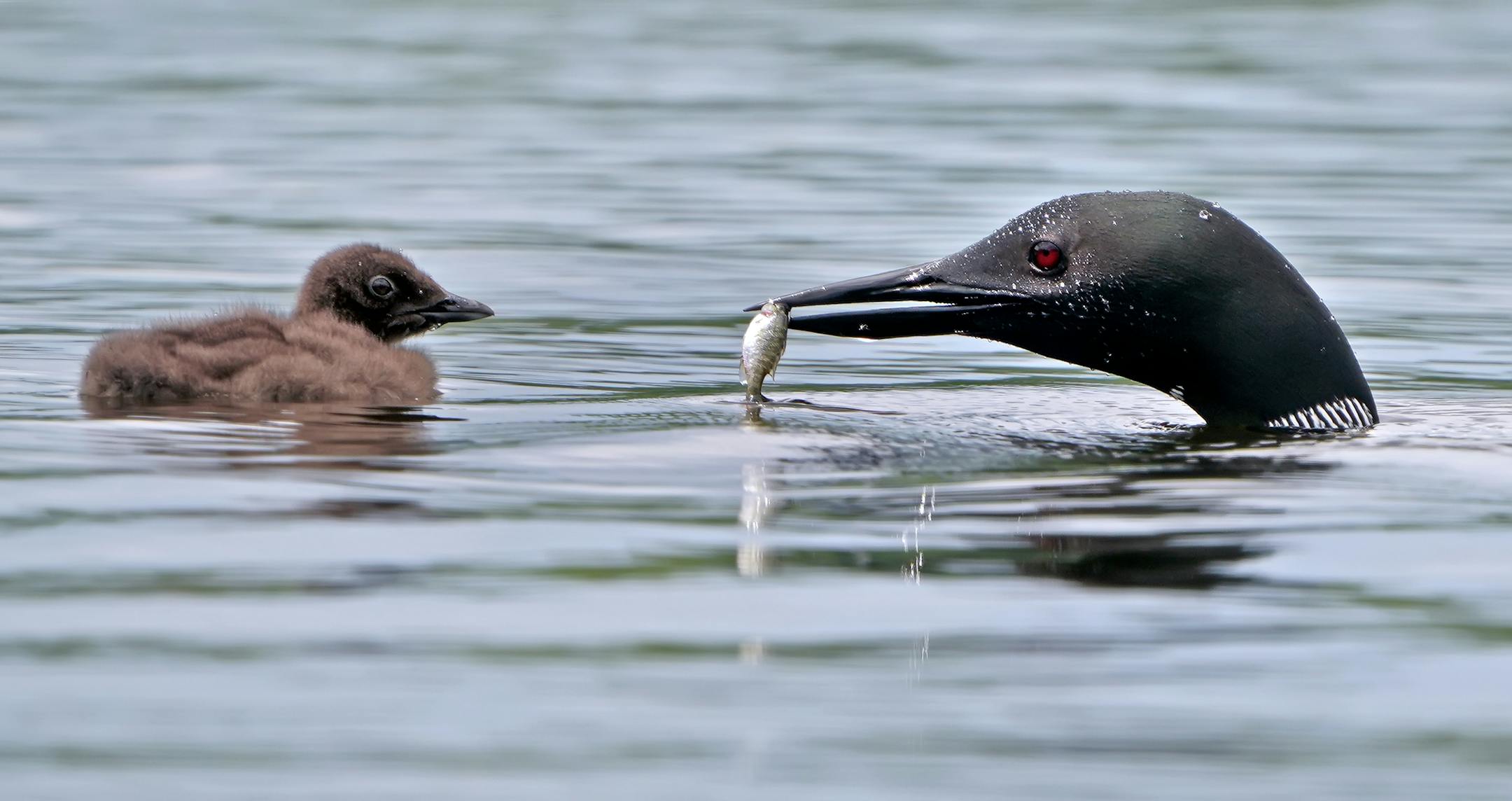
Much like the acute wail of the common loon that resonates deeply with many Minnesotans and signals another summer, state wildlife managers have made the annual call out for conservation-minded volunteers to help watch for them.
The effort is one of the ongoing projects focused on loons and their well-being within the Nongame Wildlife Program of the Department of Natural Resources. And it's a sizable job: Specialists who coordinate the Minnesota Loon Monitoring Program need volunteers to focus on six regions, each with 100 lakes, in central and northern Minnesota.
The regions are targets because it's common ground for returning loons, a landscape full of large, clear lakes with room for flight and habitat to breed and support young.
The monitors' work – counting adults and chicks they see daily over a 10-day window in early July — builds on a knowledge base and conservation effort that began in 1994.
What's known is the population of loons (about 12,000 breeding adults) is stable and remains the highest number of any state in the lower 48.
What also is known is the species is, like so many others in the avian community, vulnerable to disease and environmental threats.
Just this week, lab results on two dead loons (one found near Phalen Lake in St. Paul, the other in Chisago County) showed the presence of the highly pathogenic avian flu that has killed countless waterfowl and some raptors that have eaten them, according to Nongame Wildlife Program spokeswoman Lori Naumann.
There are standing challenges, too. Among them are the impact of land development on the loons' shoreline nesting habitat, and lead poisoning from consuming fishing tackle mistaken for food.


