

The rhetoric is rising around the $7 billion Keystone XL pipeline, which would carry diluted bitumen — an acidic crude oil — from the tar sands of northern Alberta to the Texas Gulf Coast. The State Department is expected to make a decision on whether to allow its construction later this year, and there is proposed federal legislation that would require a decision by November.
It's becoming a huge national issue, one that obscures the fact that such pipelines are already criss crossing the country, including Minnesota. In 2010 the Canadian company Enbridge Inc. completed two new pipelines in this state. One, known as the Alberta Clipper, carries tar sands oil to Superior, Wis., where it links with another pipeline and refineries in Chicago. The second runs parallel to it, but carries a highly toxic petroleum product back to Alberta, where it is used as a thinner for the viscous crude.
So for us, the environmental risk is already here.
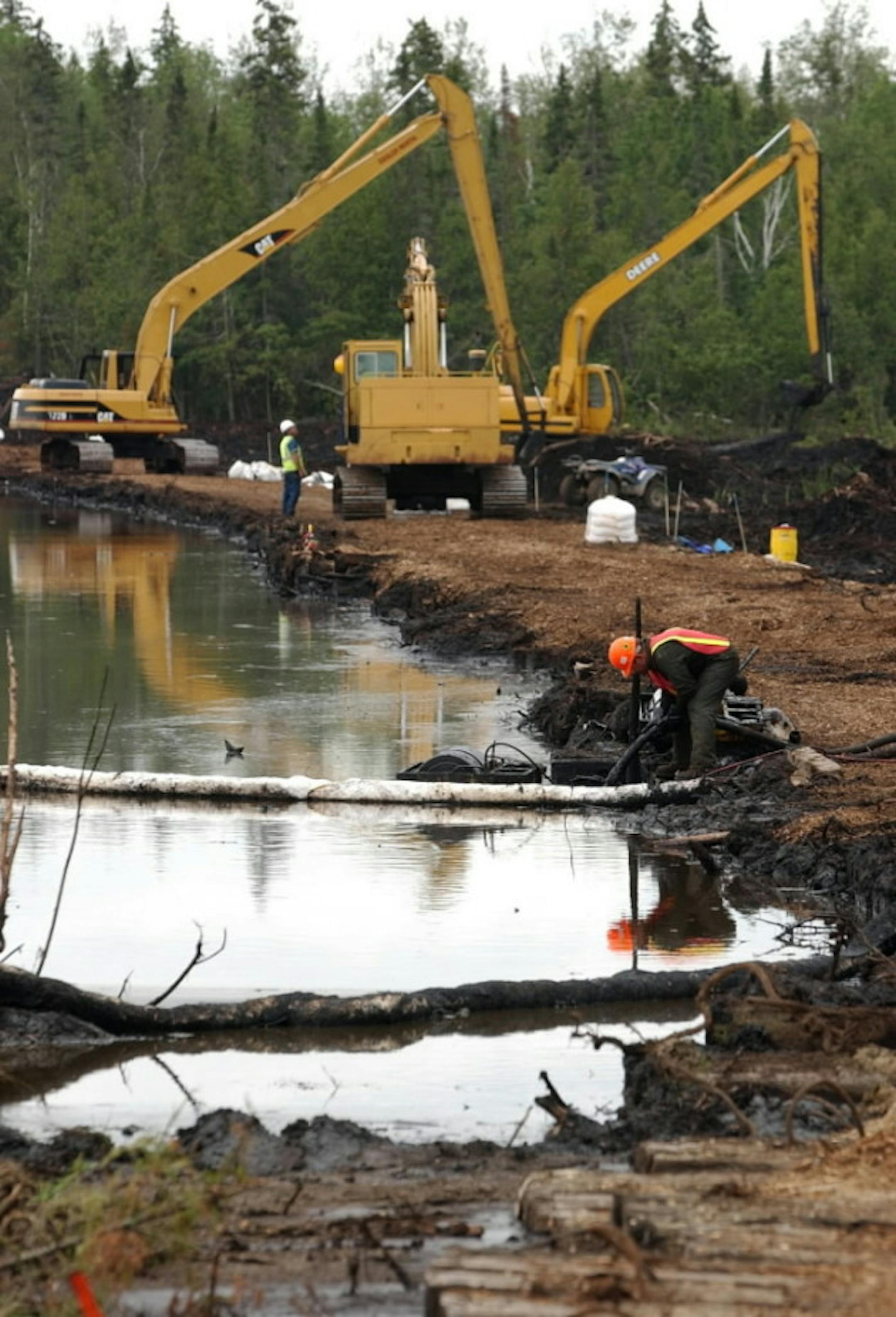
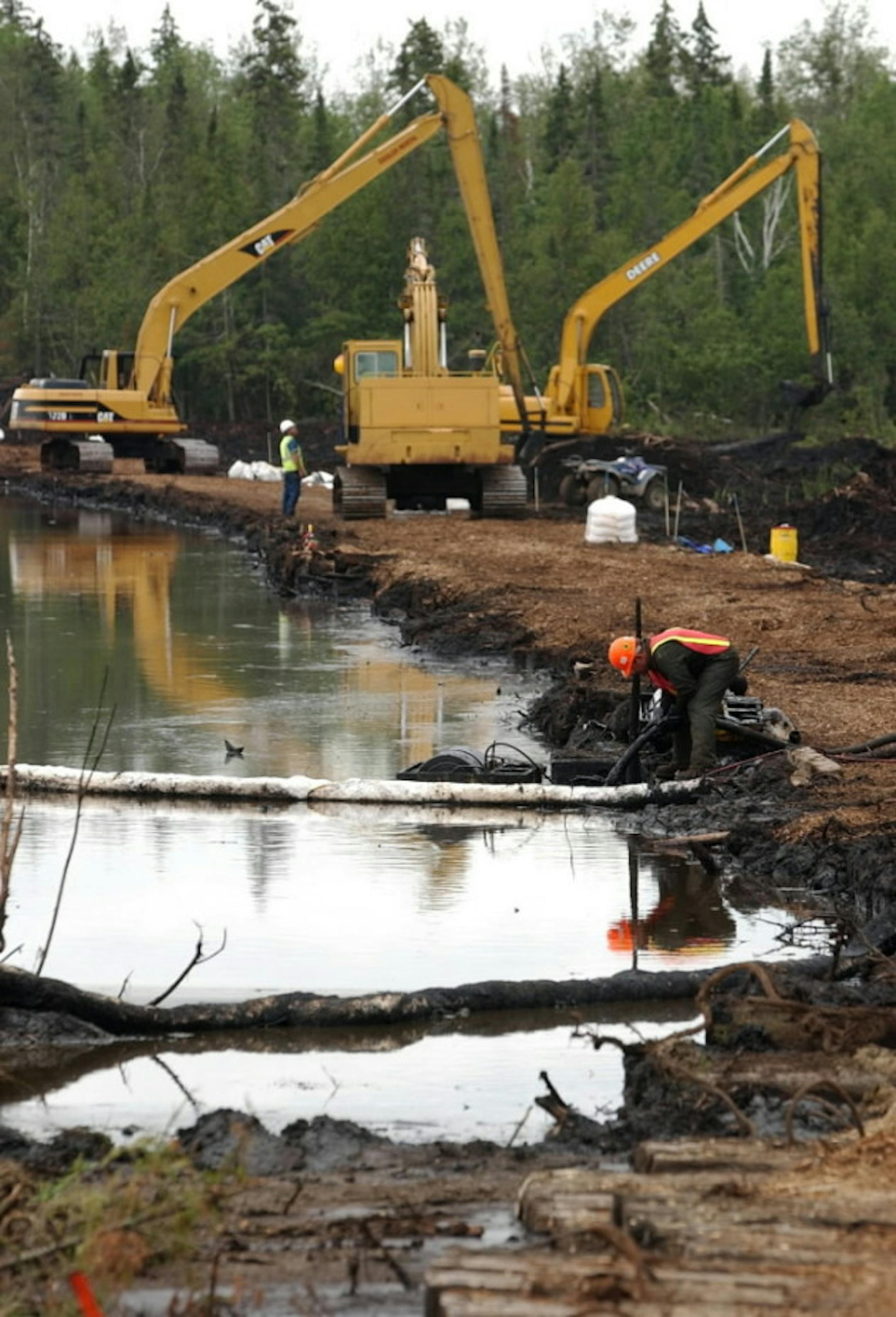
2002 cleanup of an oil pipeline spill near Cohasset, Minn. Star Tribune photo
Now, a fissure the length of the proposed pipeline is splitting the country. On one side are those who believe using more, dirtier oil is a mistake that will lead to massive toxic spills and and an unacceptable increase in greenhouse gas emissions. On the other are those who believe it's essential to protect our economic and security interests. Some it of it is downright amusing, including this web site on the U.S. Chamber of Commerce that riffs on Harry Potter's Chamber of Horrors.
The U.S. chamber has it's own not quite so funny web site here.
Much of the argument is around how much carbon the oil will release into the atmosphere. Many experts have taken issue with some of the claims espoused by environmental groups, including Bill McKibben's 350.org and NASA climatologist James Hansen. University of Alberta business professor Andrew Leach, who has not taken a stand on the pipeline, does take a stand on their math.
"In the fight against climate change, every bit counts, but to make an argument that is based on a leverage ratio of somewhere between 90 and 500 times the actual damage caused by a particular project is not the right way to go about it. "
But the pro-pipeline groups, alas, are relying on the lesser of two evils argument. They say that the one way or the other Canada is going to extract that oil and ship it either to the United States or on tankers to China. So we may as well build the pipeline.
One of the best summaries of the issues is here in an article by ClimateWire. The New York times editorial page weighs in here.


