

The intricacies of the human body in motion -- muscles flexing, joints hinging, cells powering a system of anatomical thrust -- represent a feat of cosmic proportion, a biological achievement where Newtonian laws and the limits of locomotion mix to move a beating, breathing form through space and time. Some people just call it running.
On a treadmill a few weeks ago in Boulder, Colo., I paced alone in the audience of an exercise physiologist as a runner long on a quest for the perfect stride. Like many casual runners, I have worked to refine my technique and running style. I train with a heart-rate monitor and know the type of shoe that fits my foot.
But despite training thousands of hours over the years and completing a half-dozen marathons, I have never sought more than basic advice on my body's method for plodding forward on a plane.
Thus the test in Boulder.
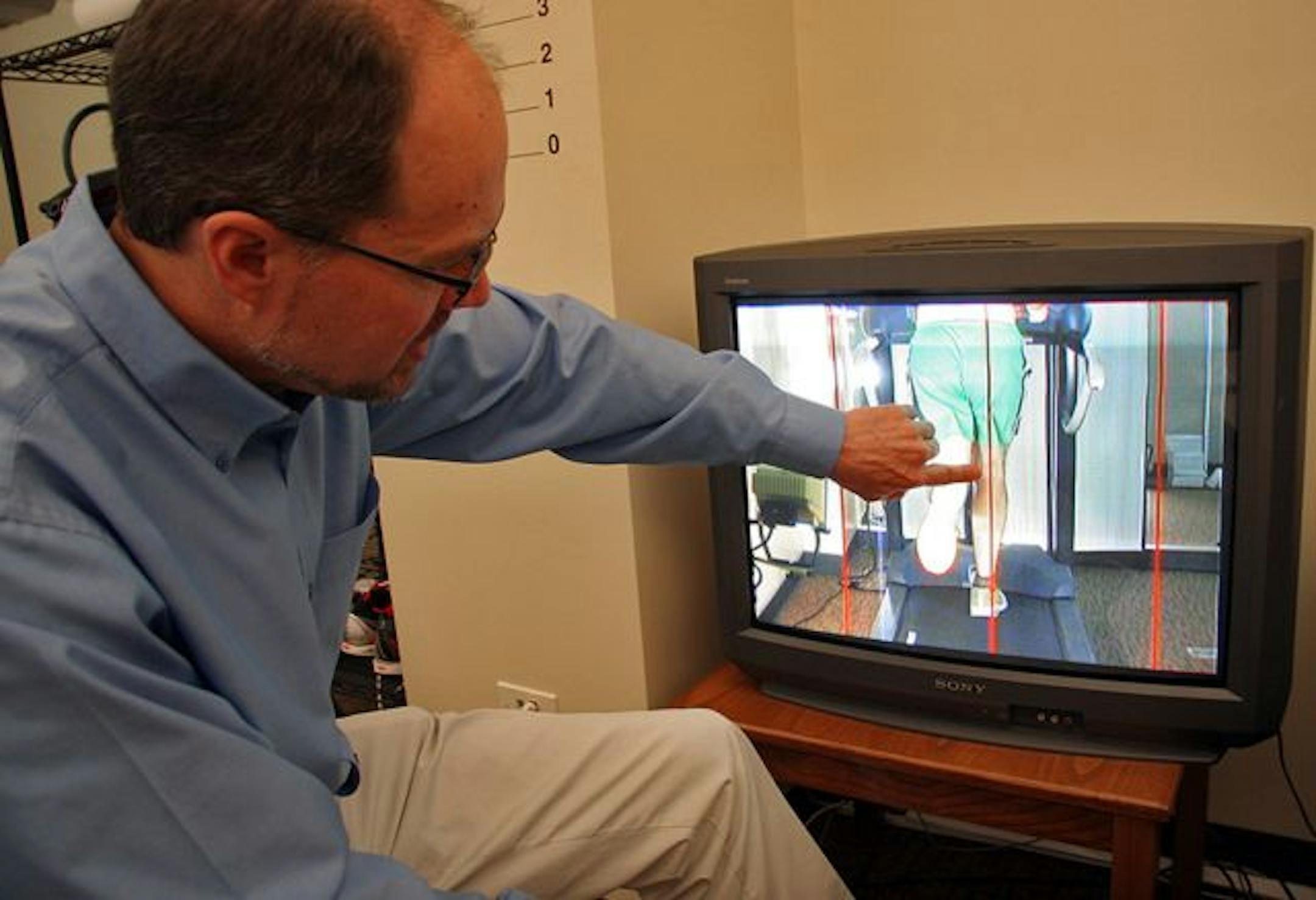
The procedure, a $350 gait analysis at the Boulder Center for Sports Medicine, involved a clinical exam, stop-motion video and software that calculated angulations in my hips, ankles and knees. My assessor, Tim Hilden, a physical therapist and a native Minnesotan, mixed a thorough medical evaluation with time spent observing me sweat and run on a treadmill.
"This test gives amateur athletes the type of treatment often reserved for the pros," Hilden said.
Basic gait-analysis tests are offered free at running shops nationwide, including in the Twin Cities. Run on a treadmill at a store such as StartLine in Minnetonka, and a salesperson can see from your stride which type of shoe you should wear.
"We watch your stride and listen to the sound of the shoe as you run," said Monica Wenmark, StartLine's owner.


