
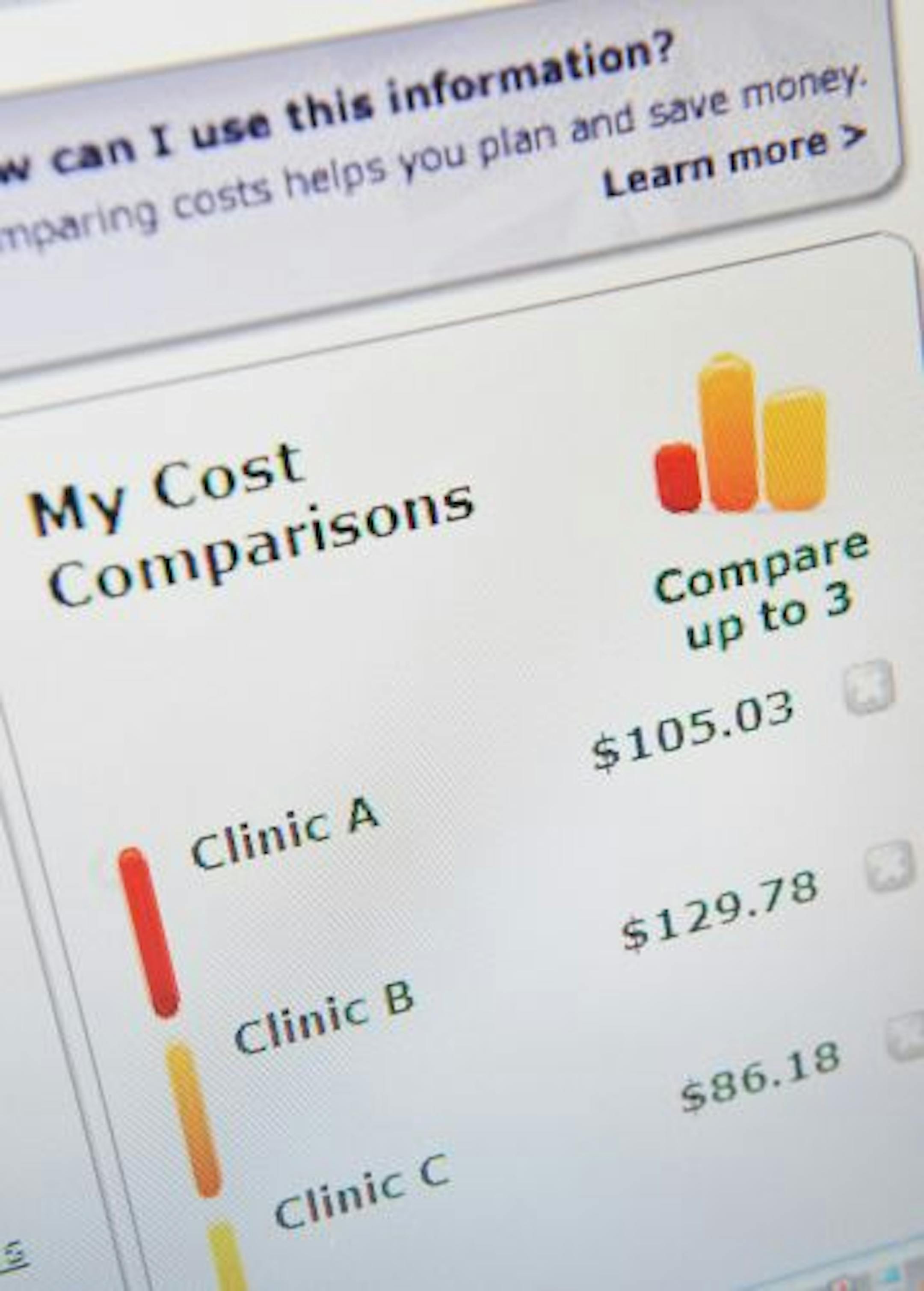
Looking for a better way to compare

HealthPartners is launching a tool to check the prices for medical services at various facilities.

March 22, 2009 at 3:42PM
HealthPartners customers have a new online comparison shopping tool to help them nail down the exact cost of nearly 100 health care services at 500 hospitals and clinics in Minnesota.
HealthPartners customers have a new online comparison shopping tool to help them nail down the exact cost of nearly 100 health care services at 500 hospitals and clinics in Minnesota. (Star Tribune/The Minnesota Star Tribune)

You wake up with a crushing headache. Feels like a sinus infection. You dial the clinic to make an appointment -- and then you remember your company has switched to a new, high-deductible insurance policy, and you wonder: What will it cost me?

Good luck finding out. Minnesotans who have switched to this new form of health insurance find that, while some health care providers can quote prices, they generally offer only estimates or ranges. Often, prices fail to reflect the discounts negotiated by insurance companies.

But starting this month, HealthPartners patients have a new online shopping tool that will give them answers in dollars and cents. It specifies the cost of nearly 100 common health care services at 500 hospitals and clinics in Minnesota.

An office visit for a sinus infection? At a Park Nicollet clinic it's $137.53. Seem a little spendy? Try $78.32 at Community-University Health Care Center.

A flu shot at Fairview? $17. A brain MRI at the Minneapolis Clinic of Neurology? $624.

The HealthPartners tool could represent an important step in the evolution of high-deductible health policies, which now cover one in 10 insured Minnesotans and require people to pay a bigger share of medical bills out of pocket.

"Cost is front and center for many of our customers," said Scott Aebsicher, HealthPartners senior vice president.

Moreover, if high-deductible plans are to fulfill their larger promise -- harnessing market competition to cut costs and improve quality in American health care -- consumers are going to need better comparison tools.

"Historically, we've been patients, but we haven't really been consumers in the way we have with most other products," said Richard Neuner, chief marketing officer at Blue Cross and Blue Shield of Minnesota. "We spend more time and do more research on which flat-screen television to buy than on a multiple-thousand-dollar medical procedure."

Even for people with traditional insurance and modest deductibles, the act of shopping around could cut overall health care costs and help bring down insurance premiums for everyone.

"We want people to become increasingly savvy about their health care shopping," said Aebischer. "Yes it's going to help lower our cost, but ultimately it's going to lower the cost for the consumer."

While a cost calculator is a step in the right direction, cost should not be the only factor in consumer decisions, according to Roger Feldman, a professor in the Division of Health Policy and Management at the University of Minnesota.

"I know the link between price and quality is weak," he said. "But consumers, rightly or wrongly, could use a high price as an implicit sign or signal of quality."

Feldman said the gold standard would be a tool that integrates price data with quality ratings.

HealthPartners has an online quality comparison tool, but it is separate from its cost-comparison tool.

Blue Cross and Blue Shield of Minnesota is moving in the direction of integrating the two. The state's biggest health insurer plans to launch a tool later this month for customers to compare price ranges of common procedures at hospitals, clinics and other health facilities in Minnesota and around the country. They will then be able to click to quality information, customized for the factors most important to them, such as safety and patient satisfaction, to make their own decisions on value.

One by one, all the major players in Minnesota's health insurance market are recognizing the trend.

Medica, the state's second biggest health plan, offers a public website, Mainstreet Medica, which provides plan-negotiated price ranges and median costs for procedures and facilities. UnitedHealthcare has physician and hospital search tools for members that rate providers on relative quality and cost efficiency.

An independent site, Carol.com, provides cost estimates for procedures and local facilities, customizable for individuals' insurance coverage.

"I think this is very much the wave of the future, and health plans will continue to refine their tools," said Neuner.

Kate Levinson is a University of Minnesota journalism student on assignment for the Star Tribune.

about the writer

about the writer

KATE LEVINSON, Star Tribune