

Welcome to the Wednesday edition of The Cooler. Please take a seat in an orderly fashion. The presentation will now begin:
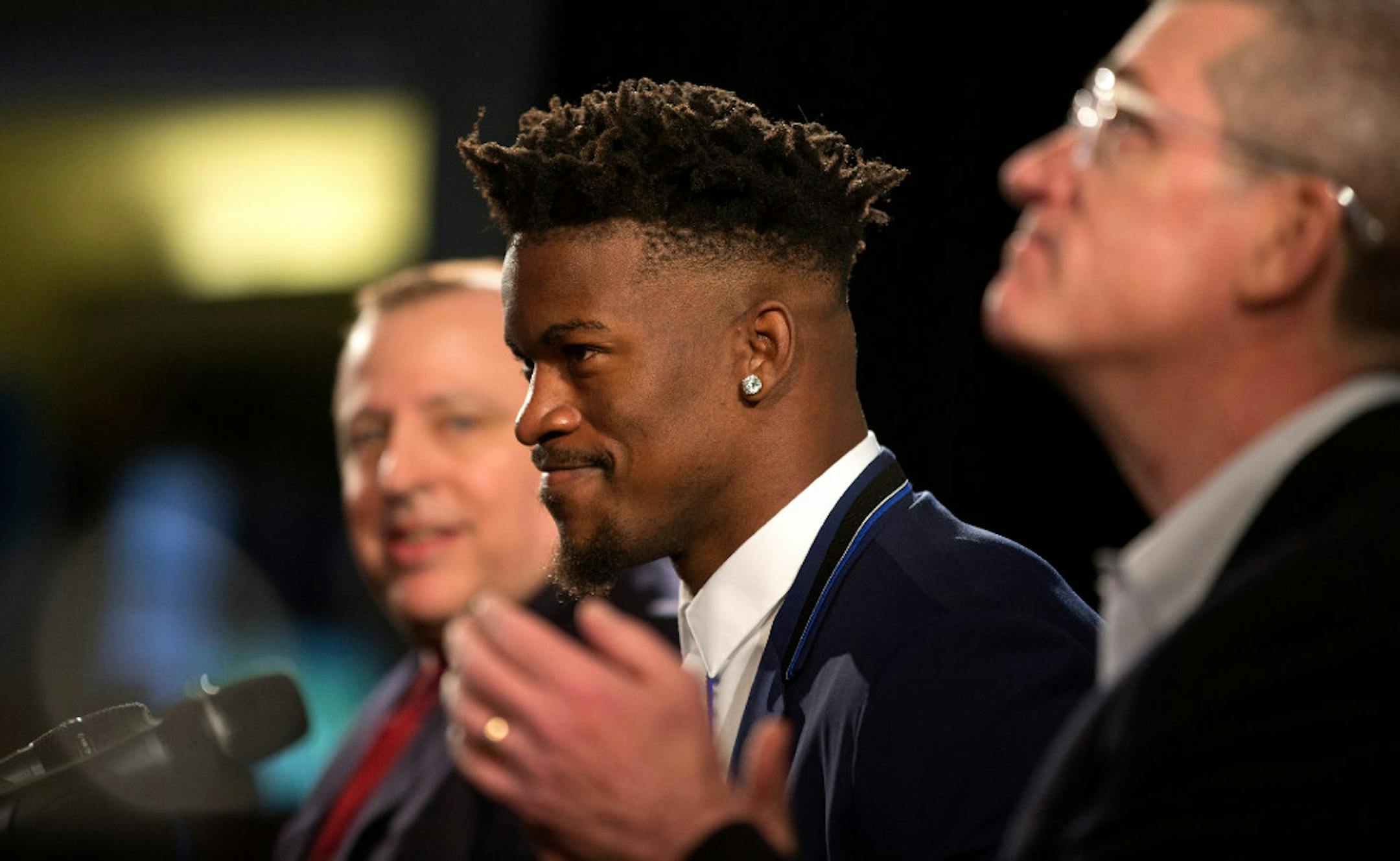
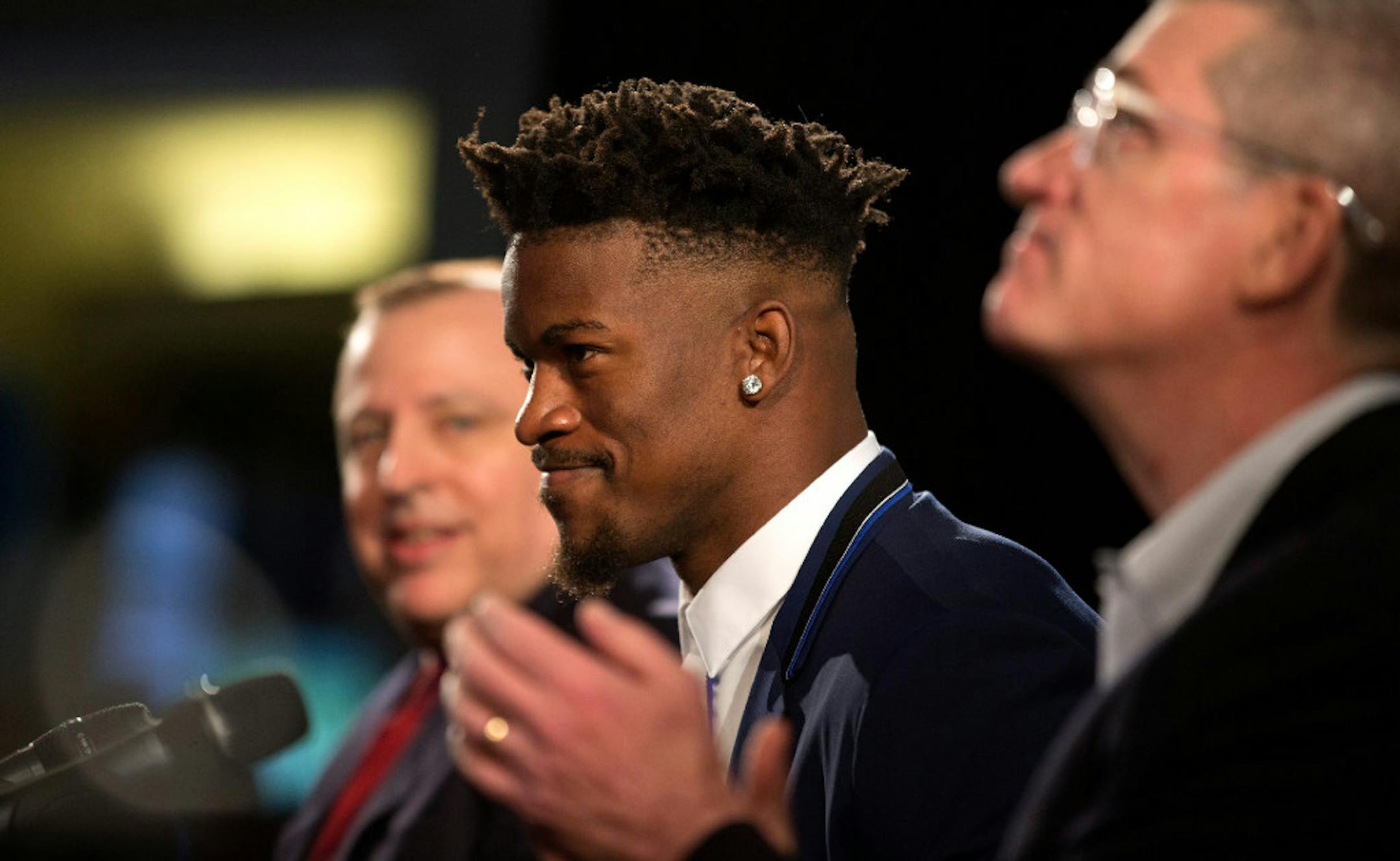
*One year ago at the NBA Draft, the Timberwolves pulled off one of the most significant trades in franchise history when they landed Jimmy Butler from Chicago. The Wolves hold the No. 20 pick this year (instead of No. 7, as they did last year), so this draft might not be as dramatic (though you never know).
But the Butler trade has had a huge impact in many different directions and continues to shape what the Wolves will do this offseason. With that in mind, let's take a quick look back and assess the trade one year later.
PROS:
*Butler was the best player in the trade by a significant margin. The Wolves had to give up Zach LaVine, Kris Dunn and No. 7 pick Lauri Markkanen. They received Butler and No. 16 pick Justin Patton.
Butler is a top-15 player in the NBA (evidence: two consecutive third-team All-NBA selections). The team that gets the best player generally wins a trade. That distinction goes to the Wolves, and I have hard time seeing a future when any of those other three players — who all have strengths and talent — eclipse what Butler has already done.
*He made the Wolves immediately relevant. Sure, the Wolves went out and added Jeff Teague, Taj Gibson and Jamal Crawford in free agency as they vaulted from 31 to 47 wins and made the playoffs for the first time since 2004. Butler, though, was the main catalyst. Evidence of systemic improvement from within was minimal last season. The Wolves improved because they added better players, and Butler was chief among them. Minnesota was 37-22 in the regular season when he was on the court last year and 10-13 without him.
*He started to change the culture. I say started because the Wolves aren't anywhere near where they need to be (or where coach/POBO Tom Thibodeau wants them to be). But Butler is demanding, accountable and an excellent defender. He does not accept losing. And he does not accept less than 100 percent effort. As a model for younger players, his demands might be a little "old school," but a 16-win improvement is evidence that his voice needs to be heard.


