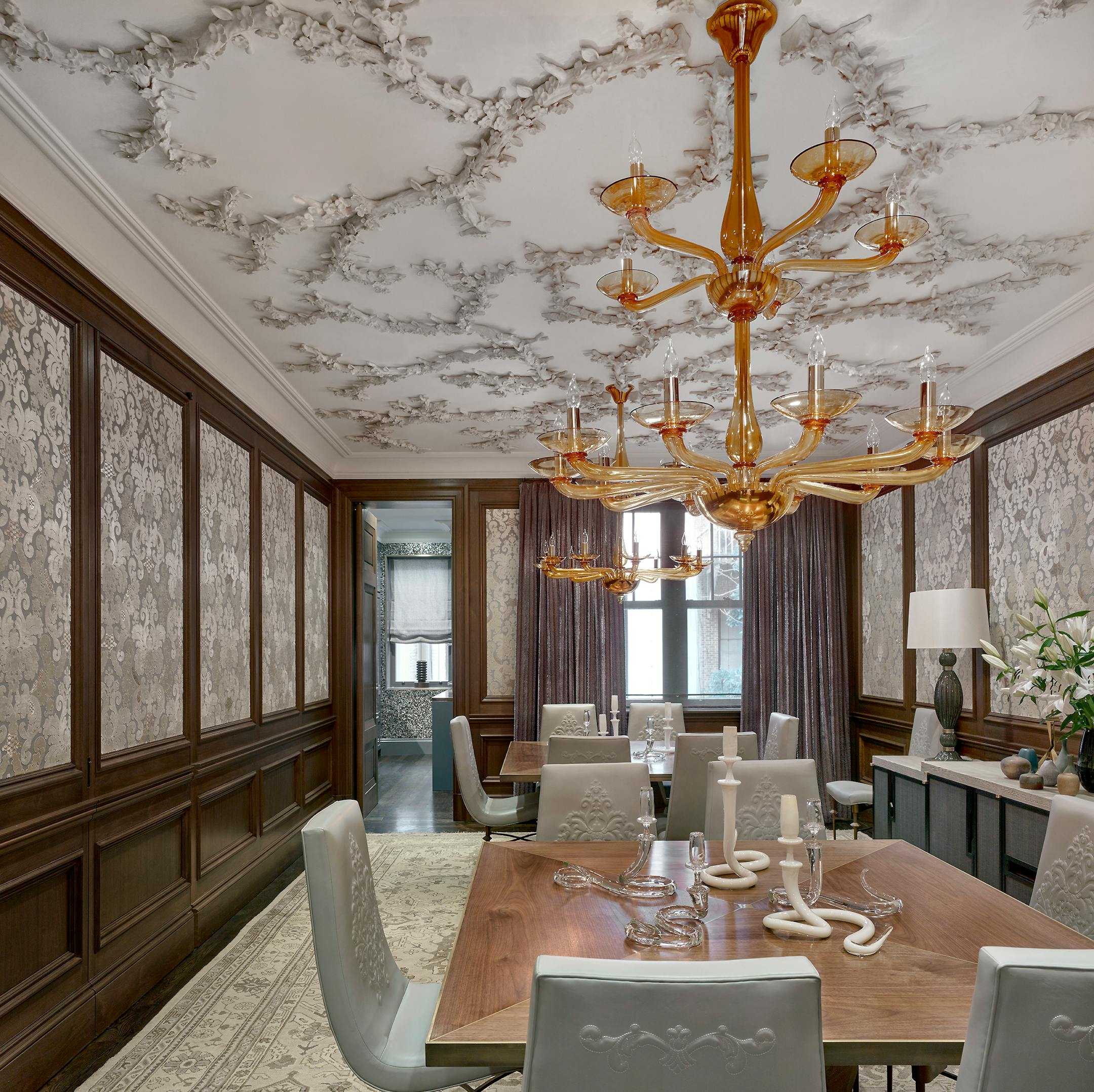
If Beth Cayre had to move, she would regret leaving the dining room ceiling, with its plaster cherry blossom branches hand molded by ceramics artist Matthew Solomon. And who could blame her?
The branches were part of what gave character to her Neo-Grec Upper East Side townhouse when she and her husband, Nathan, gutted the property six years ago and dressed it up with new ornamental details.
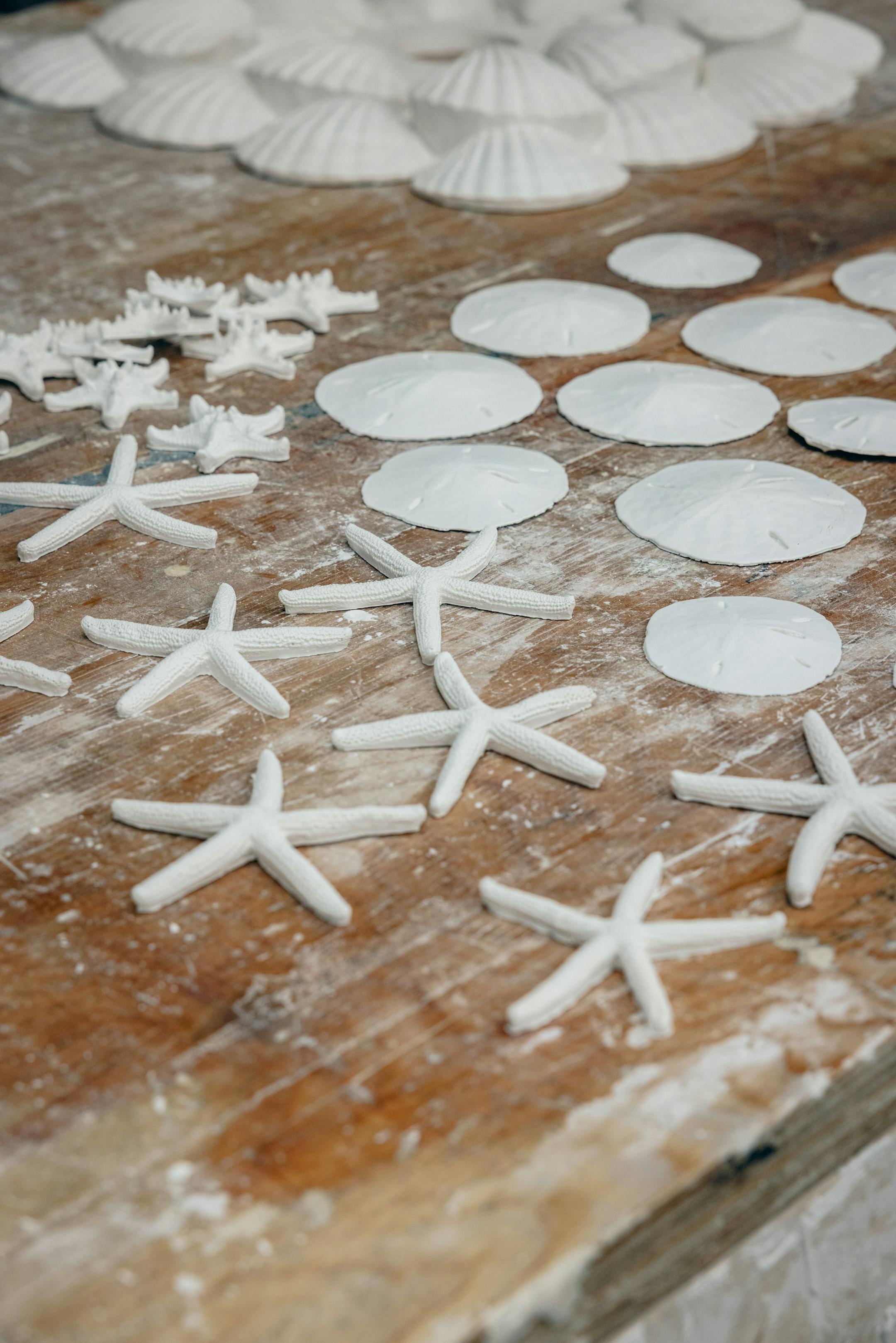
Their interior designer, Joe Nahem, envisioned a garden floating above their heads. He asked Solomon, who was known for making elaborate floral vessels surfaced with ruffled clay petals, how he would feel about doing a plaster ceiling. "He thought I was crazy," Nahem said, "but was very excited." (Solomon died in 2021.)
The botanical motif set the tone for the rest of the room — its damask brocade upholstery, Venetian glass chandeliers and custom embroidered chairs. Six years later, the ceiling still swells the hearts of those who see it.
"The project has longevity," Nahem said. "Every person who looks at it sees something different without connecting it to a period. That's why it works."
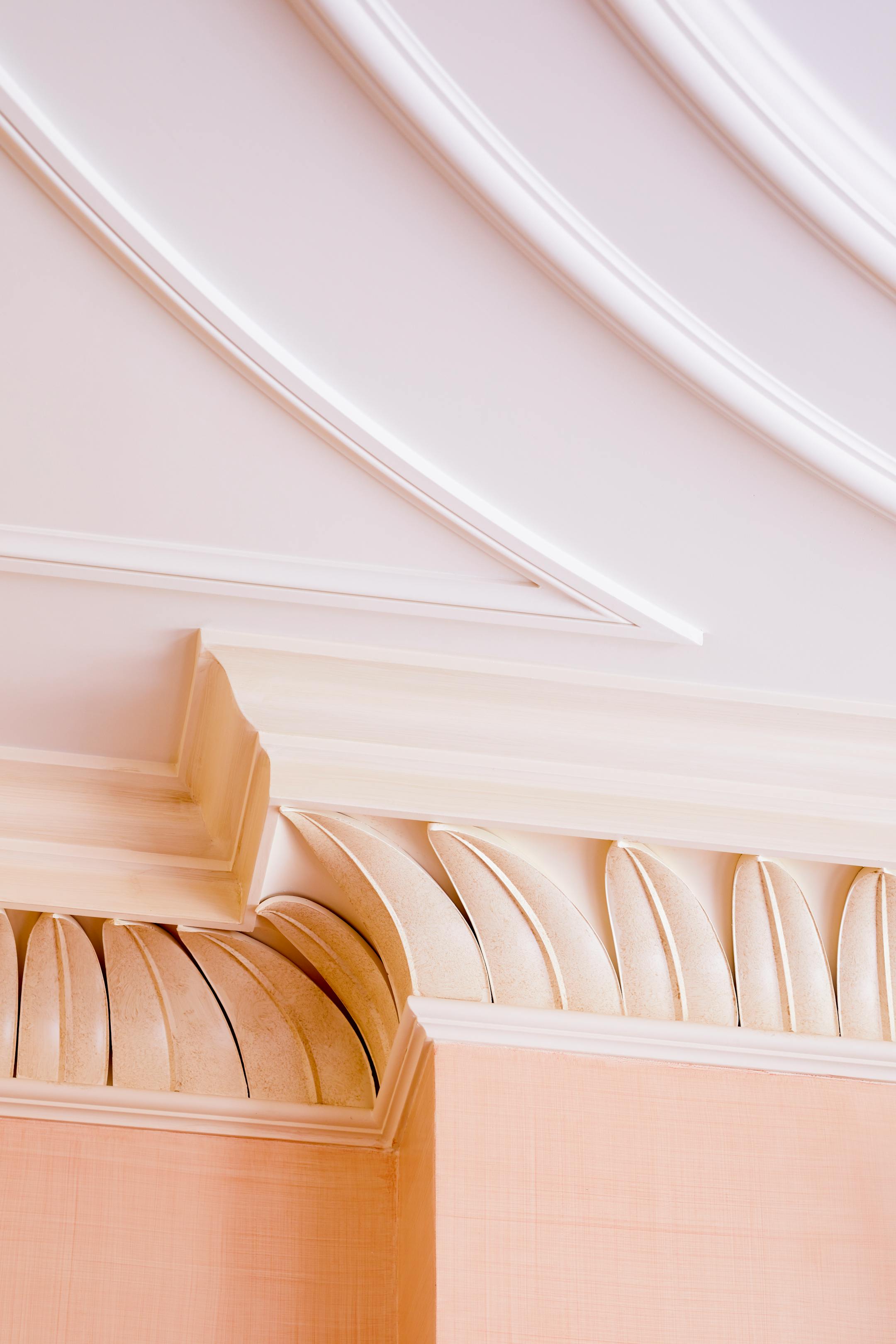
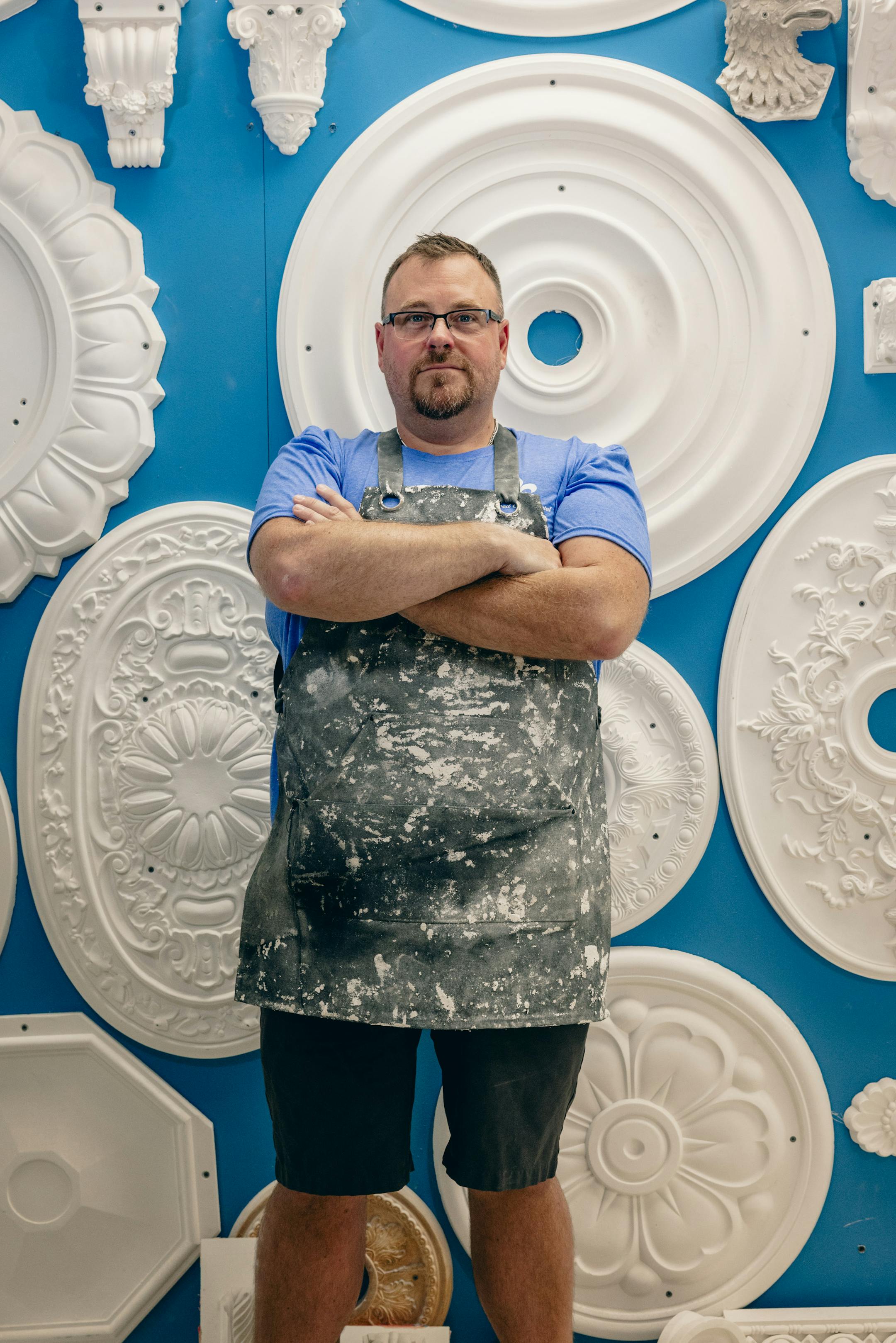
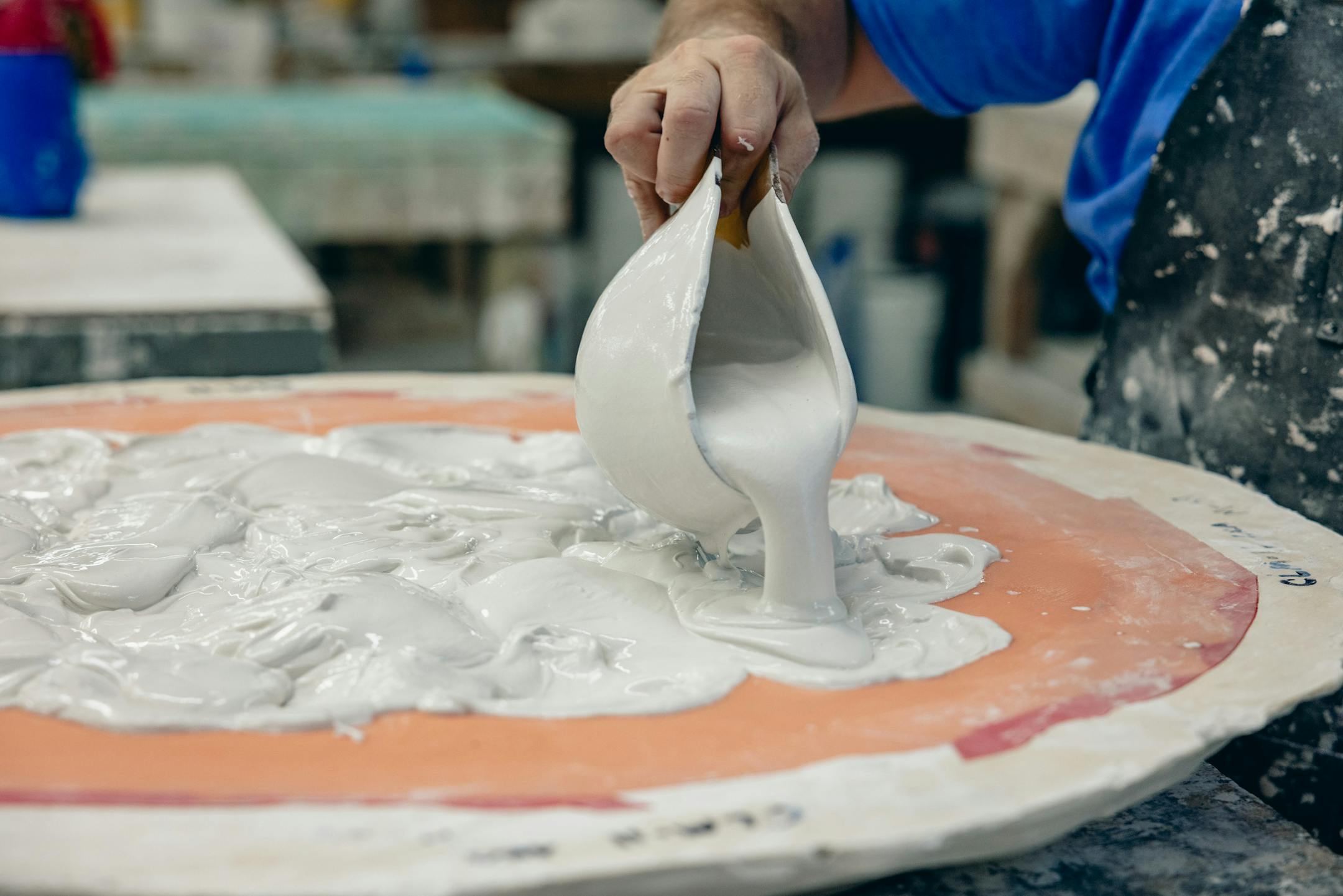
Made from gypsum, a soft mineral that often occurs in a stark white hue, plaster can be found in ancient Egyptian tombs and ancient Greek temples. It's a sort of grace note of traditional Western architecture, the stuff of the gilded ceilings of Versailles, and the cornices and wedding-cake bijoux of Mount Vernon.
And now, with a push from social media, plaster ornamentation is on the upswing, becoming shorthand for quiet luxury while bearing the quirks of modern culture.
In contrast to the ornate handwork that was common in the past, the new applications of plaster "are exciting and offer a channel to reinvent past architectural detail," said Alexandra Kaehler, a Chicago-area interior designer. "I know it is not for everyone, but it is fun to see how it is reinterpreted."