

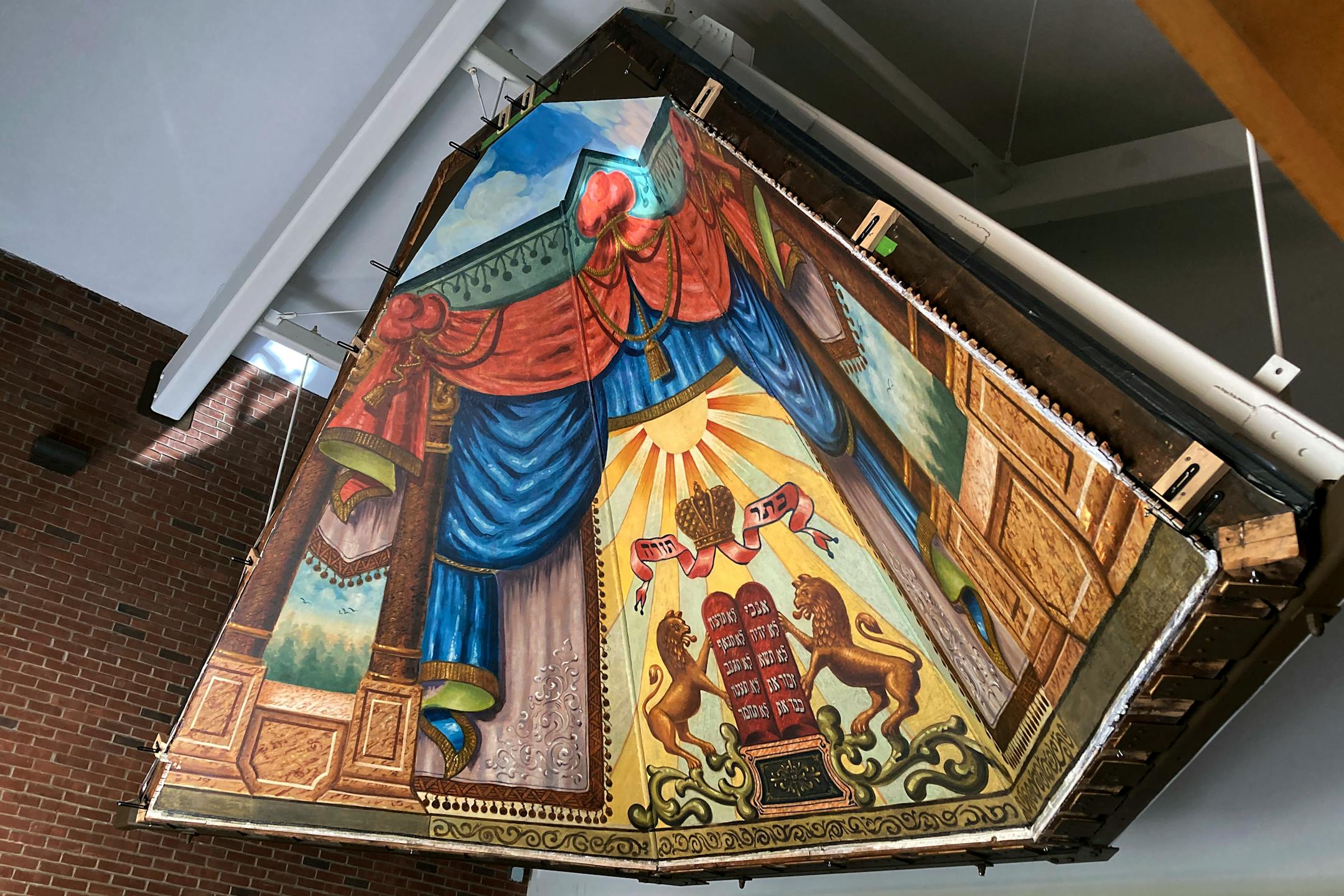
BURLINGTON, Vt. — A mural that was painted in a Vermont synagogue more than 100 years ago by a Lithuanian immigrant — and hidden behind a wall for years— has been termed a rare piece of art and has been painstakingly moved and restored.
The large colorful triptych painted by sign painter Ben Zion Black in 1910 shows the Ten Commandments with a lion on both sides, the sun beaming down, and columns and rich curtains at the borders. Now known as the "Lost Mural," it's a rare representation of a kind of art that graced wooden synagogues in Europe that were largely destroyed during the Holocaust, experts say.
"When I learned about the mural and what it is and the story behind the artist, I was completely amazed, and there is nothing like this elsewhere in this country," said Josh Perelman, chief curator and director of exhibitions and interpretation at the Weitzman National Museum of American Jewish History in Philadelphia.
It's a representation of a style that was present throughout Europe but Perelman said he has never heard of anyone bringing that style to the United States.
"It makes it both a treasure and also a significant work, both in American Jewish religious life and the world of art in this country," he said.
Black, who was also a musician, playwright and poet, as well as a sign maker, decorated the inside of what was then the Chai Adam Synagogue in 1910 in a Jewish neighborhood in Burlington known as Little Jerusalem. He painted the triptych — the Lost Mural — in the apse of the building, as well as other murals in the synagogue's interior.
But the synagogue closed in 1939 when it merged with another one, Ohavi Zedek, and the original building went on to have other uses, including a carpet store, according to the Lost Mural website.
When the building was being turned into apartments in 1986, Ohavi Zedek archivist Aaron Goldberg and a fellow synagogue member got the owner to install a wall in front of the mural, according to the website. Black's two daughters donated money to have archival photographs taken of the art, but it was unclear at the time whether the mural could be saved, Goldberg said.


