


One of the fiercest and most prolonged development fights to accompany Minneapolis' housing boom neared an end Thursday with initial approval of a luxury condominium project in the Linden Hills neighborhood.
A well-organized group of neighbors have fought hard against different iterations of the project for years, arguing its height would fundamentally change the southwest Minneapolis neighborhood. But guided by the city's zoning code and an established plan for the neighborhood, a City Council committee unanimously denied an attempt to stop the four-story development on a site of a shuttered Famous Dave's restaurant.
Opponents, who bussed people to City Hall to testify, argued that the city already denied an earlier version of the project in 2012.
"The 56-foot height dwarfs our one-story home, potentially blocks light to our garden [and] sets a precedent for other building in this quaint little livable neighborhood," said homeowner David Myers.
The vocal opposition highlights the tension developers have faced in some corners of the city as they attempt to build five- and six-story buildings, though some communities have been more accepting. It poses complex and politically vexing challenges for city leaders, who hope to increase the city's population near commercial centers and transit lines.
The Linden Crossing project has changed substantially since developer Mark Dwyer's initial five-story proposal, which helped spur a moratorium on large-scale development in the neighborhood and the creation of a long-term plan for the area. The number of units has been halved from 40 to 20, the square footage has been reduced by 43 percent and the height has been cut by 3 feet — with the top floor now substantially pulled back from the edge of the building to create a more compact feel. It also features about 6,000 square feet of ground-floor retail space.
"What we're creating here is an experience that feels like three stories and will be a great addition to the neighborhood," Dwyer told the committee.
The changes have also meant making the units more expensive, however. Dwyer said units in the original plan would have cost between $400,000 and $450,000. Now he expects the units will be between $650,000 and $1.4 million. "As a city, when we give away density … we have to create a higher-end product," Dwyer said.
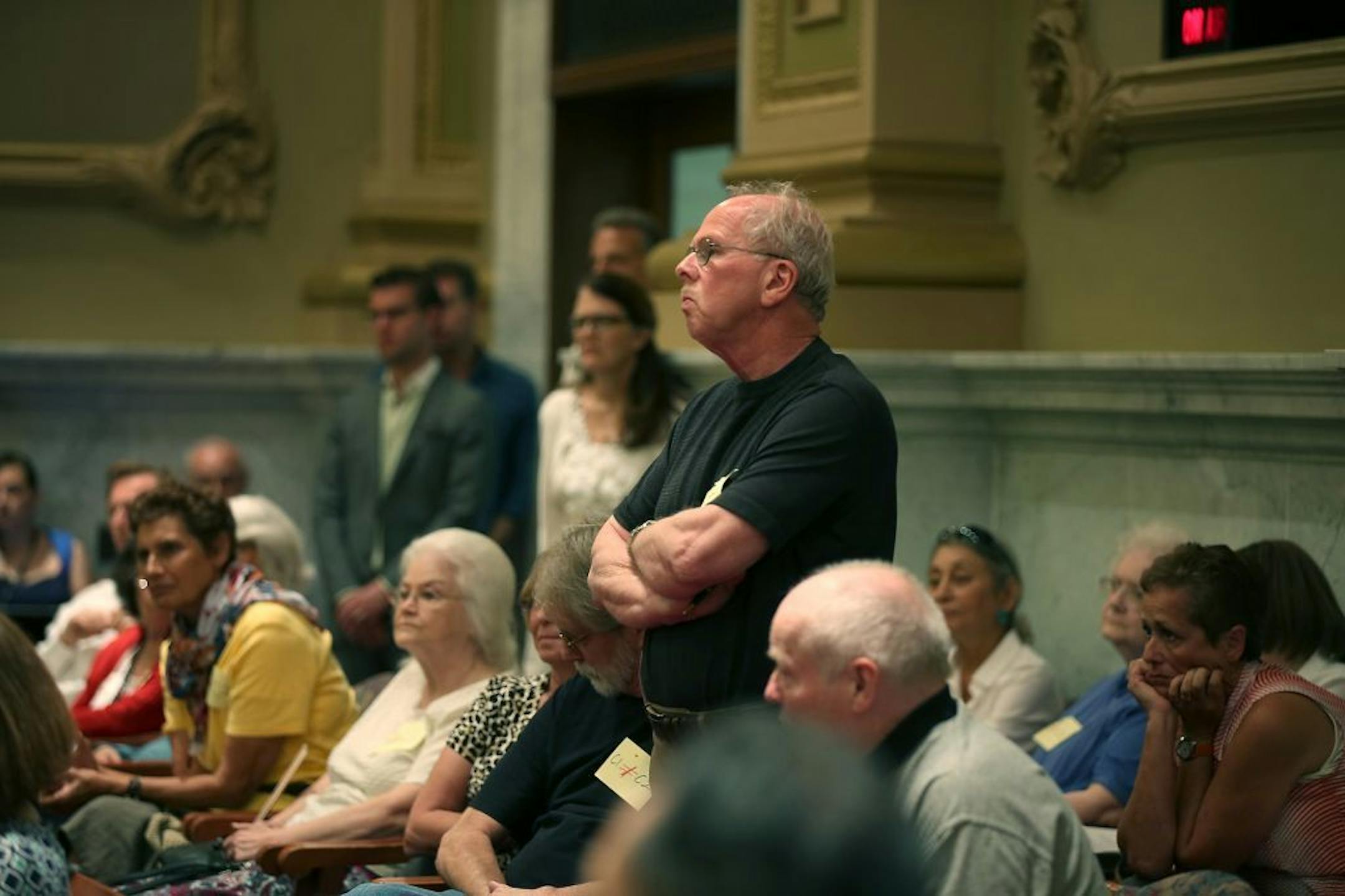
![Linden Hills residents waited in line to express their opposition regarding the Linden Crossing proposal to the Zoning and Planning Committee, Thursday, August 7, 2014 at City Hall in Minneapolis, MN. ] (ELIZABETH FLORES/STAR TRIBUNE) ELIZABETH FLORES • eflores@startribune.com](https://arc.stimg.co/startribunemedia/CCZNMTTLESS2AOQCDNXVXMLHSI.jpg?&w=1080)


