

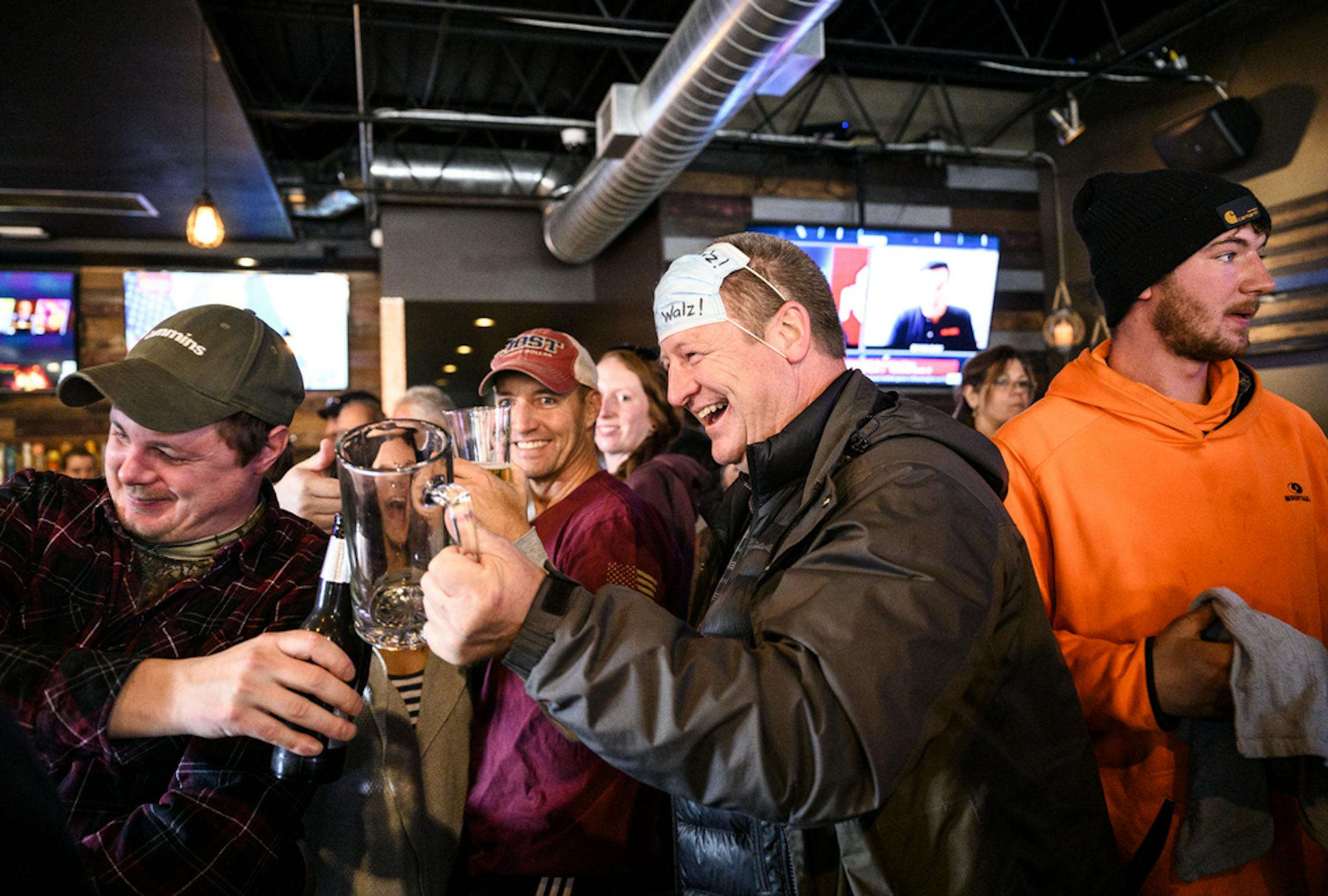
Alibi Drinkery in Lakeville welcomed diners over the New Year's holiday, defying the governor's most recent executive order meant to slow the spread of COVID-19 and an injunction requiring the establishment to shut down until Jan. 10.
The scenes at the restaurant, which has been packed at times with maskless diners and people drinking at the bar, bother Tyler Norkunas, who lives nearby and wonders why local law officers haven't stopped the gatherings amid the pandemic.
"I think [police] need to step in and take the reins," said Norkunas, 29. "It should be 'protect and serve' just like any normal circumstance."
Police departments have largely left enforcement of the order for businesses to the state Attorney General's Office as a handful of restaurants and bars open their doors to indoor diners across Minnesota. Though police have criminal enforcement authority, they've often played a supporting role to state agencies on the civil side, accompanying Minnesota Department of Health officials or monitoring whether restaurants are breaking the rules.
A spokesman from the Attorney General's Office said he didn't know of any instances of police enforcing the executive order against a business in Minnesota.
"[Local law enforcement] has the power," said John Stiles, spokesman for the Attorney General's Office. "I'm not aware that anyone's done it."
Several factors influence the role local law enforcement plays, including the attorney general's guidance that they should take an educational approach rather than a punitive one.
In Lakeville, the City Council has given clear direction that police should aim for "voluntary compliance" with masks and leave enforcement to the attorney general, said Police Chief Jeff Long. When people gathered at Alibi in December to protest the required shutdown, he said, Lakeville police were present and watching from a distance.


