

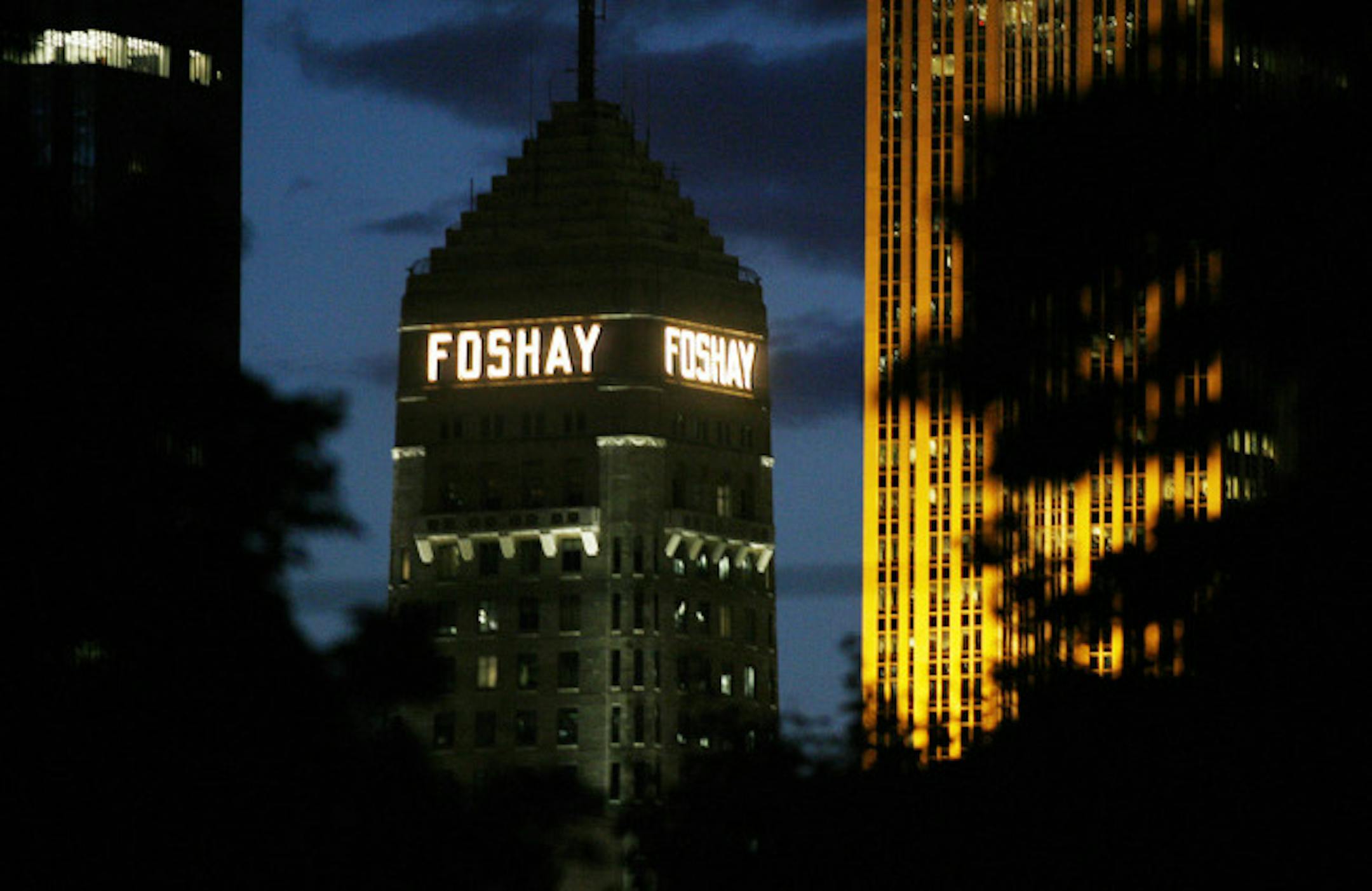
Which downtown Minneapolis landmark is getting a musical shout-out from musicians born 50-some years after it was built?
That would be the Foshay Tower, the Prohibition-era skyscraper that rises on Marquette Avenue between 8th and 9th streets. Once the tallest building west of the Mississippi, it's now dwarfed by the newer structures around it, a poignant evolution that resonated with Jon Reine, guitarist for Greycoats and writer of its song named for the Art Deco tower.
"It's a piece of architecture that's old and beautiful, being swallowed up by progress," Reine said.
The Twin Cities-based indie rock band was creating music for its latest period-inspired album, "World of Tomorrow," when a bandmate brought up the Foshay. "We were working on a Dust Bowl-themed angle, and that led into what led up to the Great Depression, that time in the Roaring '20s right before the market crashed," Reine said. "One of the guys suggested the Foshay Tower as a muse."
Reine, a Minneapolis native, had only vague childhood memories of the Foshay. "I remember it being a really cool, tall building," he said, but he'd never been inside or learned about its history.
Once he started researching it, he became intrigued by the tale of the tower and Wilbur Foshay, the utilities baron who commissioned it. Foshay's skyscraper, modeled after the Washington Monument, was a bold, modern design statement, with Foshay's last name in 10-foot letters at the top on all four sides. The Foshay Tower, completed in 1929, opened with great fanfare — a three-day celebration with a parade, fireworks and dignitaries from across the country.
But the glory was fleeting. Foshay's financial empire collapsed just two months later and he eventually did time in Leavenworth Prison for running a pyramid scheme with investors' money.
"Foshay was kind of a Gatsby figure," Reine said. Like F. Scott Fitzgerald's fictional protagonist, Foshay was a self-made millionaire who crashed and burned. "It was a fascinating piece of history that was unknown to me," Reine said, with parallels to recent spectacular rises and falls. "It was around the time of [Bernie] Madoff and [Tom] Petters [two modern-day financiers whose fortunes collapsed in infamy], so there was that hook."


