

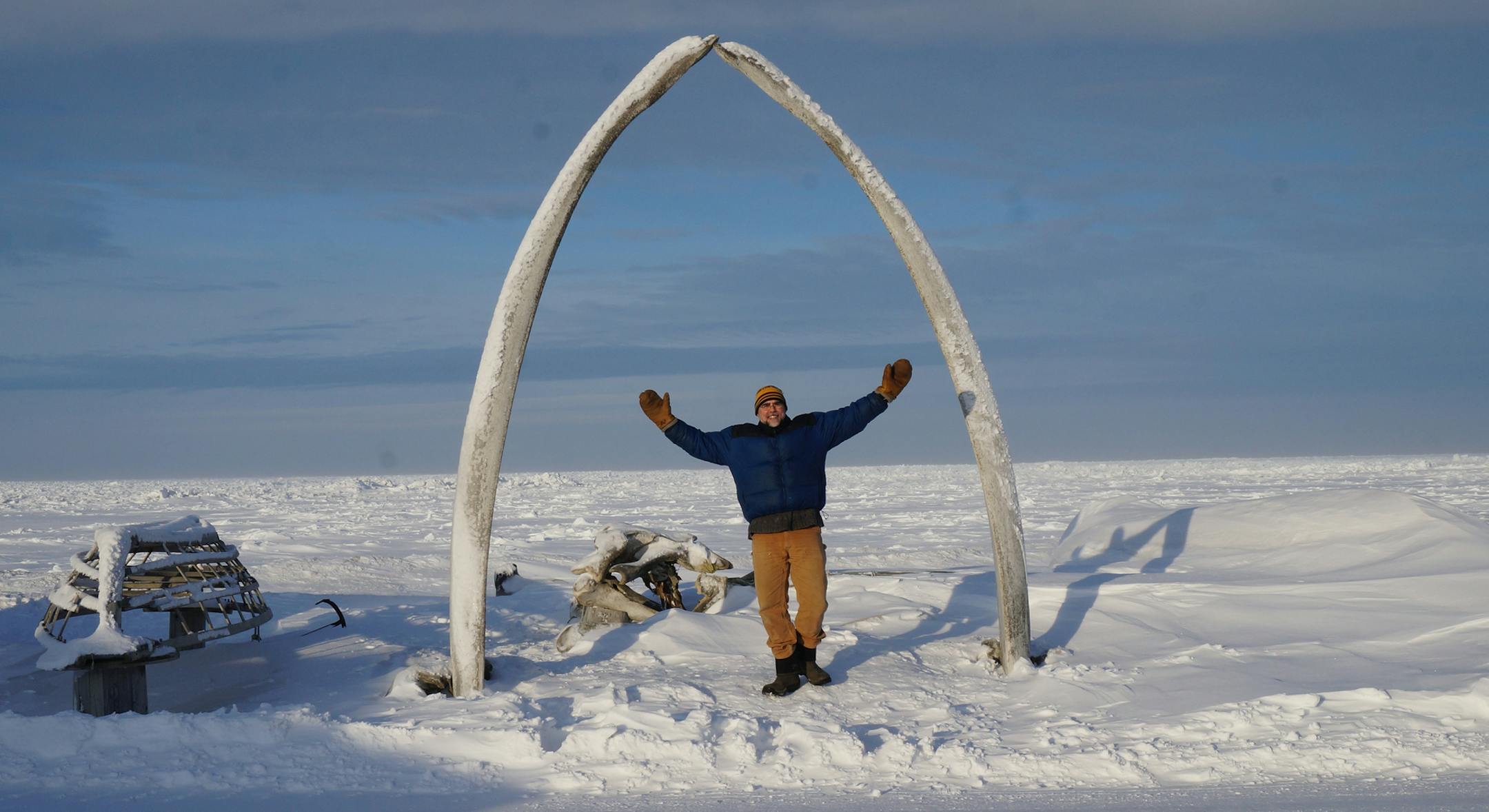
Andy Von Duyke, a wildlife biologist whose work helped rescue the imperiled great blue heron colony in Lino Lakes, has gone far afield to pursue his latest research, to a place even colder (most days) than Minnesota: Barrow, Alaska.
Barrow, population 4,300, is the northernmost city in the United States, 330 miles above the Arctic Circle. It has one stoplight, buildings on stilts to protect the permafrost beneath, and foot-tall trees. It's as flat as North Dakota and there's no road out.
"Tourists come for a day to say, 'I've been to Barrow. It's the end of the world,' " Von Duyke said.
Although the residents are mostly Inupiat natives who hunt to provide food, Barrow is a research hub, with a median household income of $87,000, about $20,000 above the Alaskan median. It's a young town with a median age of 28, six years below the state median. The cost of living is outrageous, Von Duyke said, noting that gasoline costs $7 a gallon; milk is $10 a gallon.
Von Duyke, who was home last week to visit family in the Twin Cities, now works for the North Slope Borough wildlife department. A borough is equivalent to a county and North Slope covers an area the size of Minnesota. His department monitors caribou, polar bears, whales, seals, fish and other animals, which are still a major food source for the local Inupiat people.
"Our job is to collect enough data so [wildlife] can be well-managed and conserved for sustainable harvests," he said.
Von Duyke worked during the endless night that began when the sun set about Thanksgiving and didn't come up until Jan. 24. Although Barrow's winter average high temps are below zero, Von Duyke said he enjoyed noting that Minnesota temperatures this winter were often lower than Barrow's.
Focus on hard-to-catch seals
His research, which began last June, focuses on seals that give birth on ice packs, and seeks to understand how they live, feed, migrate and may be affected by receding ice or other changes. The first step is netting the seals, tagging them with signal-emitting transmitters and releasing them.


