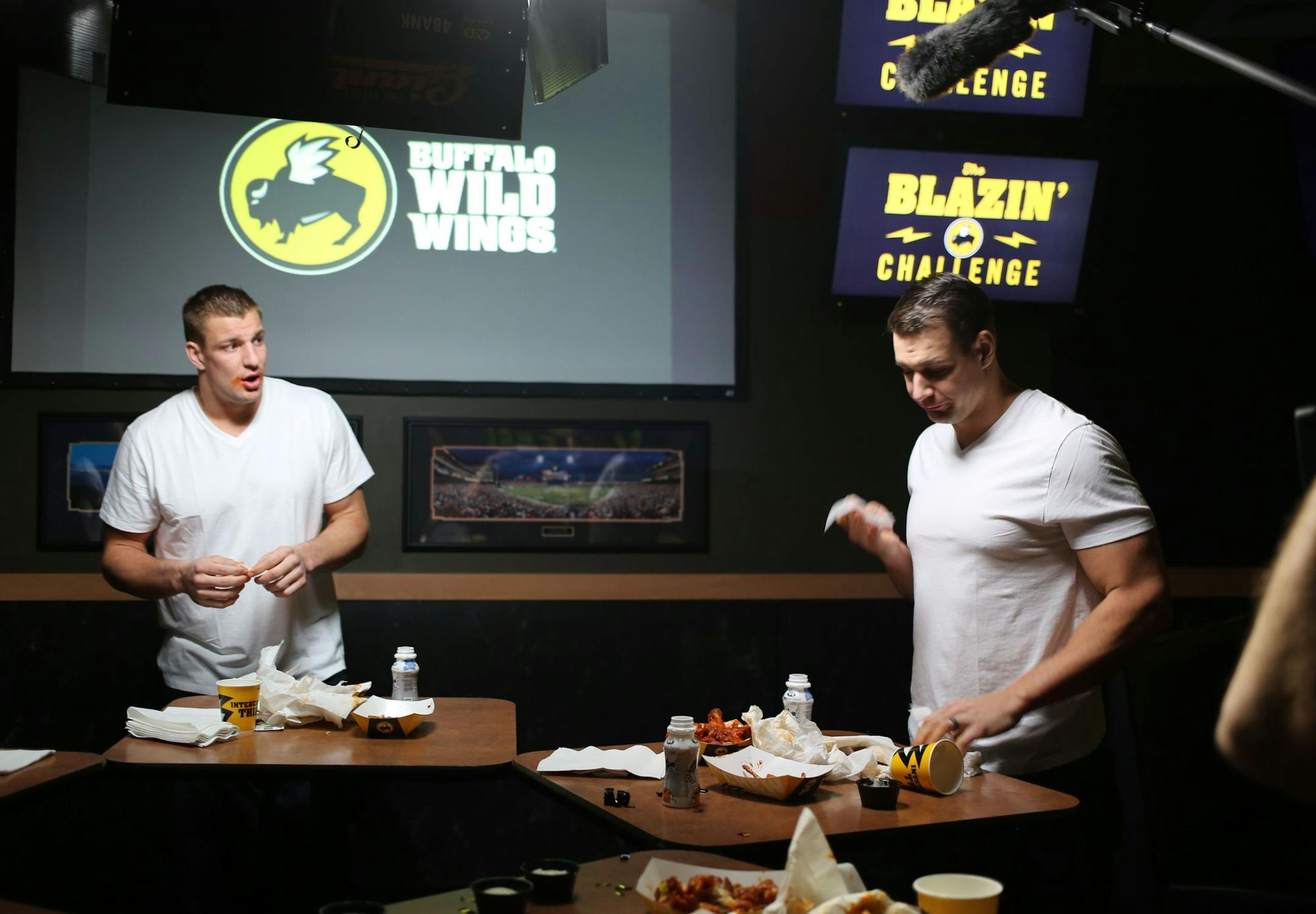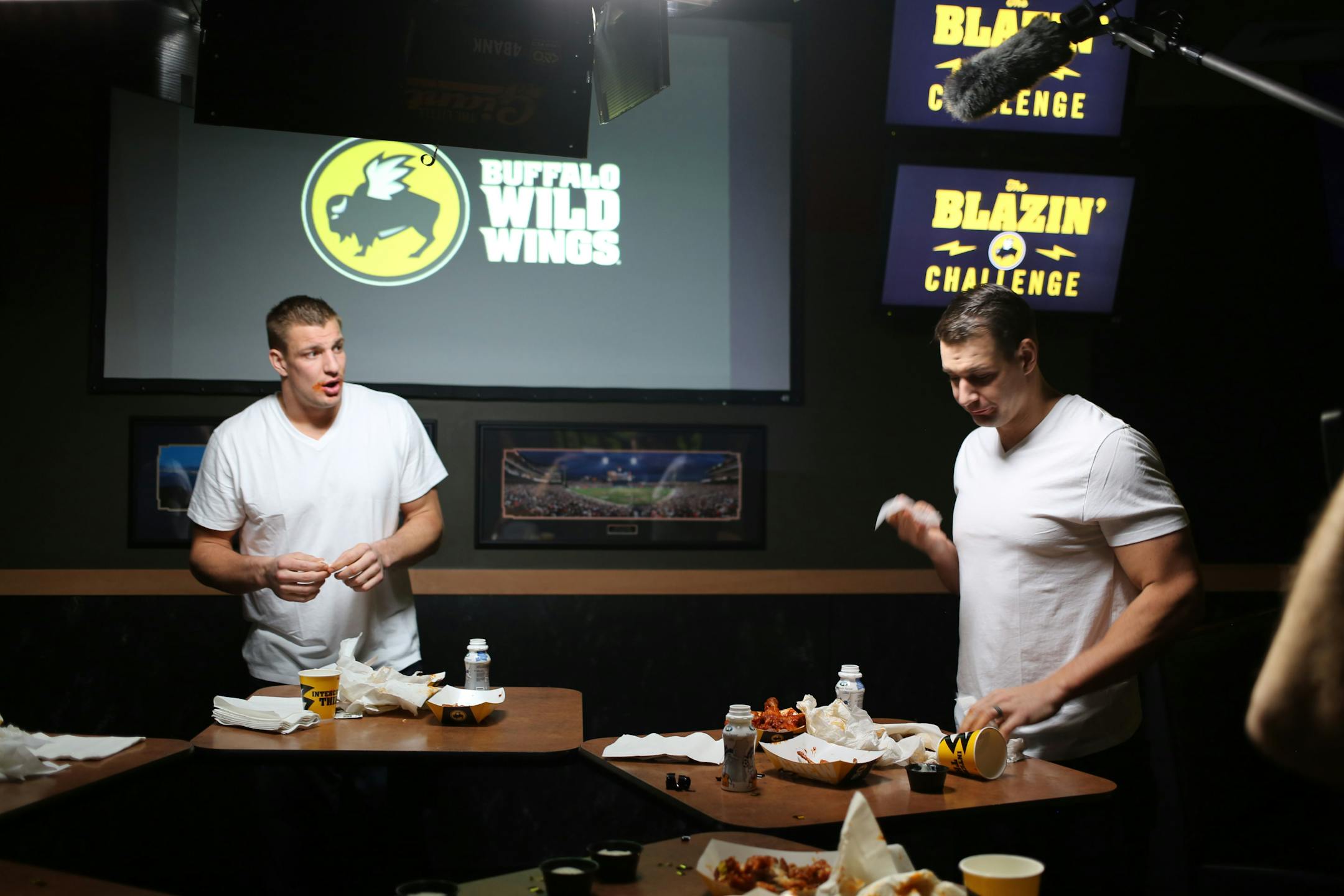
It took 48 wings drenched in Blazin' sauce, New England Patriots tight end Rob Gronkowski and some reconfigured GoPro cameras for Buffalo Wild Wings to create its Super Bowl ad.
The company did not buy TV time for the spot during the game. Instead, the restaurant chain, based in Golden Valley, posted the video Thursday on Facebook — shot in a 360-degree format — and, with mentions of it on websites from USA Today to GQ and Fox Sports, it was well on its way Friday to viral status.
The Big Game has always been the largest stage to test creative ideas as companies and their agencies vie for the most water cooler-worthy ads. In the past decade, they have expanded the Super Bowl campaigns by releasing ads early online. Now, much of the ingenuity comes in the form of online complements to TV commercials or purely digital campaigns — some that will happen in real time during the game.
"Brands are doing really fascinating things both on social media and other digital platforms that lead up to the Super Bowl, [including] what's happening in real time as their spot is airing and what's the follow-up or the engagement afterward," said Mike Caguin, chief creative officer at local ad shop Colle+McVoy.
Many Twin Cities agencies have responded to the growth in digital work by expanding their offerings and adding staff with digital expertise.
Advertising has always been a large part of the Big Game. In the Super Bowl's first 50 years, a total of $4.5 billion has been spent on ads. TV ads during this Sunday's broadcast, which is expected to reach 189 million U.S. viewers, are estimated to cost a record $377 million, according to Ad Age Datacenter.
"It's like a Christmas for advertisers," Caguin said. "It's the only time of year where people are looking forward to seeing commercials."
Yet most companies that can afford the cost for a TV ad during the broadcast are adding a digital component to their campaign.